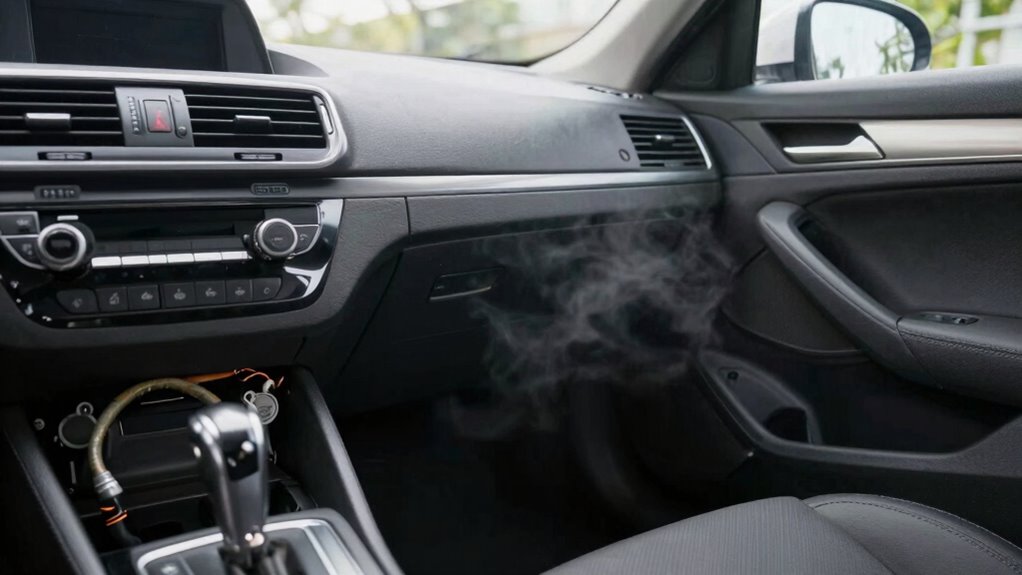

If you notice a fuel smell in your cabin, it likely means there’s a leak in your fuel line or an EVAP system issue. Start by carefully inspecting visible hoses and connections for cracks or damage. Keep in mind that persistent odors can also come from hidden leaks or faulty components, so it’s wise to have a professional check your system with specialized tools. Getting these issues addressed early helps guarantee your safety and your vehicle’s longevity. Keep exploring to uncover more tips.

Get business pricing on garage and car supplies
- Business-only prices and quantity discounts
- Tax-exempt purchasing
- Multiple users, one account, clear invoices
Key Takeaways
- Inspect fuel lines, hoses, and connections for visible leaks or cracks using a systematic visual check.
- Use a soapy water solution on fuel components to detect leaks via bubbling during pressure tests.
- Conduct a pressure test of the fuel system to identify hidden leaks or faulty valves.
- Check the EVAP system, including charcoal canisters and purge valves, for blockages or damage.
- Seek professional diagnostics if leaks or EVAP issues are not apparent, for precise leak detection and safety.
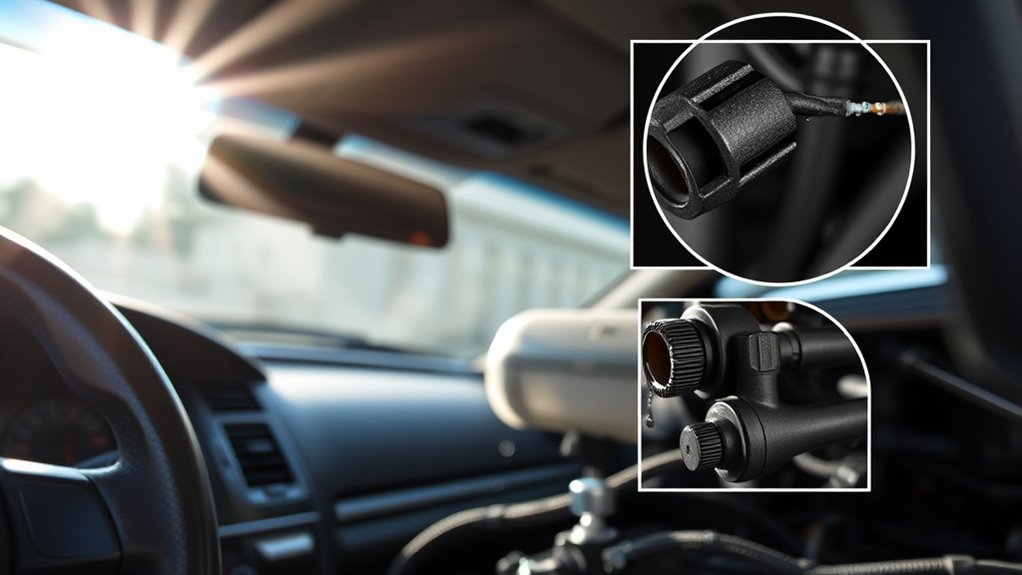
If you notice a strong fuel smell in your car’s cabin, it’s a clear sign that something’s wrong and needs immediate attention. Fuel odors aren’t just unpleasant; they can indicate leaks or issues within your vehicle’s fuel system, which pose safety risks. The first step is understanding that diagnosing the problem involves fuel system diagnostics, where you’ll check for leaks, damaged hoses, or faulty components that might be releasing fumes into the cabin. To confirm the source, you might need to inspect the fuel lines, fuel injectors, and the EVAP (evaporative emission control) system, which prevents fuel vapors from escaping. This process often requires specialized tools and a systematic approach to identify leaks or malfunctions accurately. Ignoring the smell could lead to more severe issues, including engine damage or fire hazards, so prompt diagnosis is vital.
Once you’ve identified the source of the leak or problem, you can proceed with odor elimination techniques. If the smell originates from a minor leak, fixing or replacing the faulty hose or seal might resolve the issue. For more persistent odors, deep cleaning the interior with odor-neutralizing products can help, but only after confirming the leak is sealed. It’s important to remember that lingering fuel vapors aren’t just a discomfort—they can also cause health problems over time, especially in poorly ventilated spaces. Ventilating your car thoroughly, running the engine with the windows open, and using charcoal-based odor absorbers are effective techniques to diminish the smell temporarily while you address the root cause. Additionally, choosing a vacuum with HEPA filters can help trap fine particles and reduce lingering odors in your vehicle based on best rated vacuum cleaners. Moreover, understanding fuel vapor emissions and their potential impact can guide more effective mitigation strategies. Being aware of the vehicle’s fuel system components can also help you identify potential trouble spots before odors become severe.
However, addressing fuel smell in the cabin isn’t just about masking the odor; it’s about safety and proper maintenance. If the smell persists after basic fixes, consider having a professional perform extensive fuel system diagnostics to pinpoint hidden leaks or EVAP system faults. These specialists can perform pressure tests and leak detection procedures that go beyond what most DIY methods can handle. It’s also advisable to educate yourself about fuel system safety protocols to better understand the importance of early detection and repair. Remember, fuel system issues don’t always manifest through obvious leaks—sometimes, small cracks in the fuel tank or subtle EVAP system malfunctions can cause persistent odors. In such cases, professional inspection and repairs are your best bet to ensure your vehicle is safe and odor-free.
Ultimately, tackling a fuel smell requires a combination of immediate odor elimination techniques and thorough diagnostics. Don’t ignore the warning signs, and prioritize proper repairs to maintain safety, prevent further damage, and keep your driving experience comfortable.
Products Worth Considering

Chemical Guys 14-Piece Arsenal Builder Car Wash Kit with Foam Blaster

DEWALT 20V MAX XR Impact Driver, 1/4 Inch High Torque Brushless 3-Speed Cordless with LED Light, Extended Runtime (DCF845B)

Autel Home EV Charger up to 50A J1772 Hardwired Level 2 Charger with 25 ft Cable
As an affiliate, we earn on qualifying purchases.
Frequently Asked Questions
Can Fuel Smell in the Cabin Indicate a Diesel Engine Problem?
Yes, a fuel odor in your cabin can indicate a diesel engine problem. The smell often suggests a fuel leak or issue with the fuel system, which can be more common in diesel engines due to their higher pressure fuel lines. You should inspect for leaks around the fuel injectors, lines, and the fuel filter. Ignoring this smell could lead to dangerous fumes or engine damage, so get it checked promptly.
Are There Specific Signs Differentiating EVAP Leaks From Fuel Line Issues?
You can differentiate EVAP leaks from fuel line issues by paying attention to odor differentiation and leak indicators. EVAP leaks often produce a faint, gasoline-like smell that worsens with temperature changes or engine load, while fuel line leaks tend to have a stronger, persistent fuel odor near the fuel system. Check for visible leaks or dampness around fuel lines, and note if the smell intensifies when opening the fuel cap or during refueling.
How Long Does It Typically Take to Repair a Fuel Line Leak?
A fuel line leak isn’t a quick fix; it typically takes a few hours to a day, depending on the severity. Think of it like repairing a delicate tapestry—careful work is needed. Repair timeframes vary, but expect costs to include parts and labor, often ranging from $150 to $500. Swift action prevents dangerous fumes and costly damage, so prompt repairs are wise for your vehicle’s safety and your wallet.
Is a Fuel Smell Inside the Car Dangerous for Passengers?
A fuel smell inside your car is dangerous for passenger safety because fuel vapors are toxic and flammable. You should address the odor immediately to prevent health hazards or fire risks. To guarantee safety, ventilate the cabin and seek professional repair to fix leaks or EVAP system issues. Proper odor mitigation is vital, and avoiding driving until the problem is resolved helps protect everyone onboard.
Can Regular Maintenance Prevent Fuel Smell Issues in the Cabin?
Imagine opening your car door and smelling fresh air, not fuel. Regular maintenance can prevent fuel smell issues by ensuring your fuel system stays sealed and leak-free. Routine inspections catch tiny problems early, while fuel system maintenance keeps hoses, connections, and valves in top shape. By staying proactive, you avoid unpleasant odors and potential hazards, keeping your cabin safe, clean, and enjoyable every time you hit the road.
Conclusion
If you notice a fuel smell in your cabin, don’t ignore it—this tiny odor could be a ticking time bomb for a full-blown fire! Leaks or evap problems might seem minor now, but they can escalate into catastrophic failures in seconds. Act fast, get your vehicle checked immediately, and save yourself from a disaster that could turn your daily drive into a blazing inferno. Your safety is worth more than a fleeting sniff!