You’ll find electrical diagnosis harder in modern vans because their systems are more complex, with numerous sensors, modules, and interconnected components. Diagnosing issues requires advanced tools to interpret subtle signals and verify wiring integrity, as simple checks may miss hidden faults. The dense wiring harnesses and CAN bus communication add layers of difficulty. If you want to understand how to navigate these challenges effectively, there’s more you can learn to improve your troubleshooting skills.
Open a free Amazon Business account
Business pricing, bulk buying and tax-exempt orders.
As an affiliate, we earn on qualifying purchases.
Key Takeaways
- Modern vans have complex, interconnected electrical systems that are harder to interpret and troubleshoot.
- Advanced sensors and modules require specialized tools and knowledge for accurate diagnosis.
- Wiring harnesses are more intricate, densely packed, and prone to subtle faults like corrosion or loose connections.
- Faults in sensors or modules can cascade, making it difficult to pinpoint the root cause.
- Traditional voltage checks are insufficient; comprehensive testing and system understanding are necessary.

Modern vans rely heavily on complex electrical systems to keep everything running smoothly, making diagnosis more challenging than ever. When you’re troubleshooting electrical issues in these vehicles, you need to be prepared for a maze of interconnected components and subtle signals. One of the first hurdles you’ll encounter is battery diagnostics. Unlike older models, where a simple voltage check often sufficed, modern vans require you to dig deeper. A weak or failing battery might not show obvious signs but can cause erratic system behavior. You’ll need to use specialized tools to accurately assess the battery’s health, including testing its capacity under load, checking for parasitic drain, and verifying that the charging system is functioning correctly. Overlooking these details can lead you down the wrong path, wasting time and potentially causing more damage. Additionally, understanding the electrical system of modern vans is essential to grasp how all components interact and communicate effectively.
Beyond the battery, wiring consistency in modern vans is another essential challenge. The wiring harnesses are more intricate and compact, often with multiple connectors, sensors, and modules tightly packed together. If wiring isn’t consistent—meaning, if there are loose, corroded, or damaged connections—you might experience intermittent faults that are difficult to reproduce or diagnose. You need to systematically inspect wiring harnesses, ensuring all connections are secure, free from corrosion, and correctly routed. Using wiring diagrams specific to your vehicle model can help you verify continuity and identify potential problem spots. Because wiring can degrade over time, it’s imperative to test for shorts or opens, especially in areas exposed to moisture or vibration. Regularly inspecting wiring integrity can prevent elusive issues from developing over the vehicle’s lifespan.
Modern vans also rely on a network of sensors and modules communicating via CAN bus systems, adding layers of complexity to electrical diagnosis. When one component fails or sends inconsistent signals, it can affect other parts of the vehicle’s electrical ecosystem. This interconnectedness means that a simple problem like a faulty sensor might cascade into multiple issues. To troubleshoot effectively, you need to check wiring consistency across all relevant connections and verify that signals are within expected ranges. This often involves using scan tools to read error codes and live data, which can point you toward specific wiring or component issues.
In essence, diagnosing electrical problems in modern vans demands a meticulous approach. Battery diagnostics must be thorough, ensuring your power source is reliable. Wiring consistency checks are crucial to confirm that connections are intact and signals are accurate. Only by understanding and addressing these core elements can you navigate the complexity and restore your van’s electrical system to proper working order.

ANCEL BA101 Car Battery Tester, 12V Digital Automotive Alternator Meter Diagnostic Tool,100-2000 CCA Load Capacity, Charging & Cranking Analyzer for Truck, Boat, RV, Marine Vehicle, and More
- Early Battery Issue Detection: Identifies problems before breakdowns
- Comprehensive Battery Analysis: Displays SOH, SOC, voltage, current, CCA
- Reliable and Accurate Results: High-quality clips and smart chip ensure dependability
As an affiliate, we earn on qualifying purchases.
As an affiliate, we earn on qualifying purchases.
Frequently Asked Questions
How Do I Identify a Faulty Wiring Harness in a Modern Van?
To identify a faulty wiring harness in a modern van, start with a visual inspection for damaged or burnt wires. Use identification techniques like checking for corrosion or loose connections. Employ a multimeter to test for continuity and voltage issues along the wire harness. If you notice inconsistent readings or visible damage, it indicates a fault. Always follow proper safety procedures and consult vehicle wiring diagrams for accurate diagnosis.
What Tools Are Essential for Diagnosing Electrical Issues in Modern Vans?
You might think diagnosing modern van electrical issues is simple, but it’s a trap! To succeed, you need essential tools like a multimeter for battery testing and fuse inspection. These help you quickly identify if the fault lies in your power source or a blown fuse. Don’t forget a wiring diagram and test light—these are your best friends in unraveling complex wiring problems. Irony’s on your side—sometimes, it’s the basics that save the day!
Can Software Updates Affect My Van’s Electrical System Diagnostics?
Yes, software updates can affect your van’s electrical system diagnostics. If the update isn’t compatible with your diagnostic tools or the vehicle’s software, it can cause inaccurate readings or trouble connecting. To avoid issues, verify software compatibility before updating, and perform update troubleshooting if you encounter problems. Keeping your diagnostic tools and vehicle software synchronized helps maintain accurate diagnostics and simplifies the troubleshooting process.
How Do I Interpret Complex Electrical Fault Codes in Modern Vans?
Deciphering complex fault codes is like unraveling a tangled web. You should focus on sensor troubleshooting and circuit analysis, breaking down each code into manageable pieces. Start by checking sensor signals and wiring connections, then analyze circuits with a multimeter. Cross-reference fault codes with the vehicle’s wiring diagrams and technical bulletins. Patience and methodical troubleshooting turn chaos into clarity, helping you pinpoint issues faster and restore your van’s electrical health.
Are There Common Electrical Problems Unique to Specific Van Models?
Yes, some van models have unique electrical problems. You might encounter model-specific issues like wiring customization challenges or faulty modules. For instance, certain vans have wiring layouts that differ notably from others, making diagnosis trickier. Knowing these common model-specific issues helps you target your troubleshooting effectively, saving time and reducing frustration. Always research your van’s specific electrical quirks to better understand and resolve potential problems efficiently.
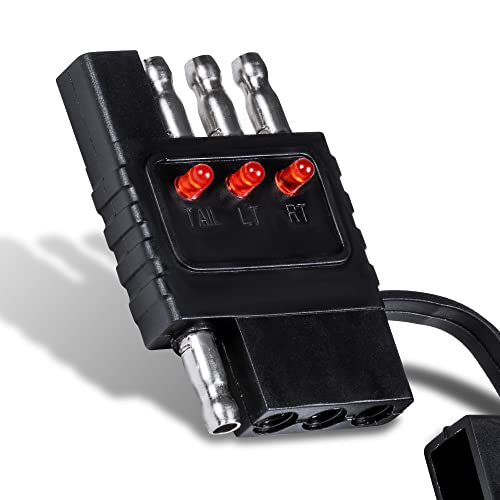
True MODS 4-Way Flat Trailer Light Tester 4-Pin Wiring Circuit Test
- Easy Inline Trailer Light Testing: Plug between vehicle and trailer with LED indicators
- Quick Problem Isolation: Split wiring harness to identify issues fast
- Tool-Free Operation: Plug-and-play design requires no tools
As an affiliate, we earn on qualifying purchases.
As an affiliate, we earn on qualifying purchases.
Conclusion
Charting the tangled web of modern van electrical systems can feel like trying to untie a knot in a storm—challenging and relentless. As you trace circuits and decode sensors, remember that each new technology adds layers to the maze. But with patience and sharp eyes, you’ll find your way through the storm. Think of it as a journey through a complex yet fascinating jungle—you’re the explorer, and every fix brings you closer to mastering the wild terrain.

ANCEL AD310 Classic Enhanced Universal OBD II Scanner Car Engine Fault Code Reader CAN Diagnostic Scan Tool, Read and Clear Error Codes for 1996 or Newer OBD2 Protocol Vehicle (Black)
- Diagnostic Capabilities: Read and clear engine trouble codes
- Recommended by Experts: Trusted by Scotty Kilmer and mechanics
- Live Data Monitoring: View real-time vehicle data
As an affiliate, we earn on qualifying purchases.
As an affiliate, we earn on qualifying purchases.

Advanced CAN Bus Diagnostics and Automotive Network Troubleshooting: Master OBD2 Systems, ECU Programming & Electrical Fault Analysis (Modern Automotive Technology Diagnostics Mastery Series Book 7)
As an affiliate, we earn on qualifying purchases.
As an affiliate, we earn on qualifying purchases.
Back to school Picks
back to school
As an affiliate, we earn on qualifying purchases.