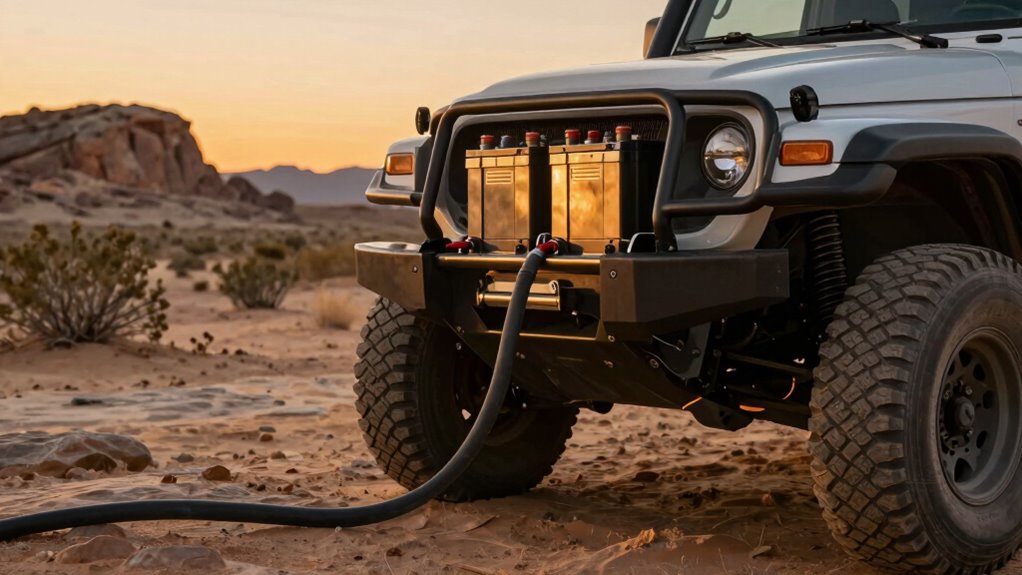

Dual battery planning is about more than just adding extra power; it’s about ensuring your system is safe, efficient, and sustainable. You need proper wiring, fusing, and placement to prevent hazards like shorts or overheating. Integrating safety features, monitoring systems, and renewable energy sources like solar is essential for reliability. Balancing energy input and consumption keeps everything stable and safe. If you keep exploring, you’ll find how thoughtful planning makes your setup both effective and secure.

Get garage and car supplies delivered free — and shop member deals
- Fast, free delivery on millions of items
- Access to Prime Big Deal Days deals on October 6–7
- Prime Video, Amazon Music and more included
Key Takeaways
- Safety considerations, including proper wiring, fusing, and venting, are critical to prevent hazards beyond just capacity.
- Integrating renewable energy sources like solar requires careful planning to balance input and prevent system instability.
- Monitoring and maintenance ensure battery health, safety, and longevity, making system management more complex than simply adding capacity.
- Proper placement and insulation of batteries are vital to avoid overheating, leaks, or damage, emphasizing safety over power alone.
- Incorporating safety features like circuit breakers and disconnect switches enhances overall system safety and reliability.
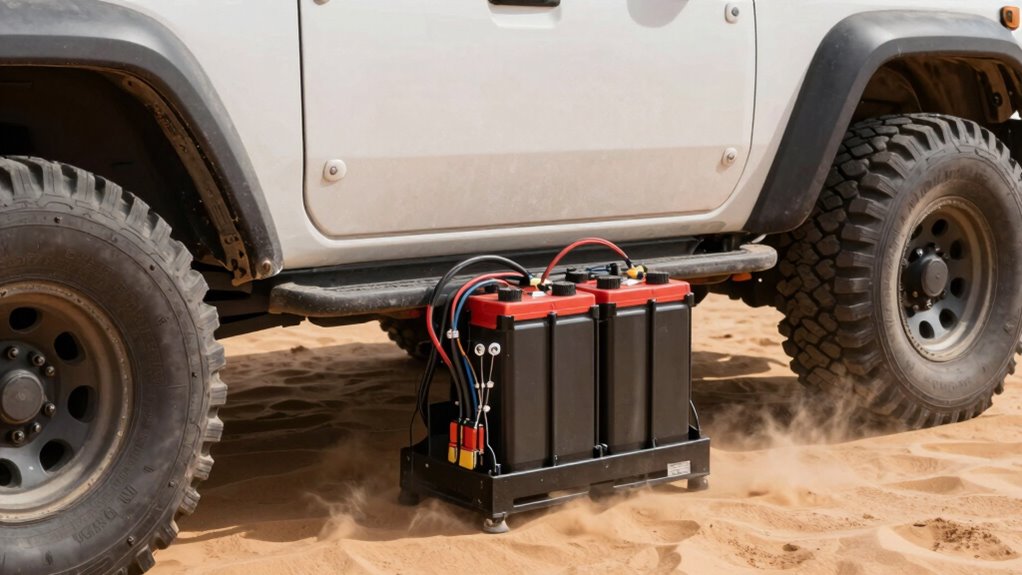
Are you prepared to guarantee your vehicle or off-grid setup has reliable power? When you start planning for dual batteries, it’s tempting to think mainly about extra power and longer run times. But true dual battery planning goes far beyond just adding more capacity. It’s about creating a safe, efficient, and integrated system that supports your needs without risking damage or unsafe conditions. Solar integration plays a key role here, allowing you to harness renewable energy to charge your batteries effectively. You’ll want a system that balances your energy input with your consumption, ensuring your setup remains stable and sustainable over time.
Safety considerations are important when designing a dual battery system. Proper wiring, fusing, and battery placement help prevent short circuits, overheating, or electrical fires. You should use high-quality components designed specifically for automotive or off-grid use, and follow manufacturer guidelines closely. Proper venting and insulation are also essential, especially if you’re using lead-acid batteries, which can emit dangerous gases if not properly managed. When planning your system, think about how to incorporate safety measures like circuit breakers and disconnect switches. These additions allow you to quickly shut down the system if something goes wrong, reducing risk and protecting your investment. Additionally, understanding how to properly integrate safety features is crucial for preventing hazardous situations. Incorporating system monitoring can further help track your battery health and safety status, ensuring ongoing reliability. Regular maintenance and inspection are also vital, as they help identify potential issues before they become safety hazards. Being aware of battery management techniques can extend the life of your system and improve safety. Incorporating proper documentation into your planning process can also help ensure all safety features are correctly implemented and maintained over time.
As an affiliate, we earn on qualifying purchases.
Frequently Asked Questions
How Do I Determine the Right Battery Capacity for My Needs?
To determine the right battery capacity, consider your energy needs and device usage. Think about how long your battery should last and how often you’ll need to recharge, keeping charging efficiency in mind. Also, prioritize battery lifespan; a slightly larger capacity can extend your battery’s life and improve performance. Assess your power consumption patterns and choose a capacity that balances your needs with longevity and efficient charging.
What Are the Best Types of Batteries for Dual Systems?
The best types of batteries for dual systems often include AGM, lithium-ion, and gel batteries. AGM and gel batteries are durable and require minimal maintenance, while lithium-ion offers higher energy density and faster charging. Consider battery chemistry to match your needs, and choose charging methods compatible with your battery type. By selecting the right chemistry and charging approach, you guarantee reliable power, longer lifespan, and efficient operation for your dual battery system.
How Does Wiring Configuration Affect Dual Battery Performance?
They say, “A chain is only as strong as its weakest link,” and wiring configuration directly impacts your dual battery system’s performance. Simplifying wiring reduces complexity, making maintenance easier and minimizing errors. Proper wiring guarantees consistent voltage regulation, preventing overcharging or undercharging. Inadequate or complex wiring can cause voltage drops, reducing battery lifespan and efficiency. So, keep wiring straightforward, and you’ll enjoy reliable power and longer-lasting batteries.
Can I Upgrade an Existing Battery System Easily?
Yes, upgrading your existing battery system is usually straightforward, but you should consider your battery lifespan and charging methods. Check if your current setup supports new batteries or if you need adapters or wiring upgrades. Upgrading can improve performance and longevity, but confirm your charging system is compatible with the new batteries. Proper planning helps you maximize your investment and avoid early replacements or system failures.
What Maintenance Is Required for Dual Battery Setups?
You need to regularly check your dual battery setup to guarantee ideal battery lifespan. Keep an eye on connections and clean terminals to prevent corrosion. Use proper charging techniques, like avoiding deep discharges and maintaining a steady charge, to prolong battery life. Periodically test your batteries to catch potential issues early. Proper maintenance helps your dual battery system stay reliable, ensuring you always have power when you need it most.
solar charge controller for dual batteries
As an affiliate, we earn on qualifying purchases.
As an affiliate, we earn on qualifying purchases.
Conclusion
Think of dual battery planning as planting seeds for a thriving garden. It’s not just about adding extra power; it’s about nurturing resilience and peace of mind in your journey. When you plan wisely, your energy system becomes a sturdy tree, weathering storms and bearing fruit when you need it most. Embrace this approach, and you’ll find your adventure blossoming with confidence, knowing you’ve built a foundation that supports your passions through every twist and turn.
automotive circuit breaker switch
As an affiliate, we earn on qualifying purchases.
As an affiliate, we earn on qualifying purchases.
battery monitoring system for off-grid
As an affiliate, we earn on qualifying purchases.
As an affiliate, we earn on qualifying purchases.
Fall Picks
fall essentials
As an affiliate, we earn on qualifying purchases.