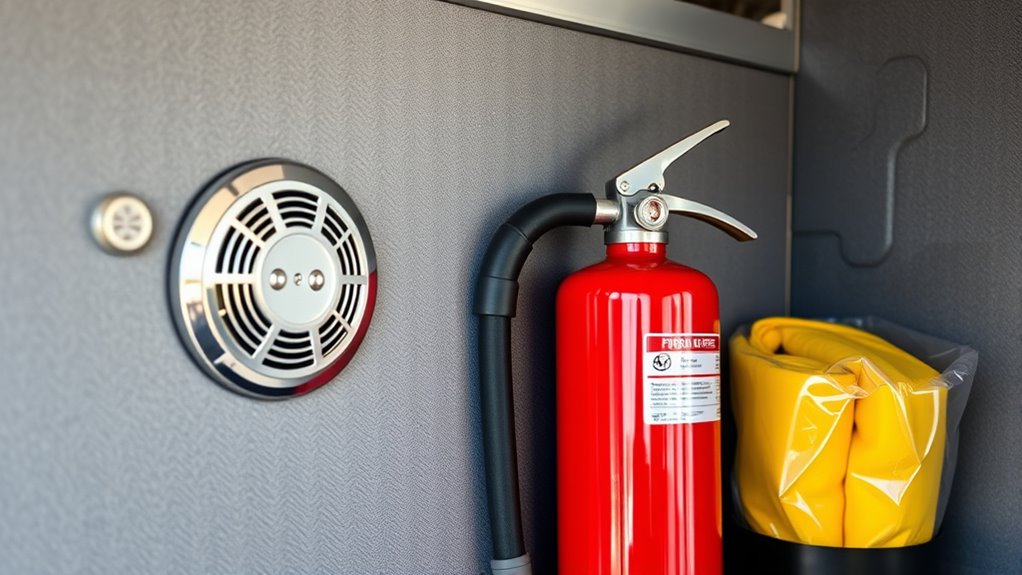
To guarantee fire safety in your van build, install reliable smoke and carbon monoxide detectors near your kitchen, electrical panel, and sleeping area, and regularly test and replace their batteries. Keep a multi-purpose ABC fire extinguisher accessible near the kitchen or electrical panel, and learn how to operate it properly. Don’t forget to store fire blankets in easy-to-reach spots and follow preventive tips like avoiding overloads. Continuing involves knowing more ways to stay safe on your adventures.
Key Takeaways
- Install reliable smoke and carbon monoxide detectors near the kitchenette, electrical panel, and sleeping areas for early fire detection.
- Choose multi-purpose ABC fire extinguishers, mounted visibly near key areas like the kitchen and electrical panel.
- Regularly test detectors and inspect extinguishers for damage, expiration, and proper functioning.
- Keep fire blankets accessible in the kitchen area to quickly smother small fires.
- Practice fire safety habits, such as avoiding overloading electrical systems and never leaving cooking unattended.
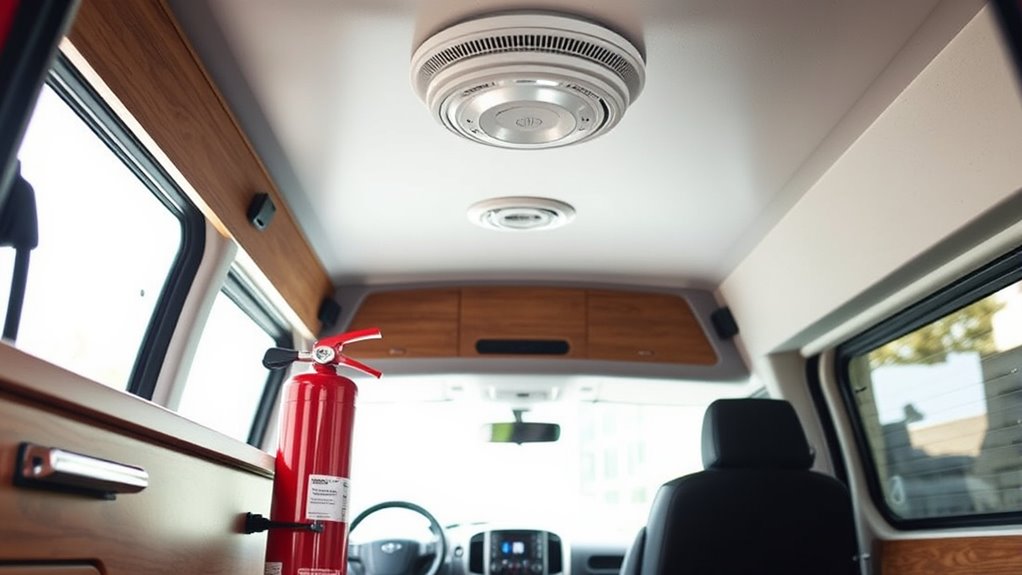
When building out a van, prioritizing fire safety is vital to protect yourself and your belongings. Fires can start unexpectedly, especially in confined spaces filled with electrical wiring, appliances, and flammable materials. That’s why installing effective fire detection systems and having the right extinguishers on hand should be at the top of your list.
Early detection is key; smoke alarms are your first line of defense. Choose a reliable, battery-operated smoke detector and place it where it can quickly alert you to any signs of smoke or fire, such as near your kitchenette, electrical panel, or sleeping area. Test it regularly and replace batteries as needed to guarantee it functions correctly.
Early smoke alarms save lives—test regularly and keep near key areas like the kitchen or sleeping zone.
You might also consider adding a carbon monoxide detector if your build includes gas appliances, as this can alert you to dangerous leaks that could ignite a fire or cause harm.
Alongside detection, having the right fire extinguishers within easy reach is vital. Not all extinguishers are created equal, so pick one suitable for the types of fires most likely to occur in your van. A multi-purpose ABC extinguisher is usually the best choice because it can handle ordinary combustibles, electrical fires, and flammable liquids. Mount it securely in a visible, accessible spot near the kitchen or electrical panel, so you can grab it quickly if needed.
Remember, the effectiveness of an extinguisher relies on proper training. Take time to familiarize yourself with its operation—know how to pull the pin, aim at the base of the fire, and sweep side to side. In a high-stress situation, this knowledge can make all the difference.
It’s also wise to keep a fire blanket nearby, especially if you cook inside or handle flammable materials regularly. A fire blanket can smother small fires before they spread, providing an immediate, simple solution. Make sure everyone else in your van knows where it’s stored and how to use it too.
Regularly inspect your fire safety equipment for damage or expiration, replacing items as needed. Additionally, avoid overloading your electrical system, keep flammable materials away from heat sources, and never leave cooking unattended. These preventative measures reduce the likelihood of fire incidents but having detection devices and extinguishers on hand guarantees you’re prepared if anything does happen.
In addition, understanding the categories of fire extinguishers and their specific uses can help you select the most effective option for your needs. Prioritizing fire safety in your van build isn’t just about compliance; it’s about safeguarding your life and your belongings on every adventure you undertake.
Frequently Asked Questions
How Often Should Fire Extinguishers Be Replaced or Serviced?
You should replace or service your fire extinguisher every 1 to 6 years, depending on the type. Check the pressure gauge monthly to verify it’s operational, and inspect for damage or corrosion.
If it’s been used, discharged, or expired, replace it immediately. Regular maintenance, including professional inspections every year, guarantees your extinguisher works when needed, keeping you safe during emergencies.
Are There Specific Fire Detection Systems for Propane or Gas Appliances?
Yes, there are specialized fire detection systems for propane or gas appliances. These systems use gas sensors to detect leaks and activate alarms, alerting you early to potential dangers.
You should install these detectors near gas appliances and verify they’re certified for RV or van use. Regularly test and maintain them to keep your van safe, especially if you’re using propane or gas for cooking or heating.
What Are the Best Locations to Install Smoke and Heat Detectors?
Spot smoke and heat detectors strategically to stay safe. Place smoke detectors near sleeping areas and living spaces to swiftly spot subtle signs of smoke.
Mount heat detectors close to cooking zones and appliances to detect rising temperatures. Keep them away from vents or windows to prevent false alarms.
Can I Install Fire Safety Equipment Myself or Should Professionals Be Involved?
You can install fire safety equipment yourself if you’re comfortable with basic electrical work and following safety guidelines. However, it’s often better to involve professionals to ensure proper installation and compliance with regulations.
Professionals can help you select the right equipment, install it correctly, and give you peace of mind knowing your van is as safe as possible.
If you’re unsure, consulting an expert is the safest choice.
How Do I Ensure Fire Safety Compliance During Van Build Inspections?
You guarantee fire safety compliance during van build inspections by thoroughly reviewing local regulations and standards, then cross-checking your build against them.
Use a checklist to verify proper installation of detection devices and extinguishers.
Schedule inspections with certified professionals who can identify potential hazards and confirm your setup meets safety codes.
Regularly update your fire safety equipment and document all inspections to stay compliant and ensure safety during your travels.
Conclusion
In your van build, prioritizing fire safety is essential to protect yourself and your belongings. For example, installing a smoke detector and keeping a fire extinguisher nearby can prevent minor issues from turning into disasters. Imagine a small electrical spark igniting a fire — quick action with an extinguisher could save your entire rig. Stay vigilant, regularly check your safety devices, and you’ll enjoy peace of mind on every adventure.