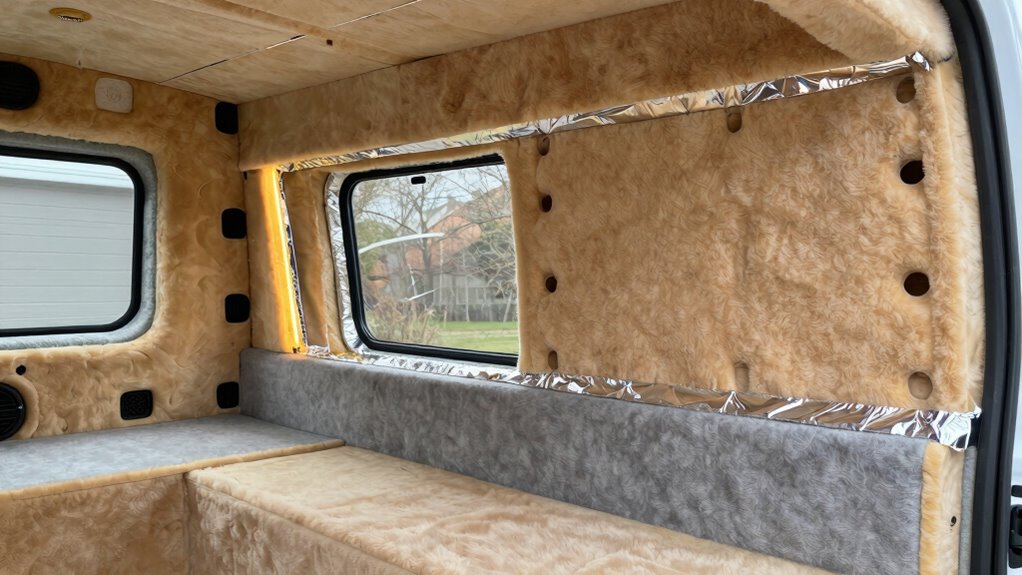
To create a cozy transit, start with effective insulation materials like foam boards, spray foam, or reflective insulation that reflect heat and reduce temperature fluctuations. Combine these with moisture-resistant barriers to prevent mold and condensation. Proper installation seals gaps and guarantees ideal performance. By carefully selecting and applying these materials and techniques, you’ll maximize comfort and energy efficiency. Keep exploring to discover how to customize your van for all seasons.
Key Takeaways
- Use foam boards, spray foam, or reflective insulation to effectively reduce heat transfer and regulate van temperature.
- Install vapor barriers on the warm side of insulation to prevent moisture buildup and condensation.
- Seal all gaps and seams to prevent moisture infiltration and improve thermal efficiency.
- Combine reflective insulation with moisture-resistant materials for optimal thermal and moisture control.
- Proper installation around windows, doors, and vents ensures consistent insulation performance and a cozy interior.
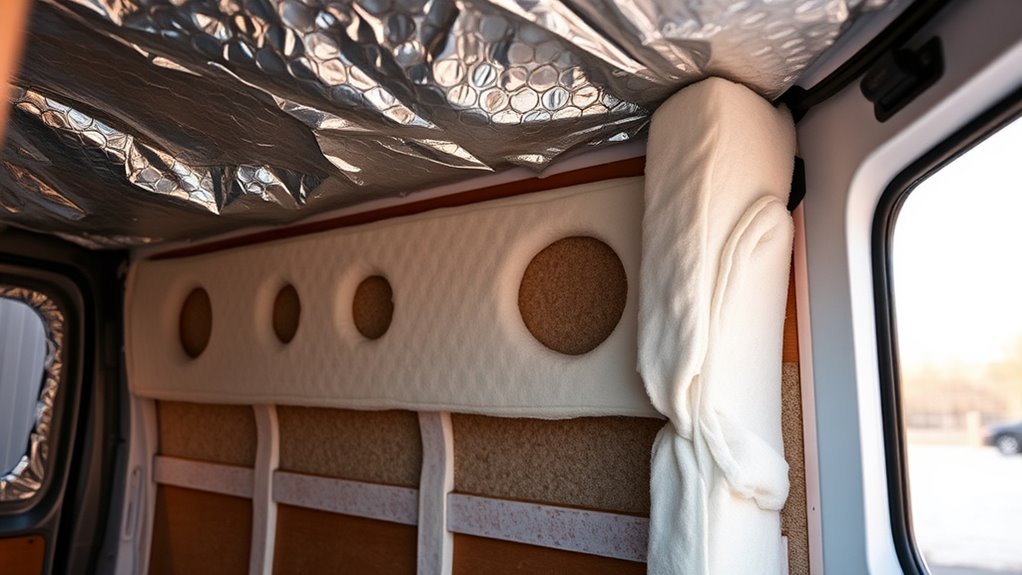
Are you wondering how to keep your van comfortable and energy-efficient? The key lies in choosing the right insulation materials and applying effective techniques. One essential aspect is incorporating thermal barriers, which help regulate temperature and prevent heat transfer. These barriers act as a shield, keeping your van warm in winter and cool in summer. Materials like foam boards, spray foam, or reflective insulation serve as excellent thermal barriers. They create a barrier that reflects heat away or retains it, reducing the need for excessive heating or cooling. This not only enhances comfort but also saves energy and prolongs the life of your climate control systems. Proper installation of insulation is crucial to maximize these benefits and avoid gaps that can compromise performance.
Thermal barriers like foam boards and reflective insulation improve van comfort and energy efficiency.
Moisture control is equally important in van insulation. Without proper moisture management, condensation can develop inside the walls, leading to mold, corrosion, and even structural damage. To prevent this, you need to carefully select moisture-resistant insulation materials and ensure proper installation. Vapor barriers or moisture barriers are typically installed on the warm side of the insulation to block condensation from forming within the walls. This step is essential because trapped moisture can compromise the insulation’s effectiveness and cause long-term problems. You should also pay attention to proper ventilation, which helps maintain airflow and prevents humidity buildup. Good moisture control techniques include sealing all gaps and seams and using breathable, moisture-resistant materials where necessary. Additionally, understanding the properties of moisture-resistant insulation can help you make better choices for your van. Incorporating moisture management techniques further enhances the durability of your insulation system.
When insulating your van, it’s important to consider how thermal barriers and moisture control work together. For instance, reflective insulation combined with a vapor barrier can dramatically improve thermal efficiency and moisture management. This combination reflects radiant heat and prevents moisture from penetrating or accumulating within the walls. Additionally, installing insulation carefully around windows, doors, and vents ensures there are no gaps where heat or moisture could escape or seep in. Proper sealing is key to maintaining the integrity of your insulation system and keeping your van cozy year-round. Incorporating proper installation techniques ensures your insulation performs optimally and lasts longer. Understanding the impact of airflow and ventilation can further optimize moisture control and prevent mold growth.
Ultimately, the goal is to create a well-insulated environment that balances thermal barriers and moisture control. Doing so keeps your van comfortable, energy-efficient, and protected from moisture-related issues. When you thoughtfully select materials and pay attention to installation details, you’ll enjoy a more pleasant and healthier space on the road. Proper insulation is an investment that pays off in comfort, savings, and peace of mind, making every trip more enjoyable and hassle-free. Incorporating thermal barriers and moisture control measures effectively is essential for long-term durability and comfort in your van.
Frequently Asked Questions
How Long Does Van Insulation Typically Last?
Insulation in your van typically lasts between 10 to 20 years, depending on the materials used and maintenance. Regular insulation maintenance helps prolong its lifespan, preventing issues like moisture damage or mold. Keep an eye on signs of wear or compression, and consider replacing or upgrading materials as needed. Proper care guarantees your insulation stays effective longer, maintaining a cozy, energy-efficient environment inside your van for years to come.
Can I Insulate My Van Myself or Should I Hire a Professional?
You can definitely do your van insulation DIY style, but if you want professional expertise, hiring a pro might be better. DIY installation saves you money and gives you control over the process, but it can be time-consuming and tricky if you’re new. If you’re unsure about handling materials or want guaranteed quality, a professional guarantees proper insulation and safety. Consider your skills and budget before deciding.
Which Insulation Materials Are Best for Extreme Climates?
For extreme climates, you should choose insulation with high thermal resistance, like spray foam or rigid foam boards, to keep your van warm or cool. Make sure to add moisture barriers to prevent condensation and mold. Spray foam offers excellent R-value and seals gaps effectively, while rigid foam boards are lightweight and durable. Both options help maintain a comfortable interior despite harsh outdoor conditions.
How Does Insulation Affect Van Ventilation and Airflow?
You might worry insulation hampers airflow, but it actually enhances ventilation efficiency when properly installed. Insulation can regulate airflow by sealing gaps and preventing drafts, ensuring fresh air circulates smoothly. This controlled airflow maintains a comfortable interior climate and prevents moisture buildup. By balancing insulation and ventilation, you create a cozy van environment without sacrificing air quality or airflow regulation, making your transit both comfortable and well-ventilated.
Is There a Difference Between Soundproofing and Insulation?
Soundproofing differences involve blocking or reducing noise, while insulation mainly regulates temperature. Insulation vs soundproofing means insulation focuses on thermal comfort, using materials like foam or fiberglass, whereas soundproofing uses dense materials like mass-loaded vinyl or acoustic panels to dampen sound. You’ll notice that soundproofing is more about noise control, but both improve your van’s comfort—just serve different purposes in creating a cozy, quiet space.
Conclusion
Think of your van as a cozy cabin in a vast forest. Just like thick trees shelter and protect, the right insulation creates a warm, inviting space against the elements. With careful choices of materials and techniques, you build a fortress of comfort that keeps the cold out and the warmth in. Your journey becomes smoother, like traveling through a peaceful, insulated haven, ready to embrace every adventure with confidence and coziness.