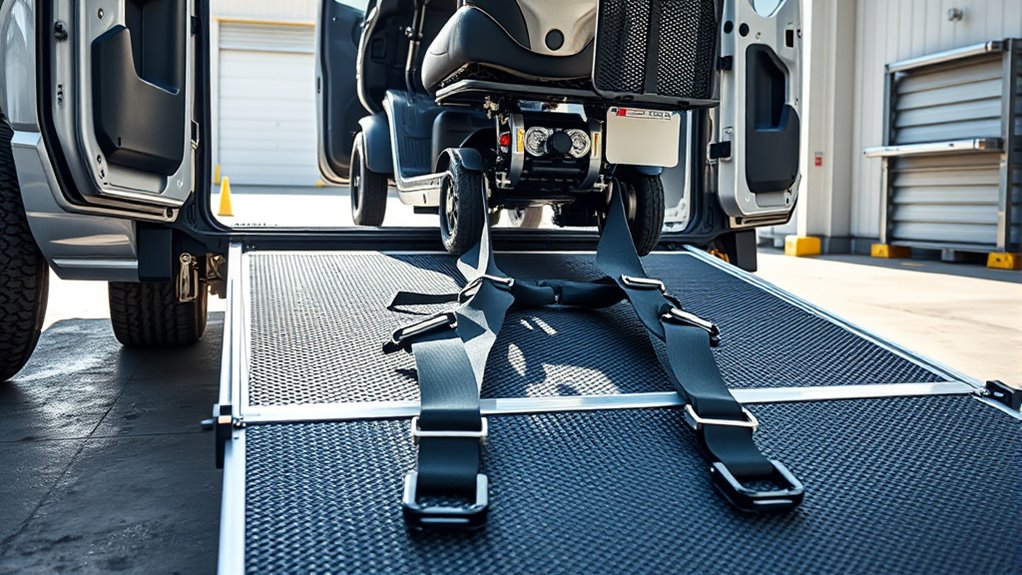

Mobility upfits like ramps, lifts, and tie-down systems help you convert standard vehicles into safe, accessible transportation for those with mobility challenges. Ramps provide a gentle slope for wheelchair entry, while lifts raise or lower mobility devices when space is limited. Tie-downs secure wheelchairs during transit, ensuring safety. Proper installation, regular maintenance, and understanding vehicle dimensions are key. Discover more about making vehicles truly accessible as you explore these essential components.
Key Takeaways
- Ramps provide gentle inclines for wheelchair access, with considerations for weight capacity, length, and material for safety.
- Lifts are mechanical devices that raise or lower mobility devices or passengers, ideal for vehicles with limited ground clearance.
- Tie-down systems secure wheelchairs during transit, preventing movement and injuries, and must be regularly inspected.
- Proper installation and maintenance of ramps, lifts, and tie-downs ensure vehicle safety, accessibility, and reliability.
- Understanding vehicle dimensions and safety features helps optimize the selection and use of mobility upfit components.
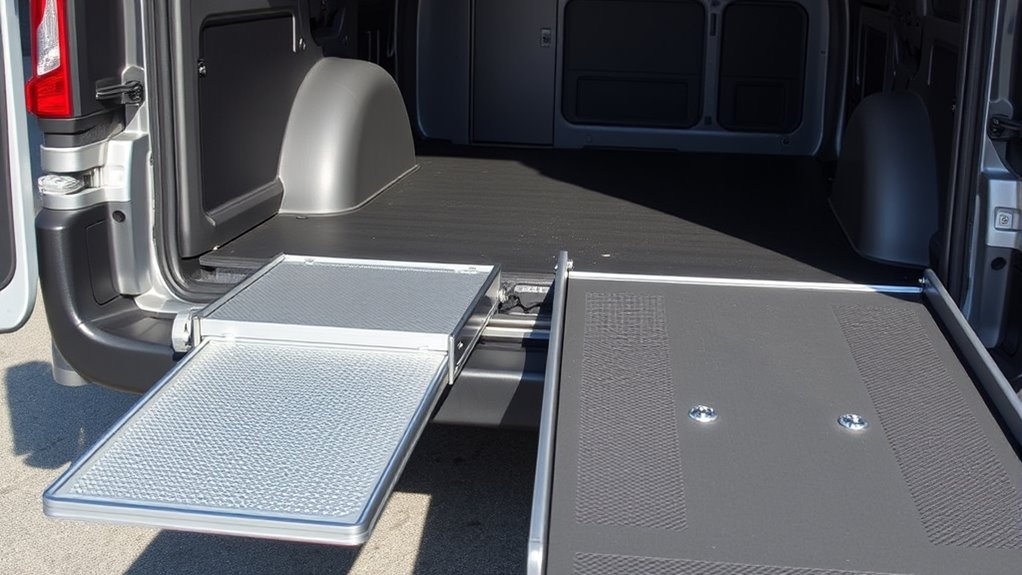
Mobility upfits transform standard vehicles into customized solutions that meet specific accessibility and operational needs. When you choose to add ramps, lifts, and tie-down systems, you’re making your vehicle more inclusive and functional for a wider range of users. These modifications are essential for guaranteeing safe and easy access for individuals with mobility challenges, whether it’s for personal use, transportation businesses, or medical services.
By understanding the basics of ramps, lifts, and tie-downs, you can make informed decisions that enhance safety and efficiency.
Ramps are among the simplest and most versatile mobility solutions. They provide a gentle incline that allows wheelchair users to enter and exit the vehicle comfortably. When selecting a ramp, consider its weight capacity, length, and material. Lightweight aluminum ramps are popular because they’re durable yet easy to handle. The length of the ramp impacts the slope; a longer ramp offers a gentler incline, reducing strain on users and making wheelchair navigation smoother. Proper installation is key—securely anchoring the ramp to the vehicle ensures stability and safety during use.
You should also account for the vehicle’s entry height and ensure the ramp’s angle doesn’t exceed safety recommendations to prevent accidents.
Lifts, on the other hand, are mechanical devices that physically raise and lower mobility devices or passengers. They’re especially useful for vehicles with limited ground clearance or when a ramp isn’t practical. There are two main types: platform lifts and hydraulic or electric lifts. Platform lifts raise the entire wheelchair and user to the vehicle’s interior level, providing a secure and stable platform during transit. These lifts typically have weight limits and safety features such as locking mechanisms and safety barriers.
When installing a lift, it’s essential to ensure it’s rated for the weight of the largest mobility device you plan to carry and that it’s properly maintained to prevent malfunctions.
Tie-down systems are critical for securing wheelchairs during transit. Properly installed tie-downs prevent movement that could cause injury or damage during sudden stops or accidents. You’ll want to use a combination of straps and docking systems designed specifically for wheelchair securement. The tie-downs should be anchored firmly to the vehicle’s frame, not just the floor, to ensure maximum stability.
Additionally, occupant restraint systems like seat belts or harnesses should be used alongside tie-downs for all-encompassing safety. Regular inspection and maintenance of these systems are essential because worn or damaged components can compromise safety.
A thorough understanding of vehicle dimensions and the use of vertical storage solutions can further enhance the safety and accessibility of your mobility upgrades.
In essence, mastering the basics of ramps, lifts, and tie-downs empowers you to create a vehicle that’s safer, more accessible, and better suited to your specific needs. Each component plays an indispensable role in ensuring that mobility isn’t just improved but also safe and reliable for everyone who uses the vehicle.
Frequently Asked Questions
What Are the Safety Standards for Mobility Upfits?
You should follow safety standards like the Americans with Disabilities Act (ADA) and manufacturer guidelines when installing mobility upfits. Confirm ramps have proper slope, sturdy handrails, and slip-resistant surfaces.
Lifts must be regularly inspected and maintained to meet safety requirements. Tie-downs should be secure without damaging the vehicle or wheelchair.
Always prioritize proper installation, routine checks, and adherence to local codes to keep users safe during transit.
How Do I Choose the Right Ramp or Lift for My Vehicle?
Choosing the right ramp or lift is like fitting a key to a lock—you need the perfect match. Consider your vehicle’s size and weight capacity first, then think about user mobility needs.
Measure your vehicle’s entry points and check for compatibility with different ramp types or lifts.
Look for safety features like non-slip surfaces and secure locking mechanisms.
Consulting with a mobility specialist guarantees you find a seamless, safe fit tailored to your needs.
What Maintenance Is Required for Mobility Equipment?
You should regularly inspect your mobility equipment for wear and damage, ensuring all components are secure and functioning properly.
Keep lifts and ramps clean and lubricate moving parts as recommended by the manufacturer.
Check tie-down straps for fraying or tears, and replace them if needed.
Test safety features like brakes and locks before each use.
Scheduling professional inspections annually helps catch issues early and keeps your equipment safe and reliable.
Are There Legal Requirements for Securing Wheelchairs?
Think of securing wheelchairs like anchoring a boat before a storm—you need sturdy, reliable ties. Legally, you’re required to use proper restraints and tie-downs that meet safety standards, such as those set by the ADA and FMVSS.
These rules make certain the wheelchair stays firmly in place during transit, preventing accidents. Always verify that your equipment complies with local laws and manufacturer guidelines to keep everyone safe.
How Long Does Installation of Mobility Upfits Typically Take?
Installation of mobility upfits usually takes between 4 to 8 hours. This timeframe depends on the complexity of the equipment and your vehicle’s make and model.
You might need more time if extensive modifications are required. It’s best to schedule the installation with a professional to guarantee everything’s done correctly and safely.
Be prepared for a possible follow-up appointment if adjustments or inspections are necessary afterward.
Conclusion
Now that you understand the essentials of ramps, lifts, and tie-downs, you’re better equipped to make safe, confident choices. Just as a sturdy foundation supports a soaring building, proper mobility upfits guarantee freedom and security on every journey. Remember, the right equipment isn’t just about compliance—it’s about empowering lives. So, embrace these basics with confidence, knowing you’re building a path of independence that’s as resilient as it is reliable.