To safely connect to 120V or 230V shore power, check your vessel or RV’s voltage and amperage ratings before plugging in. Use proper, grounded cords and adapters rated for the correct voltage to prevent electrical hazards. Always inspect cords for damage and turn off onboard systems before making connections. Installing surge protectors adds extra safety. For detailed guidance on handling different voltages and connections, continue exploring essential safety tips and best practices.

Get business pricing on garage and car supplies
- Business-only prices and quantity discounts
- Tax-exempt purchasing
- Multiple users, one account, clear invoices
Key Takeaways
- Verify vessel and dock outlet voltage ratings to ensure compatibility before connecting shore power.
- Use properly grounded, rated power cords with secure, tight connections to prevent hazards.
- Employ adapters and converters suitable for 120V or 230V to match regional power standards safely.
- Install surge protectors to guard against voltage spikes during shore power hookups.
- Follow safety procedures by turning off onboard systems before connecting or disconnecting shore power.
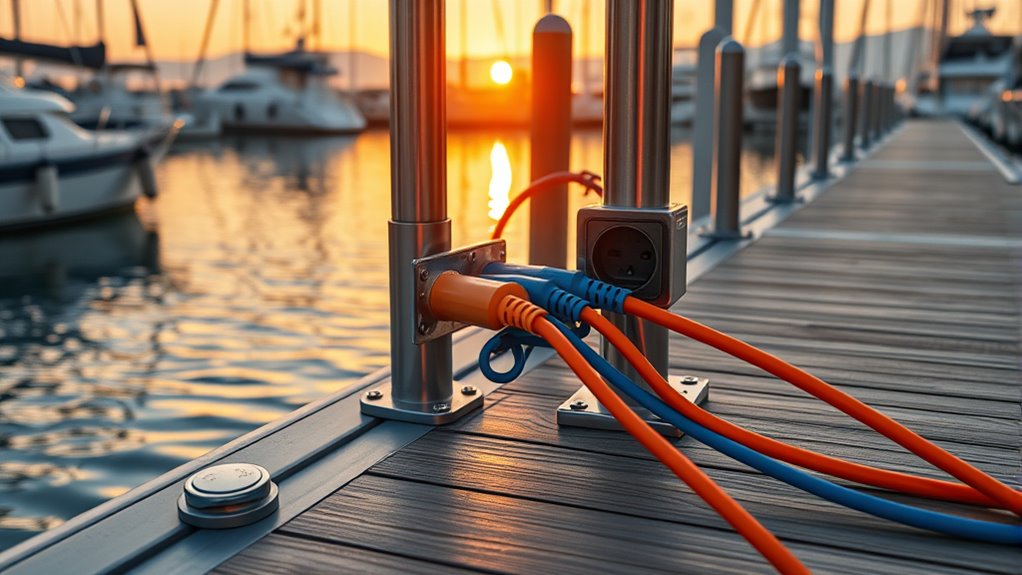
Shore power hookups allow boats and RVs to connect to electrical supplies at docks and campsites, providing a reliable source of power without running their engines or generators. This setup is vital for maintaining onboard systems, appliances, and comfort while minimizing noise and emissions.
To guarantee safe and efficient operation, understanding the integration of 120V and 230V systems is fundamental. These voltage levels are standard in many regions, with 120V common in North America and 230V prevalent in Europe and other parts of the world. Depending on where you travel or dock, you might encounter both, and knowing how to handle each safely makes a significant difference.
When connecting to shore power, verify the voltage and amperage ratings of both your vessel or RV and the dock’s power supply. Misalignment can lead to electrical issues or damage to your equipment. For example, plugging a 120V system into a 230V supply without proper adapters or converters can cause severe harm.
Conversely, using incorrect equipment can result in insufficient power, affecting your appliances or systems. Always check the labels on your shore power cord and the dock’s outlet to ensure compatibility.
Using a proper, grounded power cord is vital for safety. These cords typically feature a three-prong plug that connects to a grounded outlet, providing protection from electrical faults. When plugging in, ensure the connection is tight and secure, avoiding loose contacts that can spark or cause shorts.
It’s also wise to inspect your cord regularly for signs of wear or damage. If you notice cracks, frayed wires, or other issues, replace the cord immediately to prevent potential hazards.
Many docks and campsites provide different outlet types, such as NEMA 30A, 50A, or European-style sockets. Adapters can help bridge compatibility gaps, but always use them correctly and ensure they’re rated for the voltage and current you need.
Installing a surge protector is a smart move to safeguard your equipment from voltage spikes or electrical surges, especially during thunderstorms or unstable power conditions. These devices can prevent costly damage and give you peace of mind.
Finally, always follow safety procedures when connecting or disconnecting your shore power. Turn off your onboard systems before plugging or unplugging to prevent electrical shocks. Never force a plug into an outlet or bypass safety features.
Products Worth Considering

Autel Home EV Charger up to 50A J1772 Hardwired Level 2 Charger with 25 ft Cable

Autel MaxiCharger Level 2 EV Charger, 40A, 240V, Indoor/Outdoor, 25‑Foot Flexible Cable, NEMA 14‑50 Plug (White)

VIOFO A229 Pro 4K HDR Front and Rear Dash Cam
As an affiliate, we earn on qualifying purchases.
Frequently Asked Questions
Can Shore Power Systems Handle Simultaneous 120V and 230V Loads?
Yes, shore power systems can handle simultaneous 120V and 230V loads if they’re properly designed with separate circuits and appropriate safety devices.
You need a system that includes dual-voltage inverters, circuit breakers, and proper wiring to manage both voltages safely.
Always make certain your setup complies with electrical codes and manufacturer guidelines.
If you’re unsure, consult a qualified electrician to prevent overloads or electrical hazards.
What Are the Common Signs of a Faulty Shore Power Connection?
You might notice flickering lights, frequent breaker trips, or a burning smell, which often indicate a faulty shore power connection. Sometimes, it’s just a loose plug or corroded contacts causing the issue.
You should also check for discoloration or scorch marks on connectors. Ignoring these signs can lead to electrical damage or safety hazards, so always inspect your connection promptly and consider professional help if problems persist.
Is Additional Grounding Required for Mixed Voltage Hookups?
Yes, additional grounding is often required for mixed voltage hookups to guarantee safety. When connecting different voltage systems, you need to make sure the grounding is properly established to prevent electrical shocks or equipment damage.
Always follow manufacturer instructions and local electrical codes. If you’re unsure, it’s best to consult a qualified electrician. Proper grounding protects you and your equipment during shore power connections with mixed voltages.
How Often Should Shore Power Connectors Be Inspected or Replaced?
Think of your shore power connectors as the heartbeat of your vessel’s safety. You should inspect them at least once a season—spring and fall—and replace any that show signs of corrosion, cracks, or wear.
Regular checks keep your connection strong and reliable, preventing potential electrical storms. Don’t wait for a failure to act; stay vigilant and guarantee your power link remains as trustworthy as the steady tide.
Are There Specific Safety Protocols for Outdoor or Wet Environments?
Yes, you should follow specific safety protocols for outdoor or wet environments. Always verify connectors are rated for outdoor use and are properly sealed to prevent water ingress. Use ground fault circuit interrupters (GFCIs) to protect against electrical shocks.
Keep connectors dry, inspect regularly for damage, and avoid connecting or disconnecting in wet conditions. Wearing insulated gloves and using equipment with weatherproof covers enhances safety in such environments.
Conclusion
By ensuring your shore power hookups are safe and properly integrated, you’re not just plugging in; you’re opening the door to worry-free adventures. Think of it as a trusted lighthouse guiding your vessel safely through unpredictable waters. When you prioritize safety and follow best practices, you’re anchoring your journey in peace of mind. So, stay vigilant, respect the currents of electricity, and let your voyages be as smooth as calm seas.