
To choose the right recovery winch, honestly assess your typical recovery scenarios—whether you face mud, snow, or rocky terrain—and match the winch’s capacity and line length to those needs. Avoid overspending on features you won’t use often, and make certain compatibility with your vehicle’s power source. Prioritizing safety protocols and regular maintenance will save you trouble later. For more detailed guidance tailored to your specific needs, explore further.

Get business pricing on garage and car supplies
- Business-only prices and quantity discounts
- Tax-exempt purchasing
- Multiple users, one account, clear invoices
Key Takeaways
- Assess the typical recovery scenarios to determine the appropriate winch capacity and features needed.
- Consider environmental factors and ecosystem sensitivities to choose eco-friendly recovery practices.
- Ensure safety protocols are prioritized, including proper anchoring and protective equipment.
- Match the winch’s line length and power source compatibility to the vehicle’s specifications.
- Regularly inspect and maintain equipment to prevent failures and ensure safe operation during critical recoveries.

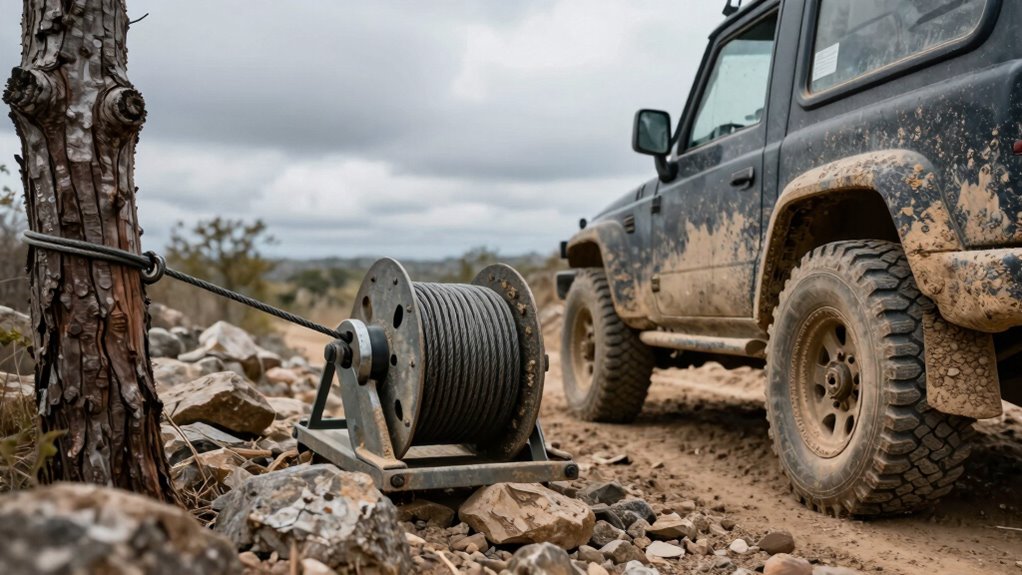
Have you ever wondered how to choose the right recovery winch for your vehicle? It’s a question that demands honest use-case thinking because selecting the wrong winch can lead to safety hazards or equipment failure. Before making a purchase, consider what kind of recovery scenarios you most often face. Are you pulling yourself out of mud, snow, or rocky terrain? Will you be using the winch for lightweight tasks or heavy-duty recoveries? Your answers will guide you toward the appropriate capacity, line length, and features. For example, a winch with a capacity too low for your typical recovery load can be dangerous, risking equipment damage or injury. Conversely, overspending on a high-capacity winch for minor tasks isn’t cost-effective or practical. When evaluating winch features, consider power source and compatibility with your vehicle to ensure optimal performance.
Once you’ve selected the right winch, understanding winch safety becomes vital. Operating a winch improperly can lead to serious accidents, so always follow safety protocols. Never stand in the line of the cable when pulling; always keep bystanders clear and wear gloves to protect your hands. Using a winch with a proper dampening blanket or a winch line dampener is essential to absorb energy if the cable snaps, preventing injury. Properly anchoring your vehicle and ensuring the winch’s mounting point is secure are also key safety measures. If you’re unsure about your setup, consult the manufacturer’s guidelines or seek expert advice. Regularly inspecting and maintaining your winch is equally important to guarantee it functions safely when needed. Maintenance tips include checking the cable for frays or kinks, cleaning and lubricating moving parts, and testing the brake system periodically. Keep the winch’s electrical connections clean and tight to avoid malfunction during critical moments. Additionally, understanding the importance of biodiversity can influence where and how you recover your vehicle, ensuring you minimize environmental impact during recovery operations. Being aware of your environment and its ecosystem can help you plan safer and more environmentally conscious recovery efforts. Incorporating environmentally friendly practices into your recovery routine can also prevent damage to sensitive habitats and promote sustainable outdoor recreation. Recognizing environmental impact as a factor in recovery planning encourages responsible use of resources and helps preserve natural areas for future use.
Remember that a well-maintained winch not only extends its lifespan but also guarantees your safety during recovery operations. Proper maintenance and adherence to safety guidelines reduce the risk of accidents and equipment failure, especially when you’re under pressure in recovery situations. Think about your specific needs and environment before using your winch, and always prioritize safety over convenience. This honest approach to use-case thinking ensures you select the right equipment, operate it safely, and maintain it properly, making every recovery safer and more effective. Ultimately, understanding these aspects helps you make smarter decisions about your recovery gear, giving you peace of mind whenever you’re tackling challenging recovery scenarios.
Products Worth Considering

Chemical Guys 14-Piece Arsenal Builder Car Wash Kit with Foam Blaster

DEWALT 20V MAX Drill and Impact Driver Combo Kit (DCK240C2)

DEWALT 20V MAX XR 1/2-Inch Cordless Impact Wrench Kit (DCF900P1)
As an affiliate, we earn on qualifying purchases.
Frequently Asked Questions
What Are the Most Common Recovery Winch Failure Modes?
You often face failure modes like cable fraying, motor overheating, and solenoid issues. To prevent these, prioritize regular winch maintenance, checking for wear and corrosion, especially after exposure to harsh environments. Neglecting maintenance can increase environmental impact through oil leaks or broken parts. Always inspect components, keep everything clean, and replace worn parts promptly. Proper care reduces failure risks and minimizes environmental harm, ensuring your winch performs safely and reliably.
How Does Winch Type Affect Recovery Effectiveness?
Think of your winch as a trusted friend whose strength depends on its type. Synthetic rope winches are lighter and easier to handle, offering quick recovery but needing careful winch maintenance. Steel cable winches are robust and reliable, ideal for heavy-duty tasks. The choice influences effectiveness, so select the right winch type, and don’t forget to upgrade winch accessories and perform regular maintenance to guarantee peak performance during recovery missions.
What Safety Precautions Should Be Taken During Winching?
You should always wear gloves and eye protection to prevent injuries during winching. Keep your hands clear of moving parts and never stand directly in line with the cable’s pull path. Regular winch maintenance guarantees it functions properly, reducing risks. Additionally, incorporate emergency preparedness by having a backup plan and communication devices ready. Check the winch, cable, and anchoring points beforehand, and never operate alone for added safety.
How to Determine the Appropriate Winch Capacity for My Vehicle?
Think of choosing a winch capacity as matching a key to a lock—your vehicle’s weight is the lock’s size. To determine the right capacity, consider your vehicle’s gross weight plus potential snatch loads. When doing winch installation, make sure it’s rated for that weight, and perform regular winch maintenance for safety and efficiency. A properly matched, well-maintained winch keeps you safe and ready for any recovery challenge.
Are There Legal Restrictions on Winching in Certain Areas?
Yes, legal restrictions and regional regulations do limit winching activities in certain areas. You should always check local laws before using your winch, as some regions ban winching on public land or require permits. Off-road parks or protected areas often have specific rules to prevent environmental damage or safety issues. Ignoring these regulations can lead to fines or other penalties, so always do your research beforehand.
Conclusion
Imagine your recovery winch as a sturdy lighthouse guiding stranded ships safely to shore. Its true power lies in honest, deliberate use—lighting the way through thick fog, not for reckless displays. When you understand your needs and respect the tool’s strength, you prevent storms and steer clear of wreckage. So, embrace this beacon with integrity, knowing that your careful approach keeps everyone safe, just like a lighthouse defending its harbor against the darkest night.