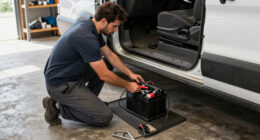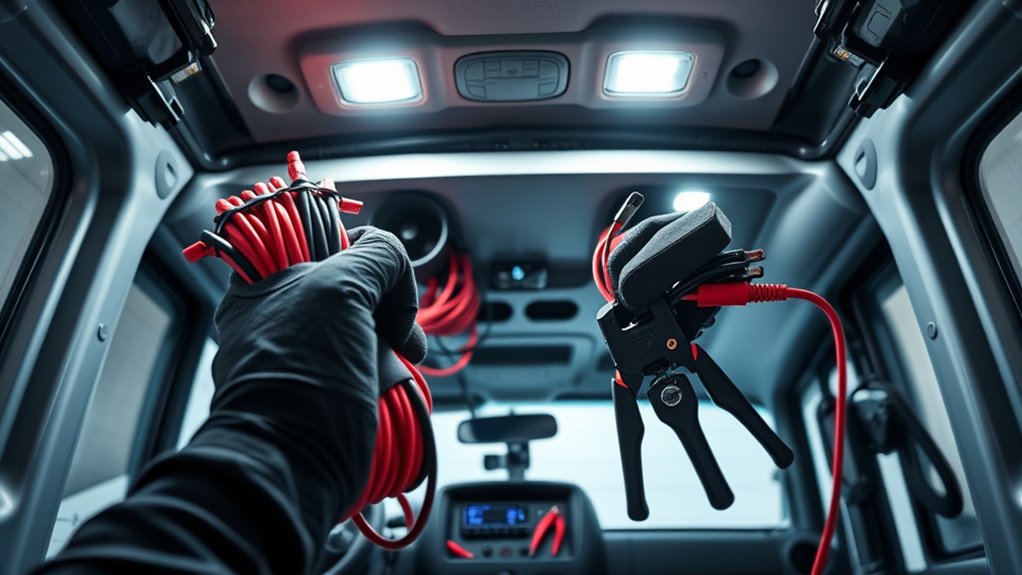

To wire upfit equipment safely in your Ford Transit, use the vehicle’s auxiliary switch system by tapping into the factory-controlled circuits that provide 12V power with built-in fuses and relays. Guarantee you select the correct power sources—like the auxiliary switches or properly fused battery taps—and use the right wiring techniques, such as crimp terminals and protective conduits. Following safety standards and proper installation steps helps prevent issues; explore further to learn detailed wiring best practices.

Get business pricing on garage and car supplies
- Business-only prices and quantity discounts
- Tax-exempt purchasing
- Multiple users, one account, clear invoices
Key Takeaways
- Use Ford’s auxiliary switch system with proper fusing to control auxiliary loads and prevent battery drain.
- Tap power directly from the battery using correctly rated cables and protective fuses for safety.
- Employ Motorcraft wiring pigtails and suitable terminals to ensure secure, corrosion-resistant connections.
- Route wiring away from moving parts, heat sources, and fuel lines, securing with clips or ties for strain relief.
- Follow industry safety standards and manufacturer guidelines, inspecting connections regularly for corrosion or looseness.
Products Worth Considering

DEWALT 20V MAX 1/4-Inch Impact Driver Kit with Battery and Charger (DCF787D1)
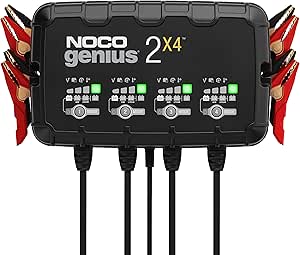
NOCO GENIUS2X4 6V/12V Four-Bank Battery Charger and Maintainer

NOCO Boost GBX75 2500A UltraSafe Jump Starter, 12V Lithium Battery Booster
As an affiliate, we earn on qualifying purchases.
Understanding the Ford Transit Auxiliary Switch System
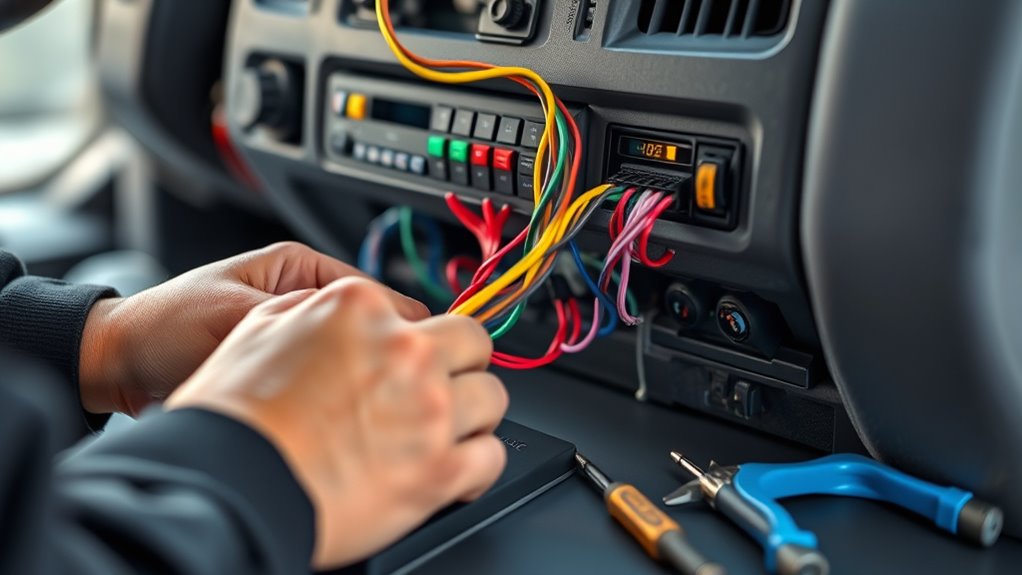
Understanding the Ford Transit Auxiliary Switch System is key to safely and effectively adding or modifying accessories. These switches activate only when your ignition is in the “run” position, preventing battery drain. Each switch supplies a maximum of 12V and 20 amps, controlling various auxiliary loads like lights, winches, or compressors. The on/off function is simple, with indicator lights in the center console to show status. Outputs pass through fuses and relays for protection and control, ensuring safety during operation. To access the switch outputs, you’ll need to remove the driver’s seat and battery box lid, as the C33-H connector is tucked deep within wiring bundles. Using the proper wiring pigtails and OEM parts guarantees a clean, reliable setup aligned with factory standards.
Selecting the Right Power Sources for Upfit Equipment
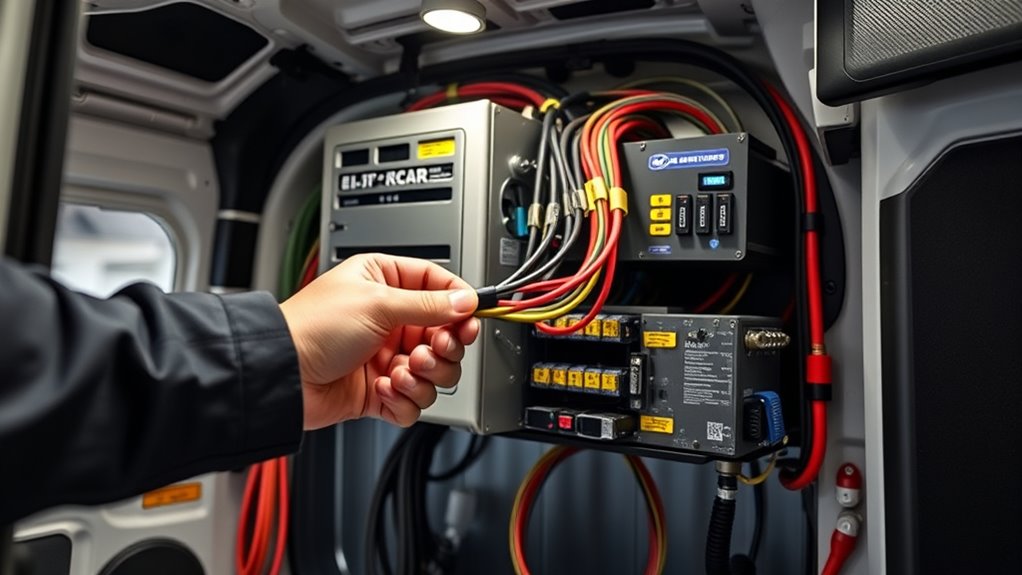
Choosing the right power source for your upfit equipment is essential to guarantee safe and reliable operation. For moderate loads like LED lights or small compressors, Ford Transit auxiliary switches provide 12V/20A output, controlled by ignition, making them ideal. For heavier or continuous loads, tapping directly into the battery terminals is possible but requires proper fusing and cable sizing to prevent damage or fire. Alternator outputs can also supply power but should be used with caution, considering the alternator’s capacity to avoid battery drain or overheating. Installing dedicated power distribution blocks near the battery helps manage multiple circuits safely with fuses. Using relay-controlled circuits allows safe switching of high-current devices through low-current controls, reducing wiring stress. Always calculate total load and use appropriately gauged wiring to maintain voltage and safety. Additionally, understanding electrical load management is crucial to prevent overloading circuits and ensuring the longevity of your system. Incorporating AI-driven insights can enhance system monitoring and optimize power distribution for complex upfit configurations. Proper planning of power sources and load distribution can also help minimize potential system failures and extend the lifespan of your electrical setup.
Proper Wiring Techniques and Connection Methods
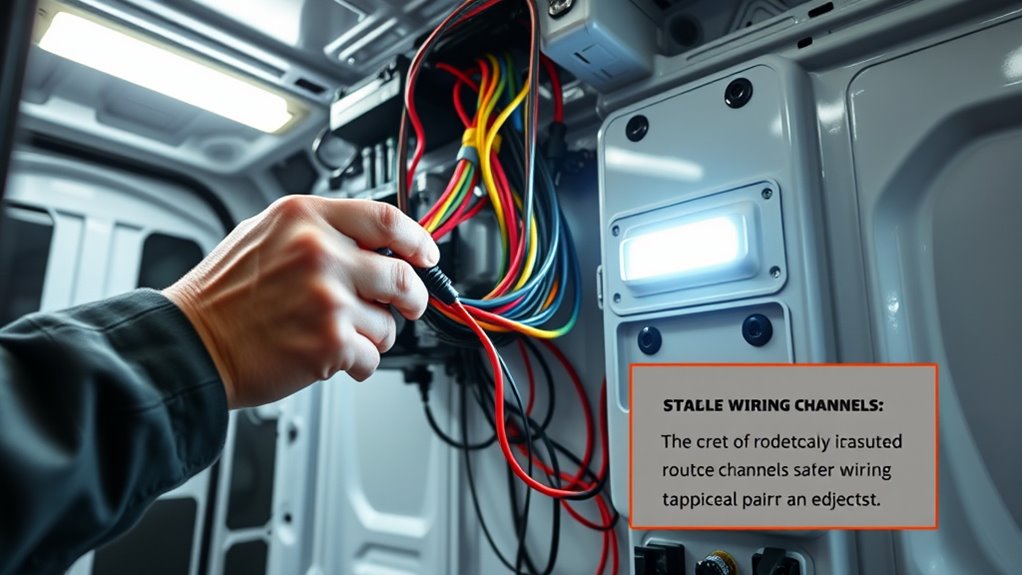
Proper wiring techniques and connection methods are essential to guarantee a safe, reliable, and maintainable upfit system. You should use the Motorcraft Upfitter Switch Wiring Pigtail (Part WPT-1408) for proper connections to the C33-H connector. Choose suitable terminal types like crimp splices, shrink tubes, or female quick-release terminals to ensure future serviceability. Use 14 AWG male tab wire connectors for secure fit into C33-H slots while maintaining wire gauge compatibility. Route wiring away from moving parts and heat sources to prevent damage or shorts. Maintain proper strain relief by securing wires with clips or ties to avoid vibration fatigue and connector loosening. Regularly inspect connections for corrosion or looseness, ensuring ongoing system safety and performance.
Ensuring Safety and Compliance During Installation
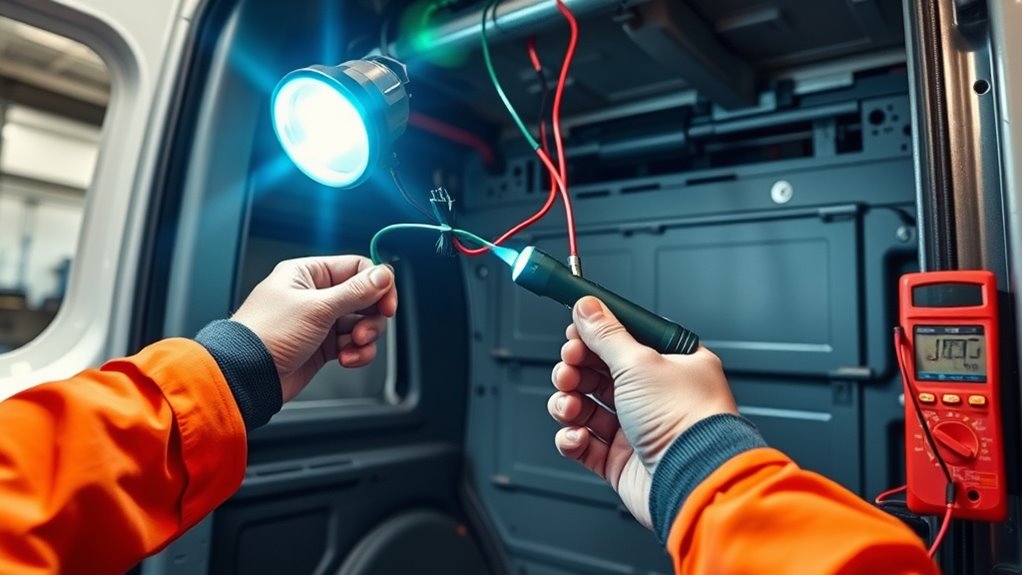
Ensuring safety and compliance during installation is critical to prevent accidents, avoid fines, and maintain vehicle reliability. You must follow DOT and industry safety standards, working with certified upfitters who adhere to manufacturer guidelines. Regular inspections verify that wiring and equipment remain secure and meet safety regulations. Properly secured and insulated wiring minimizes risks like shorts, corrosion, or damage from movement or contact with sharp edges. Use the correct wire gauge and protective conduits, especially near heat sources or fuel lines. Carefully review manufacturer manuals and upfit specifications before installation to ensure all components are compatible and safety features are incorporated. Engaging knowledgeable personnel helps identify hazards early. Additionally, understanding electrical safety standards is essential to prevent potential hazards during and after installation. Proper wiring techniques and adherence to safety protocols are vital for ensuring long-term reliability and safety of the vehicle’s electrical system. Following these steps guarantees your installation remains compliant, safe, and reliable for ongoing use. Proper wiring techniques are essential to avoid electrical failures and costly repairs down the line, especially when considering proper storage of electrical components to maintain their integrity over time.
Troubleshooting Common Power Tapping Issues

Troubleshooting common power tapping issues often involves examining the physical connections for signs of wear or damage. When troubleshooting common power tapping issues, the first step is to identify poor or loose connections that can cause intermittent power loss or faults. Check under the driver seat wiring harness for loose contacts, especially at tap points and fuse terminals. Look for corrosion that creates voltage drops and causes erratic accessory behavior. Ensure ring terminals on battery taps are tightened properly to prevent arcing or resets. Verify that the correct wire gauge is used to reduce resistance and heat buildup. Proper automation technologies enable scalability and flexibility in vehicle systems, so ensuring wiring integrity is crucial. Proper connection integrity is essential for reliable power delivery in complex vehicle systems. Additionally, inspecting splices for proper insulation helps prevent short circuits, especially in tight engine bay spaces. Using high-quality connectors and regular maintenance can further improve overall system reliability.
Frequently Asked Questions
Can I Tap Into Existing Factory Wiring Without Voiding My Warranty?
Yes, you can tap into existing factory wiring without voiding your warranty if you avoid cutting or permanently altering the wires. Use fuse taps or add circuits that connect without severing the factory wiring. Always document your work, opt for Ford-approved accessories, and consult your dealer beforehand. This careful approach helps guarantee your modifications stay within warranty coverage while providing the power you need.
What Is the Maximum Current Rating for the Auxiliary Switches in the Ford Transit?
You should know that each auxiliary switch in your Ford Transit is designed to handle a maximum of 20 amps. While some models or sources might suggest higher ratings, official specifications confirm that the safe limit remains at 20 amps per switch. Pushing beyond this rating risks damaging your vehicle’s electrical system. To keep everything running smoothly, consider using relays or direct battery connections for higher loads.
Are There Specific Tools Recommended for Safe Wiring Modifications?
You should use crimping tools designed for insulated and non-insulated terminals, along with connectors like quick-release terminals and lever nuts for secure connections. A digital multimeter and circuit testers help verify correct wiring and circuit integrity. Use vehicle-specific wiring harnesses and fuse holders for compatibility and safety. Protect your wiring with heat shrink tubing, wire loom, and proper organization tools like cable ties to guarantee a safe, reliable installation.
How Do I Identify the Correct Wires to Tap Into for Power?
To identify the right wires, start by using a multimeter or test light to check for voltage only when the ignition is on, indicating switched power. Trace wires visually behind panels or under seats, focusing on auxiliary switch harnesses and fuse boxes. Confirm wire functions with factory wiring diagrams, ensuring you’re tapping into protected circuits. Always disconnect the battery before testing and handling wires to stay safe during the process.
Is It Safe to Use Quick-Disconnect Terminals for All Connections?
Using quick-disconnect terminals for all connections is like trusting a fortress with paper walls—it’s not always safe. They’re great for low to moderate currents and easy maintenance, but they can’t handle high loads or harsh environments reliably. Always match the terminal’s ratings, use OEM-style connectors with locking features, and inspect regularly. This guarantees your wiring stays secure, safe, and durable, preventing failures that could be costly or dangerous.
Conclusion
Think of wiring your Ford Transit’s upfit equipment like tending a garden—you need the right connections, careful planning, and attention to safety. When I first started, I learned that rushing could cause shorts or failures, much like weeds choking a healthy plant. By following proper techniques, you guarantee your system thrives and lasts. Remember, a well-wired vehicle isn’t just safer; it’s like a flourishing garden—resilient and ready to grow.