Auxiliary alternators give you extra charging power to support large electrical setups during big conversions. They work alongside your main alternator, ensuring your batteries stay charged even under heavy loads like multiple batteries or high-powered electronics. Proper wiring, sizing, and safety measures are key to their effectiveness. If you’re looking to keep your system reliable and efficient, understanding how auxiliary alternators enhance your setup can make a big difference—keep exploring to learn more.

Get business pricing on garage and car supplies
- Business-only prices and quantity discounts
- Tax-exempt purchasing
- Multiple users, one account, clear invoices
Key Takeaways
- Auxiliary alternators provide additional charging capacity to support large battery banks and high-demand electronics during big conversions.
- Proper wiring and safety measures ensure reliable operation and prevent electrical failures or fire hazards.
- They help maintain battery charge levels during extended heavy use, preventing drain and ensuring system longevity.
- Correct sizing of the auxiliary alternator to your batteries optimizes performance and system reliability.
- Using quality components and professional installation enhances safety, durability, and overall effectiveness of the power system.
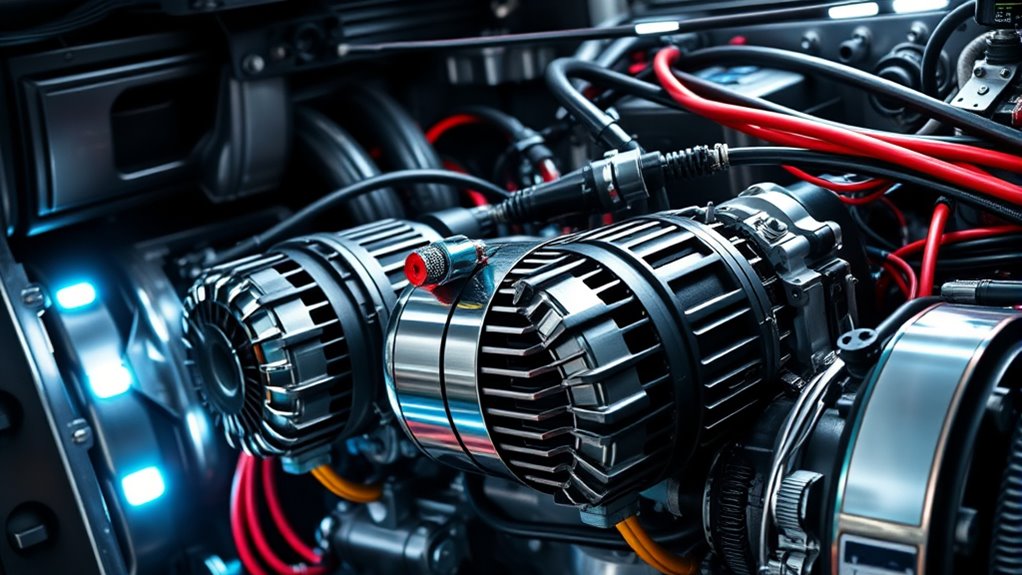
An auxiliary alternator is a backup power source that works alongside your vehicle’s main alternator to guarantee a steady supply of electrical energy. If you’re undertaking a big conversion—like adding multiple batteries, high-powered electronics, or specialized equipment—you’ll quickly realize that your factory alternator alone might not keep up. That’s where an auxiliary alternator comes in, providing extra charging power to ensure your batteries stay topped off and your electronics function smoothly. When considering this upgrade, understanding how it impacts your battery capacity and wiring configurations is essential.
Your battery capacity determines how much energy your system can store and use. Larger or additional batteries require more charging power to maintain their charge, especially when running heavy loads. An auxiliary alternator is designed to handle this increased demand, making sure your batteries don’t drain prematurely. Properly sizing the auxiliary alternator to match your battery capacity is critical; if it’s too small, your batteries won’t get fully charged, risking depletion. Conversely, a correctly matched auxiliary alternator will keep your entire electrical setup energized and reliable, even during extended use or heavy draw scenarios.
Matching your auxiliary alternator size to your battery capacity ensures reliable, efficient power for heavy loads and extended use.
Wiring configurations are equally important to optimize the auxiliary alternator’s performance. You need to plan how it connects to your existing electrical system, ensuring that the wiring can handle the current without overheating or causing voltage drops. Typically, you’ll wire the auxiliary alternator in parallel with your main alternator, using heavy-gauge cables to minimize resistance. Proper fuse placement and circuit breakers are essential safety components that protect your system from overloads. Additionally, integrating a smart isolator or a battery management system can help balance charging between multiple batteries, preventing one from being overcharged while others remain undercharged. High-quality components are vital for ensuring durability and optimal performance of your electrical system.
Installation isn’t just about plugging in a new alternator; it’s about configuring your wiring for maximum efficiency and safety. You might need to modify your existing wiring harnesses or add new connectors to ensure proper connections. Keeping everything organized and secure prevents potential electrical failures or fire hazards. Consulting a professional or detailed wiring diagram can save you time and money in the long run. Properly planning your electrical setup can significantly enhance system reliability and safety. It’s also important to consider ventilation considerations to prevent overheating of electrical components during operation. Remember, the goal is to create a seamless, reliable power system that supports your big conversion without adding complexity or risking damage.
Ultimately, an auxiliary alternator is a powerful upgrade for your vehicle’s electrical system. It ensures your battery capacity is adequate for your needs and that wiring configurations are optimized for safety and performance. With the right setup, you’ll enjoy a stable, reliable power supply—perfect for those extensive conversions that demand more from your vehicle’s electrical system. Additionally, understanding the importance of high quality components can significantly enhance the longevity and efficiency of your electrical system.
Products Worth Considering

DEWALT 20V MAX 1/4-Inch Impact Driver Kit with Battery and Charger (DCF787D1)

Chemical Guys 14-Piece Arsenal Builder Car Wash Kit with Foam Blaster

DEWALT 20V MAX XR Impact Driver, 1/4 Inch High Torque Brushless 3-Speed Cordless with LED Light, Extended Runtime (DCF845B)
As an affiliate, we earn on qualifying purchases.
Frequently Asked Questions
How Do Auxiliary Alternators Impact Overall Vehicle Fuel Efficiency?
Auxiliary alternators can slightly reduce your vehicle’s fuel efficiency because they increase energy consumption by providing extra charging power. While they supply more power for accessories or conversions, they also put additional load on the engine, which may cause it to work harder. However, if managed properly, their impact on overall fuel efficiency remains minimal, especially compared to the benefits of supporting larger electrical systems.
Can Auxiliary Alternators Be Installed on All Vehicle Types?
You can’t install auxiliary alternators on all vehicle types, as vehicle compatibility varies. Some vehicles, especially those with limited space or complex electrical systems, face installation challenges. Before proceeding, check your vehicle’s specifications and consult a professional to guarantee proper fit and wiring. While auxiliary alternators are great for larger conversions, they may not suit every vehicle, so careful assessment is essential for a successful upgrade.
What Is the Typical Lifespan of an Auxiliary Alternator?
A stitch in time saves nine—your auxiliary alternator typically lasts about 80,000 to 150,000 miles, depending on usage and maintenance. You can expect good battery longevity if you keep it well-maintained, but neglect might lead to earlier replacement costs. Regular inspections help extend its lifespan, ensuring reliable power for your vehicle’s enhanced systems and avoiding unexpected breakdowns. Proper care keeps your investment running smoothly longer.
Are Auxiliary Alternators Compatible With Modern Vehicle Electrical Systems?
Yes, auxiliary alternators are compatible with modern vehicle electrical systems. They integrate well with existing electrical setups, especially when considering your battery capacity and overall electrical integration. You’ll need to guarantee your vehicle’s wiring and charging system support the auxiliary unit, but most modern systems are designed for such upgrades. Proper installation allows for seamless power distribution, helping you maintain ideal battery health and power supply during heavy electrical loads.
How Much Maintenance Do Auxiliary Alternators Require Over Time?
You should expect to perform maintenance on auxiliary alternators regularly, typically every 10,000 to 15,000 miles or once a year, depending on usage. Keep an eye on wear and tear, like belt condition and wiring connections, to prevent issues. Regular inspections help catch problems early, ensuring your auxiliary alternator continues to provide extra charging power reliably without unexpected breakdowns. Proper maintenance keeps it running smoothly over time.
Conclusion
Think of auxiliary alternators as the steady heartbeat behind your big conversion, quietly fueling your journey’s rhythm. They symbolize resilience, offering extra charging power when your main source falters, ensuring your adventure never stalls. With this dependable companion, you carry not just extra energy, but a promise of endurance and reliability. Embrace their silent strength, and let your transformation flow seamlessly—an ongoing symphony of power that keeps your voyage alive and thriving.