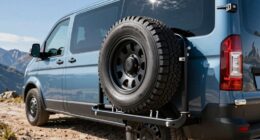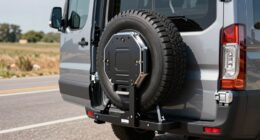
To set up your transit as a mobile workshop, start by selecting a vehicle that fits your trade needs and guarantees safety compliance. Customize the interior with sturdy shelving, secure storage, and workbenches for easy access and workflow efficiency. Incorporate modern safety features like backup cameras and secure all tools to prevent shifting. Regularly inspect and maintain safety equipment, lighting, and ventilation. If you continue, you’ll discover detailed steps to optimize safety and productivity for your mobile workspace.
Key Takeaways
- Select a suitable van or truck based on your trade’s size and equipment needs.
- Install secure shelving, workbenches, and proper layout for efficient workflow.
- Incorporate safety features like backup cameras, secure tool anchoring, and interior lighting.
- Equip the workshop with fire extinguishers, first-aid kits, and proper ventilation for safety.
- Perform regular maintenance and inspections to ensure ongoing safety and compliance.
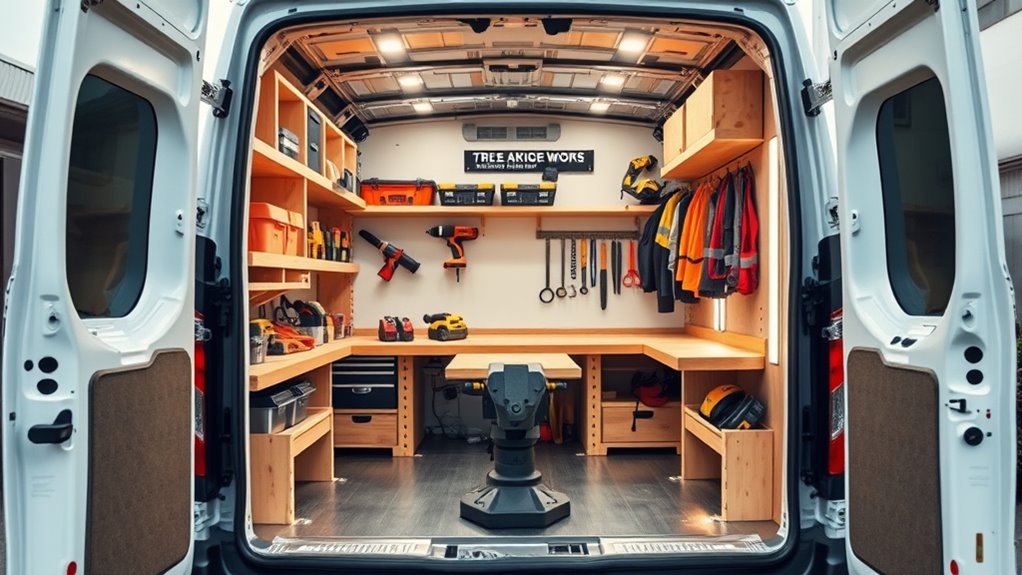
Ever wondered how to efficiently set up a mobile workshop that meets your needs on the go? The key lies in proper vehicle customization. You’ll want to start by selecting a vehicle that suits your trade, whether it’s a van, truck, or a specialized cargo van. Once you’ve chosen the right base, customizing the interior becomes essential. Think about installing sturdy shelving, secure storage compartments, and workbenches tailored to your tools. This guarantees everything has a designated place, reducing clutter and increasing efficiency. When customizing, consider your workflow—placing frequently used tools within easy reach and ensuring heavier equipment is securely fastened to prevent shifting during transit. A well-thought-out layout minimizes setup time at each job site and boosts productivity. Incorporating modern safety features such as backup cameras and sensors can further enhance operational safety during transit. Additionally, understanding vehicle safety standards during customization ensures your setup complies with regulations and enhances overall safety. It’s also beneficial to research cost-effective solutions that can help you maximize your budget without compromising quality.
However, as you modify your vehicle, safety considerations must be front and center. Vehicle customization isn’t just about adding storage or work surfaces; it’s also about guaranteeing the setup is safe for both transport and operation. Securely anchoring all tools and equipment is essential to prevent accidents caused by shifting loads. Additionally, you should install proper lighting inside the vehicle so you can work comfortably and safely, even in low-light conditions. Ventilation is another critical factor—if you handle fumes or dust, make sure your vehicle has adequate airflow. Installing fire extinguishers and first-aid kits within easy reach is a smart move, as safety equipment should be readily accessible in emergencies. Being aware of contrast ratio and lighting conditions inside the vehicle can help you optimize visibility and safety during work. Regular maintenance and inspections are also indispensable to identify potential safety hazards early, such as loose fixtures or damaged wiring, aligning with safety checklists recommended for vehicle modifications.
Frequently Asked Questions
How Much Does a Custom Mobile Workshop Typically Cost?
A custom mobile workshop typically costs between $10,000 and $50,000, depending on your needs and upgrades. You should start with a solid cost estimation and budget carefully, considering materials, equipment, and installation. Budgeting tips include prioritizing essential features first and exploring options for DIY upgrades or used parts to save money. Planning ahead helps make certain you stay within your budget while creating a highly functional mobile workspace.
What Are the Best Vehicle Types for Conversion?
You should consider vans like Sprinters or Transits for conversion, as their vehicle dimensions offer ample space for tools and work areas. These models also tend to have fewer conversion challenges due to their straightforward layouts. Look for a vehicle with high roof options and wide doors, which make modifications easier. Choosing the right vehicle guarantees you maximize space and minimize difficulties during your mobile workshop setup.
How Do I Secure Tools During Transit?
To secure your tools during transit, you should invest in sturdy lockable storage compartments and use anti-slip mats to prevent movement. Implement tool security by locking cabinets and using cable locks for larger items. Regularly check your transit safety measures to guarantee tools stay in place. By doing so, you protect your equipment and reduce the risk of accidents, keeping your mobile workshop efficient and safe on the road.
What Permits or Regulations Are Required?
Imagine your transit is a rolling fortress, ready to hit the road. You’ll need vehicle licensing to prove it’s roadworthy, and safety compliance to meet legal standards. Check local regulations for permits like commercial vehicle permits, and guarantee your setup passes safety inspections. Staying compliant isn’t just paperwork; it’s your shield against fines and delays, keeping your mobile workshop rolling smoothly and legally wherever you go.
How Can I Optimize Space for Different Trades?
To optimize space for different trades, focus on smart storage solutions and layout optimization. Use modular shelves, pull-out drawers, and wall-mounted racks to maximize vertical space. Arrange tools and equipment by frequency of use, keeping essentials within easy reach. Consider adjustable partitions to customize areas for specific trades. This approach keeps your mobile workshop organized, efficient, and adaptable, ensuring you can quickly switch between tasks without wasting space.
Conclusion
Now, with your transformed transit, you’re unstoppable—like a moving fortress of productivity on wheels, ready to conquer any job in the blink of an eye. Imagine the endless possibilities, the jobs you’ll finish faster than ever, and the pride you’ll feel knowing you’ve got a mobile workshop that’s a true game-changer. This isn’t just a van; it’s your ultimate tool for domination. Gear up, hit the road, and turn every day into a legendary success story!