
When choosing a bed design for your van build, consider your space, lifestyle, and flexibility needs. Fixed beds offer stability and added storage, perfect for long-term use. Foldable beds save space and provide versatility for other activities. Convertible beds combine seating and sleeping options, ideal for maximizing small areas. Each style affects insulation, comfort, and functionality—you’ll find helpful tips on these options as you explore further.
Key Takeaways
- Fixed beds provide stability and built-in comfort, ideal for long-term van dwellers seeking simplicity.
- Foldable beds maximize space by transforming into living or storage areas, perfect for small or multi-use vans.
- Convertible beds combine sleeping and seating functions, offering multifunctionality for versatile van setups.
- Insulation choices differ: fixed beds suit foam board or spray foam, while foldable and convertible beds benefit from lightweight, removable insulations.
- Your selection depends on space, lifestyle, and travel needs, balancing convenience, flexibility, and comfort.
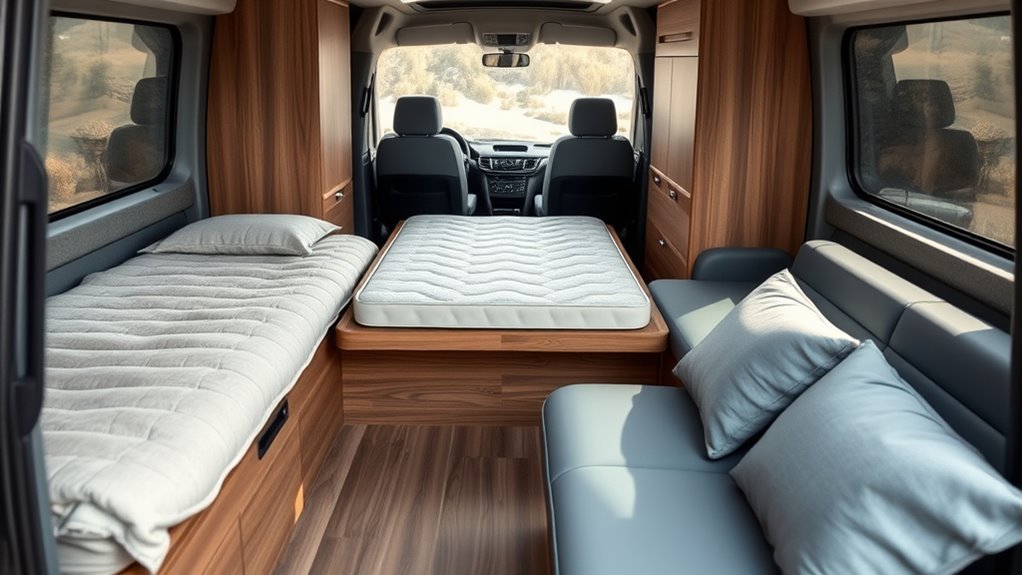
When planning a van build, choosing the right bed design is essential for maximizing space, comfort, and functionality. Your decision impacts how well you utilize storage solutions, how easy it is to move around inside the van, and how comfortable you’ll feel sleeping in your converted space. Fixed beds are straightforward—they’re built-in, permanent fixtures that provide a solid sleeping surface. They often come with integrated storage underneath, which is a huge plus for maximizing your van’s limited space. When selecting insulation materials for a fixed bed setup, consider options that help regulate temperature and reduce noise, such as foam board or spray foam. These materials also contribute to a more comfortable sleeping environment by maintaining consistent temperatures and dampening outside sounds. Incorporating proper insulation choices can greatly improve your overall comfort and energy efficiency.
Foldable beds offer flexibility, allowing you to transform your sleeping area into additional living or storage space during the day. These designs typically involve a mattress that folds in half or into thirds, stored against the wall or in a dedicated cabinet when not in use. With foldable beds, you can free up floor space for activities or to access other storage compartments, making your van more adaptable to different needs. When choosing insulation materials for foldable beds, you’ll want to guarantee the mattress and surrounding areas are well-insulated to prevent cold spots and condensation, especially since foldable mechanisms often involve moving parts and exposed areas. Using lightweight yet insulating materials like reflective foams or thermal pads can help keep your sleeping area warm without adding excessive weight.
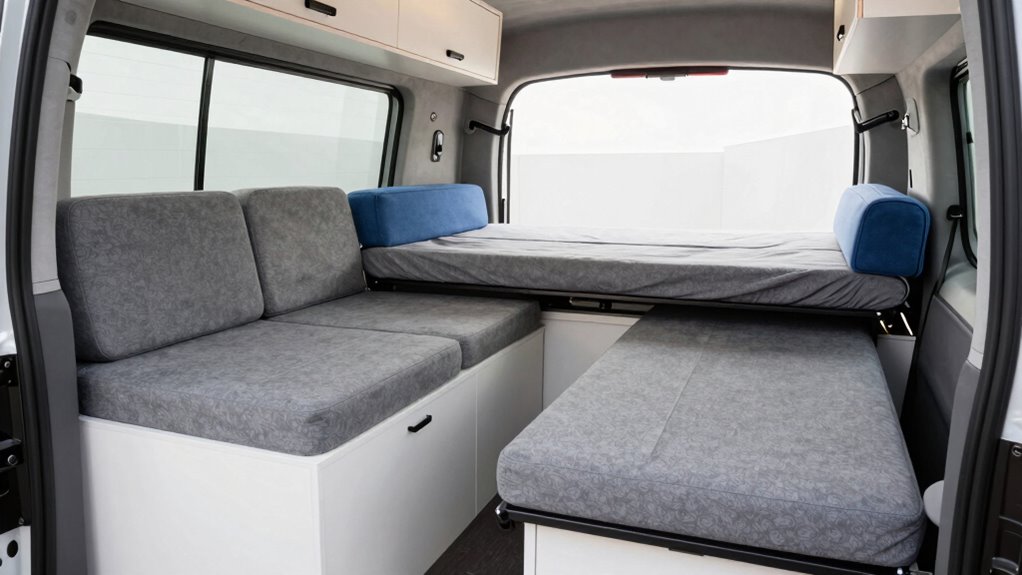
Convertible beds take the best of both worlds—they can be adjusted from a single bed to a seating or lounging area, providing multi-functionality that’s vital in small spaces. These designs often incorporate fold-out or slide-out mechanisms that allow the bed to be stowed away during the day, revealing a comfy seating area. A convertible setup can be especially efficient if you’re looking to maximize every inch of your van’s interior. When considering insulation for a convertible bed, focus on removable or modular insulation options that can be easily adjusted or added as needed, especially if the bed folds or slides away. Lightweight insulation materials like reflective bubble wrap or removable foam panels work well here, as they can be swapped out or repositioned without difficulty.
Ultimately, your choice depends on your lifestyle, travel habits, and how you plan to use your van. Fixed beds offer simplicity and stability, foldable beds add flexibility, and convertible beds provide multifunctionality. Whichever you choose, pay close attention to storage solutions and insulation materials—these elements will considerably influence your comfort, organization, and the overall livability of your van.
Frequently Asked Questions
What Are the Best Materials for Van Bed Frames?
You should choose lightweight materials like aluminum or plywood for your van bed frame to enhance van bed aesthetics and keep the bed frame weight manageable. Aluminum is durable and corrosion-resistant, ideal for a sleek look, while plywood offers affordability and ease of customization. Both options balance strength and weight, making your van more comfortable and functional without sacrificing style or mobility.
How Do I Maximize Space With Different Bed Types?
To maximize space with different bed types, choose a design that balances van bed comfort and storage solutions. Fixed beds offer consistent comfort and under-bed storage, while foldable or convertible beds save space during the day. You can also incorporate multi-functional furniture, like storage benches or beds with built-in drawers. Prioritize compact, efficient layouts to keep your van open and functional, ensuring you have enough room for essentials and comfort.
Are Foldable Beds Suitable for All Van Sizes?
Perfectly portable, foldable beds suit many van sizes, but their suitability depends on your van’s dimensions and design. You’ll find van bed comfort varies, and foldable beds offer flexible, space-saving solutions; however, their durability can differ based on materials and construction. If your van’s compact or spacious, a foldable bed can work well, but always measure carefully to make certain it fits comfortably and maintains long-lasting durability.
What Safety Features Should I Consider for Convertible Beds?
You should consider safety features like sturdy locking mechanisms to prevent accidental collapse, secure storage solutions to keep items stable during transit, and non-slip surfaces to avoid slipping when entering or exiting. Additionally, add comfort enhancements such as padding or stabilizing supports to reduce movement and guarantee safety. These features help keep you safe and comfortable, whether you’re resting or on the move.
How Do Bed Designs Affect Overall Van Insulation?
Like a sponge soaking up water, your bed design influences van insulation and comfort. Fixed beds often sit on insulated platforms, enhancing warmth, while foldable or convertible beds can create gaps, reducing insulation efficiency. Bed placement matters too; placing beds against insulated walls helps maintain temperature. Choose your design carefully to guarantee your van stays cozy, regardless of your sleeping arrangements, and optimize insulation by sealing gaps around your bed.
Conclusion
Choosing the right bed design for your van build is like picking the perfect compass—it guides your comfort and functionality. Fixed beds offer stability, foldable ones save space, and convertible options give you versatility. Consider your lifestyle and space needs to make the best choice. Whichever you pick, remember it’s the foundation of your cozy mobile home, like the steady heartbeat of your adventure. Make your decision with confidence, and enjoy every mile ahead.