
Shopping for Ford Transit roof rack accessories usually comes down to one variable before anything else: wheelbase and roof height. Unlike universal racks that clamp onto gutters, the best Transit racks are vehicle-specific, which means the right pick depends entirely on whether you own a 148″ or 130″ wheelbase van and what you plan to bolt up top. In this comparison, I break down three MELIPRON racks that dominate the Transit conversation in 2026, and the differences between them matter more than the similarities.

Get business pricing on garage and car supplies
- Business-only prices and quantity discounts
- Tax-exempt purchasing
- Multiple users, one account, clear invoices
If you drive a 148″ WB medium-roof Transit and want the most accessory-friendly platform, the MELIPRON T-Slot Crossbars with Wind Deflector lead the pack thanks to its open 4040 T-slot channels that accept solar panels, ladders, and rooftop tents without adapters. For a cleaner, lower look on the same van, the MELIPRON Low Profile L-Style rack trades some accessory flexibility for sleeker aerodynamics and a simpler install. Short-wheelbase owners get a strong option too: the 130″ WB Mid Roof model matches the load ratings of its bigger siblings in a tighter footprint.
The main tradeoffs to weigh are profile height versus accessory compatibility, and no-drill convenience versus maximum load security. All three claim 300 lb dynamic and 500 lb static ratings, but mounting hardware, fairing design, and crossbar adjustability differ enough to change which one belongs on your van. I rank them by overall utility, then help you match the right rack to your build.
Complete the kit


Key Takeaways
- Fit is non-negotiable: each rack matches exactly one Transit configuration — 148″ WB medium roof, 148″ WB mid roof, or 130″ WB mid roof — so measure before buying.
- The T-Slot Crossbars with Wind Deflector rank highest because open 4040 T-slot channels accept the widest range of accessories without adapters.
- All three racks share 300 lb dynamic / 500 lb static load ratings, so load capacity is not a differentiator — design and install method are.
- The Low Profile L-Style model suits solar-focused builds where a sleek stance and wind-noise reduction matter more than raw accessory flexibility.
- The 130″ WB rack is the only one of the three for short-wheelbase Transits, with adjustable crossbars for tighter rooftop layouts.
- Every option installs without drilling into the roof, using factory mounting points with weather-sealed landing pads.
| MELIPRON Van Roof Rack for Ford Transit 148″ WB Medium Roof |  | Best Overall — the most accessory-ready platform for 148″ Transit builds | Brand: MELIPRON | Model Number: T-Slot Crossbars with Wind Deflector | Material: Aluminum | VIEW LATEST PRICE | See Our Full Breakdown |
| MELIPRON Low Profile Roof Rack for Ford Transit 148″ WB Mid Roof |  | Best Value — a sleeker, simpler alternative for the same van | Brand: MELIPRON | Model Number: L-Style Solar Mount Crossbars | Material: Aluminum with powder coating | VIEW LATEST PRICE | See Our Full Breakdown |
| MELIPRON Low Profile Roof Rack for Ford Transit 130″ WB Mid Roof |  | Best for Short-Wheelbase Transits — a full-featured rack for compact vans | Brand: MELIPRON | Model Number: ME081201 | Material: Aluminum and steel | VIEW LATEST PRICE | See Our Full Breakdown |
| ford transit roof rack accessorie | Brand | Model Number | Material | Compatibility |
|---|---|---|---|---|
| MELIPRON Van Roof Rack for For | MELIPRON | T-Slot Crossbars with Wind Deflector | Aluminum | Ford Transit 148" WB Medium Roof |
| MELIPRON Low Profile Roof Rack | MELIPRON | L-Style Solar Mount Crossbars | Aluminum with powder coating | Ford Transit 148" WB Mid Roof |
| MELIPRON Low Profile Roof Rack | MELIPRON | ME081201 | Aluminum and steel | Ford Transit 130" WB Medium Roof |
More Details on Our Top Picks
MELIPRON Van Roof Rack for Ford Transit 148″ WB Medium Roof
This is the rack I would put at the top of the list for most 148″ medium-roof Transit owners, and the reason comes down to its open 4040 T-slot crossbar design. Where the L-Style model (my value pick below) leans toward a fixed solar-mounting layout, this version keeps its channels fully exposed, which means solar panels, Maxxair fan surrounds, ladders, and rooftop tents all attach with standard T-slot hardware instead of adapters or workaround brackets. For anyone building out a campervan in stages, that flexibility is worth paying a premium for.
The integrated wind deflector also does real work here. Compared with bare crossbar setups, a fairing at the leading edge cuts the buffeting noise that turns a six-hour highway drive into a drone-fest, and it modestly helps fuel economy — a genuine concern when you already drive a tall brick-shaped van. The aluminum construction with corrosion-resistant coating keeps the total weight manageable, which matters because every pound on the roof comes out of your payload budget.
The tradeoffs are real, though. Installation is the most involved of the three picks here; the weather-sealed landing pads do a good job of preventing leaks, but getting them seated correctly takes patience and the right tools, so budget an afternoon rather than an hour. And the fit is strictly limited to the 148″ WB medium roof — if you own a 136″ or extended Transit, this rack simply will not work. For the right van, though, this option makes the most sense as a long-term foundation for a full off-grid build.
Pros:- Open 4040 T-slot channels accept a huge range of standard accessories without adapters
- Integrated wind fairing reduces drag and highway noise
- 300 lb dynamic / 500 lb static rating handles rooftop tents with room to spare
- Weather-sealed landing pads protect against leaks at factory mount points
Cons:- Fits only the Ford Transit 148″ WB medium roof
- Installation requires specific tools and more time than the low-profile models
Best for: 148″ WB medium-roof Transit owners planning multi-accessory builds with solar, tents, and ladders
Not ideal for: Owners of 136″ or extended-wheelbase Transits, or anyone wanting the fastest possible install
- Brand:MELIPRON
- Model Number:T-Slot Crossbars with Wind Deflector
- Material:Aluminum
- Crossbar Size:4040 T-slot
- Max Load:300 lb dynamic / 500 lb static
- Compatibility:Ford Transit 148″ WB Medium Roof
- Warranty:2 years
- Included Components:Van roof rack
Our verdict“The most versatile foundation for a 148" Transit build, provided your van matches and you’re willing to spend an afternoon installing it.”
MELIPRON Low Profile Roof Rack for Ford Transit 148″ WB Mid Roof
Sitting on the same 148″ WB mid-roof Transit as my top pick, this low-profile model takes a different philosophical approach: instead of maximizing accessory mounting options, it prioritizes a low, clean silhouette and straightforward installation. Compared with the T-Slot version above, the L-Style sits noticeably closer to the roof, which pays off in reduced wind noise, less drag, and easier garage access — a small thing until you’ve scraped a taller rack on a parking structure beam once.
What makes this the value pick is how little you give up on paper. The 300 lb dynamic / 500 lb static rating matches the flagship exactly, the powder-coated aluminum construction is equally weather-resistant, and the no-drill factory-point install is genuinely simpler than the sealed-pad process on the T-Slot rack. For a buyer whose rooftop plan is basically “solar panels plus maybe a small cargo box,” paying less for this version and skipping the open-channel flexibility is a rational choice, not a compromise.
The catch is that the solar-focused layout has limits. MELIPRON recommends specific solar panel sizes, and if your panels fall outside those dimensions you may be fabricating brackets or shopping for replacements. Very large or concentrated loads — like a heavy hard-side rooftop tent mounted at one end — may also want additional support rails rather than crossbars alone. This model is better suited to streamlined solar-and-cargo setups than to maximalist overland builds, and I’d steer heavy haulers toward the T-Slot pick instead.
Pros:- Lowest-profile design of the three, minimizing wind noise and drag
- Full 300 lb / 500 lb load rating despite the slimmer frame
- No-drill installation on factory mounting points
- Durable powder-coated aluminum construction
Cons:- Recommended solar panel sizes won’t fit every panel on the market
- Heavy or concentrated loads may need supplemental support
- Fits only the Ford Transit 148″ WB mid roof
Best for: Solar-focused van owners who want a quiet, low-profile rack at a lower price than the flagship
Not ideal for: Builders planning oversized panels, heavy rooftop tents, or many bolt-on accessories
- Brand:MELIPRON
- Model Number:L-Style Solar Mount Crossbars
- Material:Aluminum with powder coating
- Max Dynamic Load:300 lbs
- Max Static Load:500 lbs
- Compatibility:Ford Transit 148″ WB Mid Roof
- Installation:No-drill, factory mounting points
Our verdict“The smart buy if your rooftop plan is solar plus light cargo — you get flagship load ratings for less money and a quieter ride.”
MELIPRON Low Profile Roof Rack for Ford Transit 130″ WB Mid Roof
Short-wheelbase Transit owners are used to being the forgotten segment of the van accessory market, so it’s good to see a rack built specifically for the 130″ WB medium roof with the same engineering as the larger models. The headline feature here is adjustable crossbar positioning: unlike the fixed layout of the L-Style 148″ rack, this one lets you reposition the 4040 T-slot crossbars to suit your rooftop arrangement, which matters on a shorter roof where a Maxxair fan, solar panels, and an antenna compete for every inch of real estate.
The load ratings match its bigger siblings — 300 lb dynamic, 500 lb static — which is more impressive on a shorter rack with fewer mounting points. The included wind fairing keeps noise in check, and the no-drill factory-point installation follows the same straightforward process as the L-Style model, making it noticeably easier to fit than the sealed-pad flagship. For contractors, weekend campers, and delivery drivers running a compact Transit, this option covers solar, awnings, ladders, and camping gear without the compromises of a universal clamp-on rack.
Two things hold it back from ranking higher overall. First, the rack comes pre-drilled for an optional light bar that isn’t included, so buyers expecting a complete lighting solution need to budget for the add-on. Second, achieving the full 500 lb static rating depends on careful, correct installation — a rushed job with improperly torqued mounts undermines the capacity that makes this rack worth buying. Since it only fits one van configuration, it’s less a competitor to the other two picks and more the correct answer for a different buyer, but within its niche it’s a confident choice.
Pros:- Adjustable 4040 T-slot crossbars adapt to tight rooftop layouts
- Same 300 lb / 500 lb ratings as the larger 148″ models
- Easy no-drill installation on factory mounting points
- Wind fairing included for quieter highway driving
Cons:- Light bar not included despite pre-drilled mounting holes
- Full load capacity depends on precise installation
- Fits only Ford Transit 130″ WB medium roof models
Best for: 130″ WB mid-roof Transit owners who want adjustable, T-slot mounting in a compact footprint
Not ideal for: Buyers expecting an included light bar or anyone unwilling to torque mounts carefully during install
- Brand:MELIPRON
- Model Number:ME081201
- Material:Aluminum and steel
- Max Dynamic Load:300 lbs
- Max Static Load:500 lbs
- Crossbars:4040 T-slot, adjustable
- Compatibility:Ford Transit 130″ WB Medium Roof
- Warranty:2 years
- Included Components:Van roof rack
Our verdict“The clear choice for short-wheelbase Transit builds, offering flagship-level capacity and flexible crossbars in a compact package.”
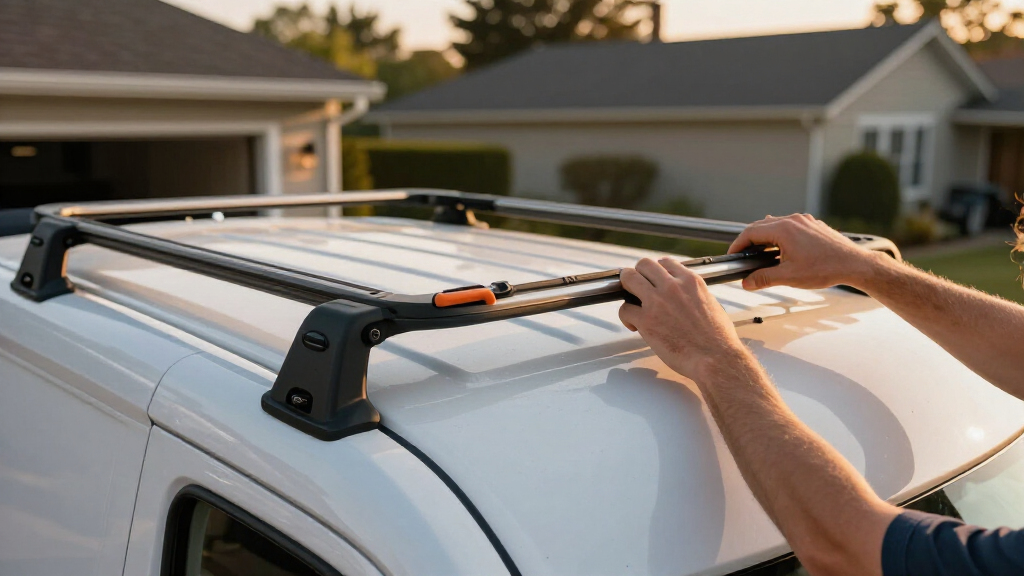
How We Picked
Because every rack in this comparison comes from the same manufacturer, I focused my evaluation on the factors that actually separate these models rather than brand-level differences. My first criterion was fit precision: Transit roof dimensions vary across wheelbase and roof heights, and a rack designed for a 148″ van will not mount on a 130″ chassis. I verified compatibility claims against each product’s stated vehicle match.
The second criterion was accessory ecosystem compatibility. A roof rack is really a platform for other gear — solar panels, rooftop tents, awnings, light bars, ladders — so I prioritized racks with open T-slot channels and adjustable crossbar spacing over closed or fixed designs. Third, I weighed aerodynamics and noise, since a rack that lives on the van year-round affects fuel consumption and highway comfort. Finally, I considered installation burden and load ratings, favoring no-drill factory-point mounting and realistic weight capacities for both driving (dynamic) and parked (static) use, the latter being what matters for rooftop tents.
I also factored in warranty length, included components, and documented drawbacks from buyer feedback — such as solar panel sizing limits on the L-Style rack and the light bar exclusion on the 130″ model — so the tradeoffs shown here reflect real-world ownership, not just spec sheets.
| ford transit roof rack accessorie | Model Number | Material | Compatibility |
|---|---|---|---|
| MELIPRON Van Roof Rack for For | T-Slot Crossbars with Wind Deflector | Aluminum | Ford Transit 148" WB Medium Roof |
| MELIPRON Low Profile Roof Rack | L-Style Solar Mount Crossbars | Aluminum with powder coating | Ford Transit 148" WB Mid Roof |
| MELIPRON Low Profile Roof Rack | ME081201 | Aluminum and steel | Ford Transit 130" WB Medium Roof |
Factors to Consider When Choosing Ford Transit Roof Rack Accessories
Before choosing between these racks, confirm a few fundamentals about your van and your rooftop plans. The differences between these three models are almost entirely about fit and intended use, so a short planning pass will save you a return shipment and a frustrating afternoon.Confirm Your Wheelbase and Roof Height
This is the single most important step, because none of these racks cross-fit between Transit configurations. The two 148″ racks mount only on 148″ wheelbase vans with medium/mid roofs, while the third fits only the 130″ wheelbase. Check your door-jamb sticker or measure between wheel centers before ordering. If you own a 136″ WB, an extended-body, or a high-roof Transit, none of these three will work and you’ll need a different MELIPRON SKU or another brand entirely.
Match the Rack to Your Accessory Plan
Think through what will actually live on your roof for the next few years. If the answer is solar plus a rooftop tent plus a ladder, the open T-Slot flagship gives you unlimited mounting positions and standard hardware compatibility. If it’s mainly solar panels in a fixed layout, the L-Style value pick does the same job for less money and sits lower. On a short van, the adjustable crossbars of the 130″ model let you rearrange around a fan or antenna. Buying more rack than you need wastes money; buying less means buying twice.
Understand Dynamic Versus Static Load Ratings
Every rack here is rated for 300 lbs dynamic (weight supported while driving) and 500 lbs static (weight supported while parked). The static number matters for rooftop tents, since two adults plus bedding can approach or exceed 300 lbs — well within the static rating but not something you’d want at highway speed. Remember that dynamic load also subtracts from your van’s total payload capacity, and that roof-mounted weight raises your center of gravity, which changes handling on corners and in crosswinds.
Installation Approach and Leak Prevention
All three racks use factory mounting points, so no drilling into your roof is required — a major advantage over universal racks, since you avoid piercing the paint and creating future rust or leak paths. The flagship’s weather-sealed landing pads offer the most robust leak protection but demand more care during install; the low-profile models are simpler and faster. Either way, take your time seating the seals, torque to spec, and recheck after your first few hundred miles, because most roof leaks come from hasty installation, not product failure.
Aerodynamics, Noise, and Year-Round Use
If your rack will stay on the van permanently, aerodynamics becomes a cost-of-ownership issue. Taller racks with exposed channels catch more air, increasing fuel consumption and wind noise; the low-profile designs trade mounting flexibility for a quieter, more efficient ride. All three include wind fairings to blunt the worst of the noise, but the L-Style models sit closest to the roof and will be the quietest. Also check your total height with the rack installed if you regularly park in garages — even a few inches can change which structures you can enter.
Frequently Asked Questions
Will any of these roof racks fit a Ford Transit with a high roof or extended wheelbase?
No. Each of these three racks is engineered for exactly one roof contour and wheelbase: two fit the 148″ wheelbase with a medium/mid roof, and one fits the 130″ wheelbase with a medium roof. Transit roofs differ in curvature and length across configurations, so a rack made for one will not line up with the factory mounting points of another. MELIPRON and other manufacturers produce separate SKUs for high-roof, 136″ WB, and extended-body Transits, so identify your exact configuration from the door-jamb sticker before ordering and buy the matching model rather than attempting to adapt one of these.
Can these racks actually hold a rooftop tent with people sleeping in it?
Yes, with the right expectations. All three racks carry a 500 lb static rating, which is the number that applies when the van is parked — and that’s the scenario that matters for tents. A typical two-person rooftop tent weighs 120–180 lbs, so adding two sleepers and bedding keeps you comfortably inside the static limit. The 300 lb dynamic rating is what governs while driving, so the tent itself plus any gear strapped to it needs to stay under that figure on the road. One caveat: hitting the full static rating depends on correct installation, particularly properly torqued mounts at the factory points, so follow the instructions carefully and recheck hardware after your first few trips.
Do I need to drill holes in my Ford Transit’s roof to install these racks?
No drilling is required for any of the three models. Each rack mounts to the factory mounting points Ford builds into the Transit roof, using brackets and hardware designed for those locations. This is a meaningful advantage over universal gutter-mount racks, because you never pierce the roof skin or paint, which eliminates the most common sources of rust and water intrusion. The flagship model adds weather-sealed landing pads for extra leak protection at the mounting locations, while the two low-profile models use simpler factory-point brackets. The tradeoff is that installation quality still matters — seals must be seated correctly and fasteners torqued to spec to keep the roof watertight over years of weather exposure.
What does the 4040 T-slot crossbar size mean, and why does it matter?
The “4040” designation refers to the cross-section of the aluminum extrusion — 40mm by 40mm — with a T-shaped channel running along its length. That channel is the industry-standard profile used by a wide ecosystem of accessory hardware, including solar panel mounts, awning brackets, light bar clamps, kayak carriers, and ladder attachments. Because the channel is standardized, accessories bolt on with common T-nuts and bolts rather than brand-specific adapters, which saves money and makes future additions simple. If you expect your rooftop setup to evolve — adding an awning next year, a light bar the year after — a 4040 T-slot rack is the most future-proof choice, which is the main reason the flagship model ranks first in this comparison.
How much will a roof rack hurt my Transit’s fuel economy and noise levels?
Any roof rack adds drag, and on a vehicle as aerodynamically challenged as a full-size van, that drag translates into real fuel penalties — typically somewhere in the range of a few percent at highway speeds, depending on rack height and how much gear is mounted. The low-profile models minimize this because they sit close to the roof and let air flow over them more smoothly; the taller T-slot flagship catches more wind in exchange for its flexibility. All three include wind fairings at the leading edge, which reduce the buffeting noise that bare crossbars generate. If your rack will live on the van year-round and you mostly run solar panels rather than bulky cargo, the low-profile designs are the more economical choice over tens of thousands of miles.
Conclusion
Because these three racks each fit a different Transit variant, the final recommendation is less about ranking and more about matching the rack to your van and your build. If you own a 148″ WB medium-roof Transit and plan a full campervan or overland setup, the T-Slot Crossbars with Wind Deflector is my top pick: the open 4040 channels, sealed landing pads, and fairing make it the most complete platform for solar, tents, and ladders. If your 148″ van needs are simpler — mainly solar panels and light cargo — the Low Profile L-Style rack delivers identical load ratings for less money, with a quieter ride and easier install.
For short-wheelbase 130″ WB Transit owners, the choice is straightforward: the compact MELIPRON model is the only one of the three that fits, and it’s a strong rack in its own right, with adjustable crossbars that shine on a crowded roof. Whatever you choose, verify your wheelbase and roof height before ordering, budget a careful afternoon for installation, and torque every fastener to spec — a roof rack is only as good as its mounting, and getting that right means years of quiet, watertight, worry-free carrying.
Fall Picks
fall essentials
As an affiliate, we earn on qualifying purchases.