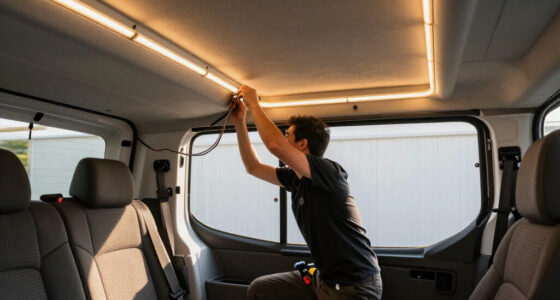
This checklist is for Ford Transit owners and operators who load cargo, equipment, or supplies and want a more deliberate approach to moving and securing it. Start by considering what you carry, how often you load it, and which tasks create the most strain or shifting risk. Your cargo and loading routine should guide each choice.

Get business pricing on garage and car supplies
- Business-only prices and quantity discounts
- Tax-exempt purchasing
- Multiple users, one account, clear invoices
The sections follow a practical sequence: loading access first, then cargo restraint and protection, followed by moving equipment. Some slots name a product to evaluate; others offer advice only. The named products are starting points, so check their current specifications and instructions before deciding they suit your Transit and your cargo. Fit and compatibility depend on the specific setup.
Use the look-for points to compare options, then consider the best-for and not-ideal notes against your actual use. Confirm dimensions, load limits, attachment points, and safe handling requirements with the product maker and your vehicle documentation. For every item, verify the details before use, and follow the instructions supplied with your vehicle and equipment.
Cargo Van Ramp
A ramp can make loading wheeled equipment into a cargo van more manageable, but the right choice depends on what you are moving and how you load it. The listed pick is the VNN Aluminum Motorcycle Ramp with Walking Step, described in its product name as an 82-inch foldable ramp. Before choosing it, confirm the full product specifications, including its usable length, width, load rating, and intended applications. Confirm the ramp’s rating for the combined weight of the equipment and anything riding on it.
A common mistake is assuming that a ramp described for a motorcycle will suit every cargo task. Check the ramp’s instructions for compatible surfaces, support points, and safe loading methods; do not assume the Transit’s threshold or the ramp’s end fittings will match without verification. Measure the vehicle opening and the loading area, and consider the space needed to unfold, position, and store the ramp. Measure before buying, including clearance and storage space.
Also consider who will use the ramp and whether its walking step is useful for that task. Follow the manufacturer’s setup instructions, secure the ramp as directed, and keep the path clear while loading. If the product documentation does not clearly cover your equipment and loading arrangement, choose a ramp explicitly suited to that use.
What to look for:
- Manufacturer-stated load capacity suited to the total load
- Ramp width and usable length for the equipment and loading path
- End fittings and support requirements compatible with the loading surface
- Folded dimensions and storage space inside or near the van
- Clear setup and safe-use instructions for the intended equipment
VNN Aluminum Motorcycle Ramp with Walking Step – 82" Foldable Ramp for Pickup Tr
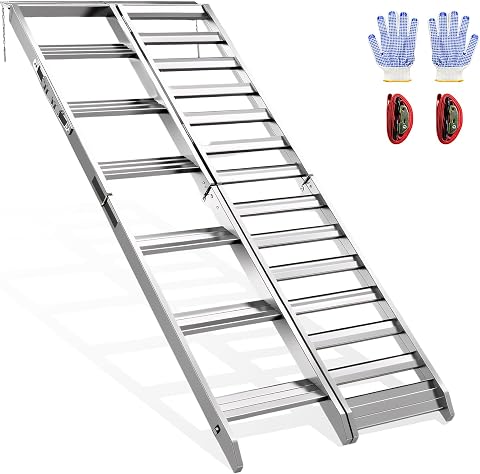
This lightweight, aircraft-grade aluminum motorcycle ramp supports up to 1100 lbs and features a foldable design for easy storage and transport. It includes an anti-slip surface, a dedicated walking step, and is suitable for loading bikes onto trucks, trailers, and more.
Pros:
- Supports heavy loads up to 1100 lbs, suitable for various motorcycles
- Foldable design for easy storage and portability
- Anti-slip surface provides reliable traction in all weather conditions
- Includes a dedicated walking step for safe, one-person loading
Cons:
- Heavy for some users despite being lightweight aluminum
- Long length may require more storage space when unfolded
- Price not specified in the description
Best for: Operators whose equipment and loading setup match the ramp’s documented specifications.
Not ideal for: Anyone who cannot confirm the ramp’s fit, rating, or support requirements for their load.
Bottom line: Verify the ramp’s specifications and setup requirements against your equipment and Transit before relying on it.
Wheel Chocks
Wheel chocks can help keep wheeled cargo from rolling during transport, but the correct style depends on the object being secured and how it is restrained. Start by identifying tire size, wheel shape, load, and the floor surface where the chock will sit. Match the chock to the wheel and the intended use, rather than treating all chocks as interchangeable.
A common buying mistake is relying on a chock alone to secure an item. Check the maker’s guidance for placement and pair chocks with suitable restraints where the cargo and instructions call for them. For a Transit setup, think through where the chocks will sit, whether they obstruct other cargo, and whether they can be positioned consistently without interfering with loading or unloading. Plan the restraint system around the cargo, vehicle, and task.
Before purchase, confirm the chock’s dimensions, materials, intended wheel range, and any stated capacity or installation requirements. Check whether the cargo needs a fixed mounting arrangement or a portable chock, and make sure any mounting method is appropriate for the van floor and allowed by the relevant instructions. Store chocks so they remain accessible and cannot become loose cargo themselves.
What to look for:
- Wheel sizes and cargo types explicitly supported by the maker
- Dimensions and shape suited to the wheel and available floor space
- Clear placement, use, and maintenance instructions
- Portable or fixed mounting appropriate to the loading routine
- Compatibility with the separate restraints used for the cargo
Cargo Bar
A cargo bar may help limit movement when its design and placement suit the load and vehicle. For a Transit, first consider the cargo area dimensions and the surfaces where the bar is meant to brace. Check the contact points and the maker’s intended installation method; do not assume a bar will fit every configuration or safely restrain every kind of item.
A frequent mistake is choosing a bar by apparent length alone. Confirm its adjustment range, contact-pad design, stated capacity, and whether its instructions cover the intended orientation and cargo. Measure the span where you plan to use it, accounting for trim, shelves, and other equipment. The bar should not block access or press against a surface in a way its instructions prohibit. Measure the planned span and check the full fit range.
Think about how the bar works with other restraints. A bar can serve a particular role in a loading plan, but the appropriate combination depends on the cargo and the product directions. Check how it is tensioned, released, and stored, and inspect it before use as directed. If the maker does not specify that the bar is suitable for your arrangement, choose a restraint designed for that job.
What to look for:
- Adjustment range that covers the measured placement span
- Contact pads suited to the surfaces described in the instructions
- Capacity and use cases documented by the manufacturer
- Tensioning and release method that can be used safely in the cargo area
- Compatibility with the cargo and other restraints in the loading plan
Ratchet Straps
Ratchet straps can secure cargo when their rating, length, attachment method, and routing suit the load. The named pick is Ratchet Straps for Anchoring Tents and Inflatables, described as 1.5 inches by 15 feet. That product name identifies a stated application; it does not establish suitability for cargo in a Transit. Check the intended application and verify the manufacturer’s documentation before using these straps for vehicle cargo.
A common mistake is to assume that strap width or length alone indicates safe working capacity. Find the documented working load limit and breaking strength, understand which figure applies to use, and check compatible anchor points and hooks. Measure the route around the cargo and to the anchors, allowing for secure routing without twists, sharp edges, or interference with doors and other equipment. Verify the load rating and every connection in the restraint path.
Consider whether the ratchet can be operated and released in the space available, and whether the webbing and hardware suit the environment and load. Follow the maker’s instructions for inspection, tensioning, and retirement after damage. If the manufacturer does not document the straps for cargo restraint or the anchor arrangement you plan to use, select straps specifically rated and described for that purpose.
What to look for:
- Documented working load limit and clear rating terminology
- Manufacturer guidance covering cargo restraint and intended use
- Length suited to the cargo route and available anchor points
- Hooks and fittings compatible with the vehicle’s approved anchors
- Instructions for inspection, tensioning, edge protection, and replacement
Ratchet Straps for Anchoring Tents and Inflatables, 1.5 in x 15 ft Loop Ends

These ratchet straps are designed to help secure large or small tents and inflatables of various sizes. The 1.5-inch by 15-foot straps feature loop ends for flexible anchoring setups.
Pros:
- Suitable for anchoring both tents and inflatables
- Loop ends provide flexible attachment options
- Ratchet design helps secure loads tightly
Cons:
- No load capacity information provided
- Only one strap size is listed
Best for: Buyers whose cargo and anchor setup match the strap maker’s documented guidance.
Not ideal for: Anyone relying on the product name or dimensions as proof of cargo suitability.
Bottom line: Confirm the straps are documented for cargo restraint and match the load and anchor points.
Moving Blankets
Moving blankets can help protect cargo surfaces from contact during loading and transport, depending on the blanket and the items being moved. Consider what needs protection, how much coverage is required, and whether the blanket will stay in place through the trip. Plan the coverage around the cargo rather than selecting by appearance alone.
A common mistake is treating a blanket as a restraint. Blankets may cushion or separate items, but they do not replace appropriate tie-downs or other securing methods. Check dimensions, material, construction, and the maker’s care guidance. Think about whether the blanket can be folded or layered without blocking access, creating loose material, or interfering with securement. Keep protection separate from cargo restraint in your loading plan.
For a Transit, consider storage when the blankets are not in use and whether you need one large cover or several smaller pieces. Check the manufacturer’s information for intended use and limitations, especially if cargo is heavy, rough, damp, or has sharp edges. Use additional protection where the instructions or the nature of the cargo call for it, and secure blankets so they cannot shift into the driving area or become loose cargo.
What to look for:
- Coverage dimensions suited to the items and surfaces being protected
- Material and construction described for the intended moving use
- Care and reuse instructions that fit the loading routine
- A way to keep the blanket in place without replacing restraints
- Folded storage size that fits the available cargo-area space
Hand Truck
A hand truck can reduce the effort involved in moving suitable loads between the van and their destination. The named pick is the COSCO 3-in-1 Assist Series Aluminum Hand Truck/Cart with Flat Free Whe…; the product name indicates an aluminum hand truck/cart and flat-free wheels, but check the full listing and instructions for its configurations and capabilities. Verify the complete model and its load guidance before choosing it.
A common mistake is assuming a multi-position design will work equally well for every load or surface. Confirm the rated capacity for each configuration, the platform and handle dimensions, wheel type, and any limitations for stairs, slopes, or uneven ground. Measure bulky items and the Transit opening, then compare those dimensions with the hand truck’s folded and operating size. Check the loading path from the cargo area to the destination.
Consider how often you will switch configurations and whether the movement and locking steps are practical for the operator. Follow the manufacturer’s directions for loading, balancing, and securing items on the truck. Do not exceed its stated capacity, and plan how the hand truck itself will be stored and restrained in the van between uses. If your route or cargo falls outside the documented use, choose equipment suited to those conditions.
What to look for:
- Full model name and manufacturer instructions for each configuration
- Capacity, dimensions, and limits for the intended operating mode
- Wheel and platform design suited to the route and load
- Folded size that fits the van opening and planned storage location
- Clear guidance for loading, balancing, use, and securing the hand truck
COSCO 3-in-1 Assist Series Aluminum Hand Truck/Cart with Flat Free Wheels, 800 l
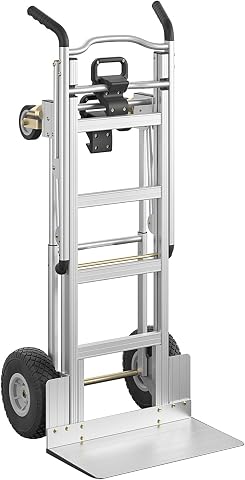
This versatile aluminum hand truck features a 1000-pound capacity and quick one-hand conversion for easy use. Equipped with heavy-duty flat free wheels, it reduces fatigue and injury risk, making it ideal for moving heavy loads with ease.
Pros:
- High 1000-pound capacity for heavy loads
- Easy to convert with one hand
- Heavy-duty flat free wheels for smooth movement
Cons:
- No specific mention of foldability or compact storage
- Potentially heavy due to capacity, may require effort to lift
Best for: Operators whose loads, route, and storage space fit the hand truck’s documented capabilities.
Not ideal for: Anyone who needs equipment for conditions the maker does not specify.
Bottom line: Confirm the full model, configuration limits, and route fit before using this hand truck.
Build the checklist in order of the jobs that matter most to your routine. First address safe loading access and the restraint needs of the cargo you carry; then add surface protection and moving equipment where they solve a specific task. Prioritize essential functions and verify each item’s fit and instructions before expanding the setup.
You can refine the kit as your cargo or loading routine changes. Keep product instructions available, inspect equipment as directed, and review how each item works with the others before a trip. A few well-matched tools and a consistent loading process can make everyday cargo handling more orderly. Start with your real needs and adjust thoughtfully.