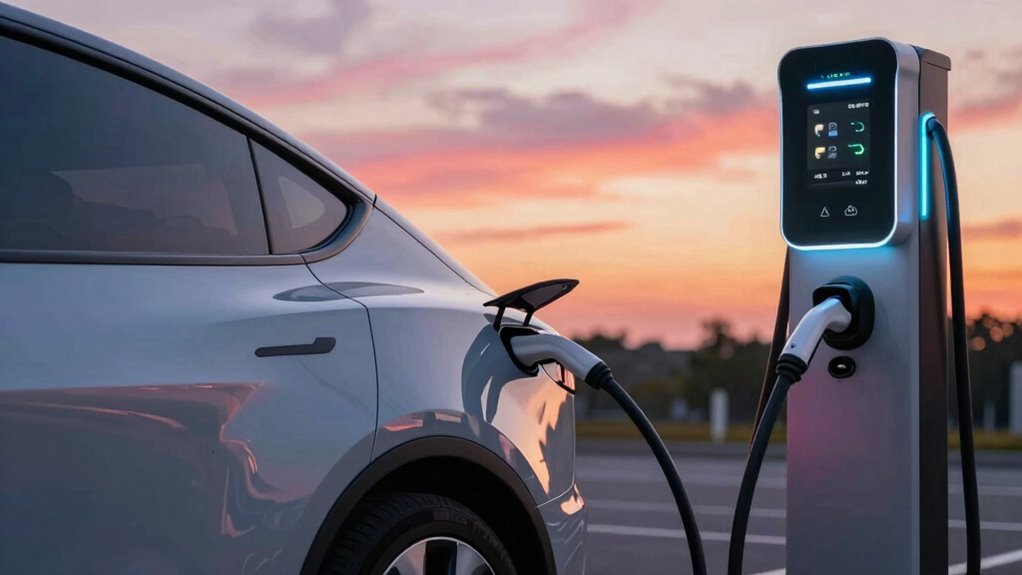

Your charging strategy truly impacts your EV’s performance and lifespan more than the hype around the technology itself. Charging improperly—like always going to 100% or draining near zero—causes faster battery degradation. Using the right mix of chargers and familiarizing yourself with the available infrastructure can prevent range issues and extend battery health. Prioritizing smart charging habits guarantees your EV stays reliable longer. Keep going to discover how to optimize your EV experience and get the most value from your investment.

Get garage and car supplies delivered free — and shop member deals
- Fast, free delivery on millions of items
- Access to Prime Big Deal Days deals on October 6–7
- Prime Video, Amazon Music and more included
Key Takeaways
- Proper charging habits extend battery life, ensuring sustained EV performance beyond initial hype.
- A strategic charging approach reduces long-term costs and minimizes battery degradation risks.
- Focus on infrastructure awareness enhances trip planning and reduces range anxiety more effectively than hype.
- Optimizing charging patterns preserves battery health, leading to reliable and efficient EV operation over time.
- Long-term benefits of smart charging outweigh temporary excitement about EV technology advances.
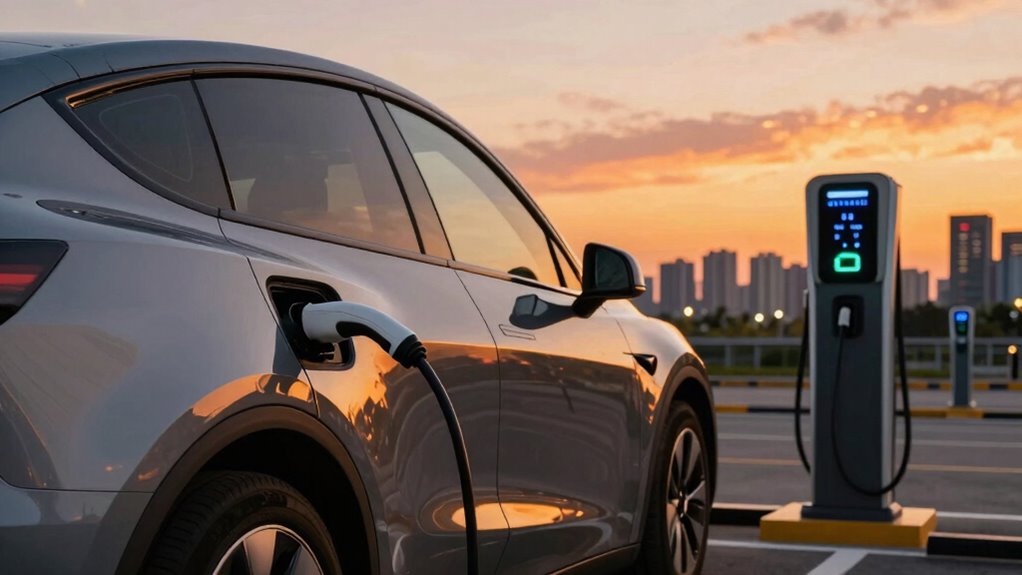
While electric vehicle (EV) hype continues to grow, focusing solely on the cars themselves misses the bigger picture: your charging strategy. The way you plan and manage your charging habits can markedly impact your EV’s performance, longevity, and overall cost savings. It’s tempting to get caught up in the excitement about new models and impressive range figures, but without a solid charging strategy, those benefits can fade quickly. Your approach to charging directly influences battery longevity — the lifespan of your EV’s battery pack — and the accessibility of charging infrastructure in your daily routine.
Battery health is vital because it determines how long your EV remains reliable and efficient. Frequent, improper charging habits—like consistently charging to 100% or letting the battery drain to near zero—can accelerate battery degradation. That’s why understanding how to optimize your charge levels, such as maintaining a charge between 20% and 80%, can extend your battery’s useful life. A smart charging strategy involves not just plugging in when convenient but also being mindful of charging patterns that preserve battery health over years of use.
Another key component is the charging infrastructure available to you. In many areas, the expansion of public charging stations has improved, but gaps still exist. Your ability to access reliable, fast charging stations influences how you plan your trips and daily commutes. Relying solely on home charging may seem convenient, but it might not be sufficient if your daily driving demands are high or if public infrastructure isn’t well-developed nearby. Having a clear understanding of where and when you can charge helps you avoid range anxiety and reduces stress during long trips. Additionally, understanding your charging infrastructure options can help you identify potential gaps and plan accordingly. Being aware of the charging station types and their locations can help you avoid unexpected inconveniences during travel. Recognizing the charging network coverage in your area enables better planning and reduces the likelihood of being stranded without power. Moreover, staying informed about evolving technologies in charging can give you an edge in optimizing your routines and maintaining battery health.
A well-thought-out charging strategy also considers the types of chargers you use. Level 1 chargers are slow but useful for overnight charging at home, while Level 2 chargers provide a faster fill-up, ideal for daily needs. Fast chargers, often found in public spaces, can top off your battery quickly but may generate more heat, which could impact battery health if used excessively. Balancing these options and knowing when to use each type can optimize both convenience and battery longevity.
Furthermore, understanding your battery management options can help you further enhance your charging habits. Ultimately, your EV experience hinges on how effectively you manage your charging habits and infrastructure. While the hype around EVs may focus on impressive specs and new models, your proactive approach to charging can make a real difference. It guarantees your vehicle remains efficient, cost-effective, and reliable long-term. Prioritizing a smart charging strategy over hype ensures you get the most out of your investment, making your transition to electric driving smoother and more sustainable.
As an affiliate, we earn on qualifying purchases.
Frequently Asked Questions
How Does Charging Infrastructure Impact EV Adoption Rates?
Charging infrastructure directly influences your EV adoption chances. When urban planning includes ample, accessible charging stations, you feel more confident owning an electric vehicle. Additionally, a robust energy grid guarantees reliable charging without strain. If infrastructure is lacking, you might hesitate to switch, fearing inconvenience. Proper integration of charging stations into city planning and a resilient energy grid make EV ownership easier, encouraging more people like you to adopt electric vehicles.
What Are the Cost Differences Between Various Charging Options?
You’ll find that the cost differences between charging options mainly hinge on charging speed and cost efficiency. Level 1 chargers are the most affordable but slowest, ideal for overnight charging at home. Level 2 chargers cost more upfront but offer better cost efficiency for regular use. DC fast chargers are the most expensive per session but provide rapid charging, perfect for quick top-ups during travel. Your choice depends on your driving habits and budget.
How Long Does It Take to Charge an EV Fully?
Imagine filling a glass of water—depending on the faucet, it fills faster or slower. Fully charging your EV can take from 30 minutes at fast chargers to 12 hours on a standard outlet. To preserve battery longevity, avoid frequent fast charging and follow proper charging etiquette—plug in when needed, don’t leave it empty, and don’t overcharge. This way, your EV stays healthy, and your charging experience remains smooth.
Are There Government Incentives for Installing Home Chargers?
Yes, there are government incentives for installing home chargers. You can take advantage of various incentive programs that help offset the costs of home installation. These programs often offer rebates or tax credits, making it more affordable to set up a dedicated charging station at your residence. Check your local, state, or federal resources to find specific incentive programs available in your area, ensuring you maximize savings on your EV charging setup.
What Are the Environmental Impacts of Different Charging Methods?
Your choice of charging method impacts the environment profoundly. Using renewable energy sources reduces carbon emissions, making charging greener. Fast chargers, often powered by fossil fuels, can increase emissions and energy consumption. Proper battery recycling minimizes waste and recovers valuable materials, reducing the environmental footprint. By selecting renewable energy and supporting battery recycling efforts, you help promote sustainable EV charging practices and decrease overall environmental harm.
As an affiliate, we earn on qualifying purchases.
Conclusion
So, don’t get caught up in the electric vehicle hype without a solid charging strategy. Without it, your shiny new EV is just a fancy paperweight, useless as a car. Think of charging as the secret weapon that transforms your EV from a mere gadget into a reliable, everyday powerhouse. Ignore it, and you might as well drive a horse and buggy. Your EV’s true potential depends on your charging plan—don’t let hype fool you into neglecting this vital detail!
As an affiliate, we earn on qualifying purchases.
As an affiliate, we earn on qualifying purchases.
Fall Picks
fall essentials
As an affiliate, we earn on qualifying purchases.