
By reviewing telematics data daily, you turn fleet oversight into a proactive management tool. This habit helps you catch risky driver behaviors, schedule maintenance early, and make smarter operational decisions. Regular checks promote accountability and foster a safety culture, reducing accidents and costs. Over time, this practice improves vehicle longevity and fleet efficiency. Keep exploring, and you’ll discover how consistent telematics use can transform your fleet’s safety, savings, and overall performance.
Key Takeaways
- Regular data review fosters a proactive safety culture beyond mere oversight.
- Consistent analysis of telematics insights enables targeted driver training and behavior improvement.
- Monitoring vehicle health trends leads to proactive maintenance, enhancing reliability and reducing costs.
- Daily insights support smarter operational decisions and optimal resource allocation.
- Continuous engagement with telematics data encourages accountability and operational excellence.
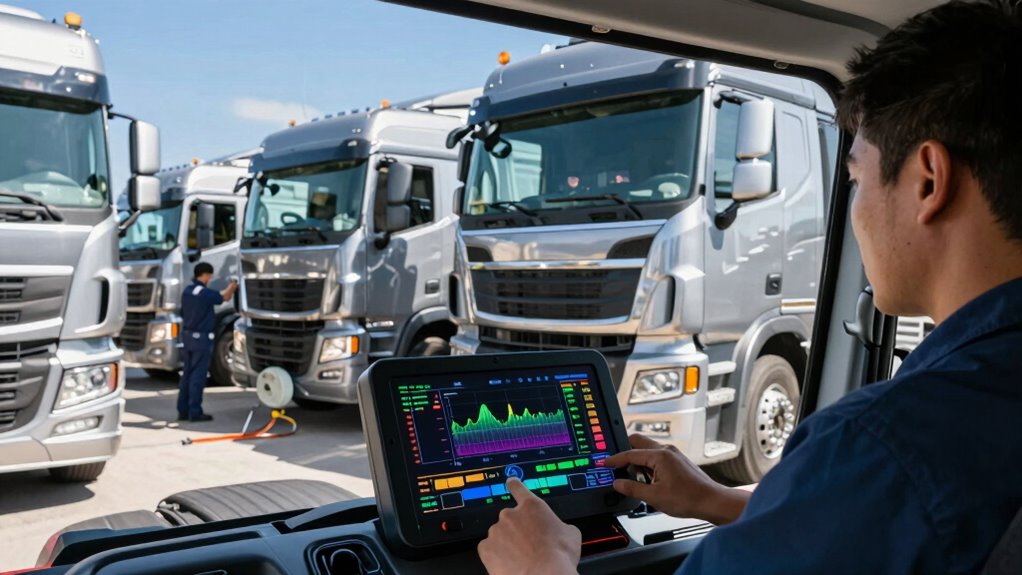
Adopting a fleet telematics habit can considerably boost your vehicle management efficiency, but it requires consistent effort and a clear strategy. When you make monitoring driver behavior a regular part of your routine, you’re not just overseeing operations—you’re actively enhancing driver safety. Telematics data provides real-time insights into speeding, harsh braking, and rapid acceleration, helping you identify risky behaviors before they lead to accidents. By addressing these issues promptly, you create a safer driving environment, which benefits everyone on the road and reduces your liability.
Consistent telematics monitoring enhances driver safety and reduces liability through real-time behavior insights and prompt corrective actions.
This habit also streamlines maintenance scheduling, saving you both time and money. Instead of relying solely on predetermined service intervals, telematics allows you to track vehicle performance and usage patterns closely. When a vehicle exceeds certain thresholds—like engine hours, mileage, or abnormal sensor readings—you get instant alerts. This proactive approach means you can schedule maintenance precisely when needed, rather than waiting for breakdowns or costly repairs. As a result, your fleet stays in optimal condition, and downtime decreases, keeping your operations running smoothly. fleet management can be optimized through consistent review of telematics data, leading to more informed decision-making. Regular analysis of telematics data also helps you identify trends over time, enabling better planning for future fleet needs. Additionally, understanding the vehicle health through telematics can help prevent unexpected failures before they occur. Incorporating cloud server solutions into your telematics system can facilitate seamless data integration and analysis, enhancing your overall fleet management capabilities.
Integrating telematics into your daily management routine encourages a culture of accountability. When drivers know their behavior is monitored, they tend to drive more responsibly, which directly impacts driver safety. Over time, this accountability fosters better habits and reduces the likelihood of accidents. Additionally, data from telematics can highlight training opportunities, guiding you to focus on areas where drivers need improvement, further enhancing safety standards.
On the maintenance side, establishing a habit of reviewing telematics reports regularly helps you stay ahead of potential issues. Instead of reacting to breakdowns, you anticipate maintenance needs, which prolongs vehicle lifespan and improves reliability. This proactive stance also helps you manage costs better, avoiding emergency repairs and extending the intervals between major overhauls.
Consistency is key. When you make telematics a daily or weekly practice, it becomes ingrained in your fleet management. You’ll develop a sharper understanding of your vehicles’ health and your drivers’ behaviors, leading to smarter decisions. Over time, these habits contribute not only to safer driving and efficient maintenance but also to overall operational excellence. The investment in developing this telematics routine pays off by reducing accidents, lowering maintenance costs, and increasing the longevity of your fleet, proving that the habit extends far beyond simple oversight. Incorporating fleet telematics data can significantly enhance your ability to make informed, proactive decisions.

Fleet Telematics: Real-time management and planning of commercial vehicle operations (Operations Research/Computer Science Interfaces Series, 40)
As an affiliate, we earn on qualifying purchases.
As an affiliate, we earn on qualifying purchases.
Frequently Asked Questions
How Can Telematics Reduce Vehicle Maintenance Costs?
You can reduce vehicle maintenance costs by leveraging telematics with predictive analytics, which helps identify potential issues before they become costly repairs. Monitoring real-time data enables you to address problems early, preventing breakdowns. Additionally, telematics improves fuel efficiency by optimizing routes and driving behaviors. This proactive approach not only extends vehicle lifespan but also cuts down on unnecessary maintenance, saving you money and ensuring your fleet runs smoothly.
What Features Should I Prioritize in a Telematics System?
You need to prioritize features that reveal the unseen—like driver behavior insights and advanced data analytics. These tools uncover patterns and risky habits before they escalate. With real-time alerts and detailed reports, you can proactively address issues, optimize routes, and boost safety. Focusing on these features transforms your fleet’s efficiency, ensuring you stay ahead of problems and make smarter, data-driven decisions that improve overall performance.
How Does Telematics Impact Driver Safety Programs?
You can considerably boost your driver safety programs with telematics by monitoring driver behavior in real-time. This technology helps you identify risky habits like speeding or harsh braking, enabling you to intervene early. By promoting safe driving habits and providing targeted coaching, telematics directly contributes to accident prevention. Ultimately, regular feedback and data-driven insights create a safer fleet, reducing accidents and enhancing overall safety performance.
Can Telematics Help With Route Optimization?
Yes, telematics can help with route optimization by providing real-time tracking of your vehicles, allowing you to adjust routes on the fly. This guarantees your drivers take the most efficient paths, reducing fuel costs and improving fuel efficiency. With live data, you can avoid traffic congestion, delivery delays, and unnecessary detours, ultimately enhancing your fleet’s overall efficiency and saving you money on fuel and maintenance.
What Are Common Telematics Implementation Challenges?
You might face common telematics implementation challenges like data privacy concerns and integration challenges. Data privacy issues arise as you handle sensitive driver information, requiring strict security measures. Integration challenges occur when connecting telematics systems with existing fleet management software, which can be complex and time-consuming. To succeed, you need careful planning, clear policies on data privacy, and technical support to seamlessly integrate new systems into your operations.

Mier Products Drive-Alert Wireless Vehicle Detection System with Chime and Volume Control, Made in The USA
As an affiliate, we earn on qualifying purchases.
As an affiliate, we earn on qualifying purchases.
Conclusion
By adopting a fleet telematics habit, you’re not just overseeing vehicles—you’re steering them toward efficiency and safety. Think of it as planting a seed that grows into a thriving tree, providing shade and fruit for years to come. The more consistently you use telematics, the more you’ll see improvements ripple through your operations. Embrace this habit, and watch your fleet become as reliable and resilient as a well-oiled machine, ready for whatever challenges come next.

RVGONOW DMS Driver Monitoring System AI Fatigue Warning Device with Face Recognition Alerts for Eye Closing Yawning Smoking Phone Use & Distraction Works for All Vehicles
Eye-Closing Alert: AI detects prolonged eye closure and sends a loud warning.
As an affiliate, we earn on qualifying purchases.
As an affiliate, we earn on qualifying purchases.
Fleet Telematics: Real-time management and planning of commercial vehicle operations (Operations Research/Computer Science Interfaces Series, 40)
As an affiliate, we earn on qualifying purchases.
As an affiliate, we earn on qualifying purchases.