
To avoid glare and improve your vision, properly aim your headlights to make certain they light up the road without blinding others. Use a level surface and a wall 25 feet ahead, then adjust the beams so they’re just below headlight height and angled downward. Regularly check and tweak the alignment for safe, effective illumination. If you want to learn the best techniques and tips for precise aiming, keep going for more helpful information.
Listen free for 30 days with Audible
Thousands of audiobooks and originals — cancel anytime.
As an affiliate, we earn on qualifying purchases.
Key Takeaways
- Proper headlight alignment ensures effective road illumination without causing glare to oncoming drivers.
- Adjust headlights to direct beams slightly downward, illuminating the road surface and lane edges properly.
- Regularly check and re-aim headlights on a level surface to maintain optimal visibility and prevent glare.
- Use proper alignment tools or follow DIY methods, such as marking beam centers on a wall 25 ft away.
- Properly aimed headlights enhance visibility, reduce reaction time, and contribute to safer nighttime driving.
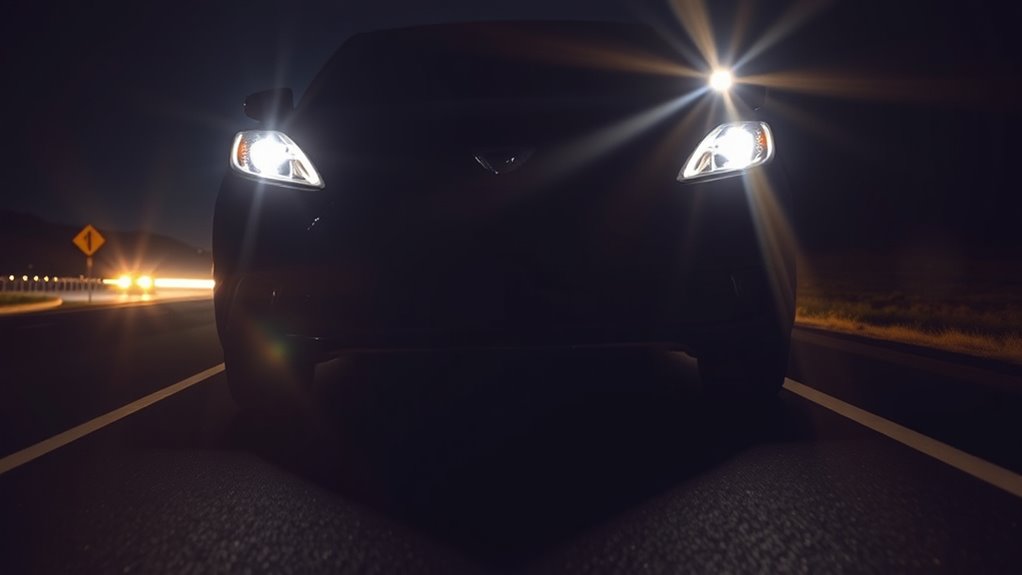
Proper headlight aiming is crucial for safe nighttime driving because it guarantees your lights illuminate the road effectively without causing glare to other drivers. When your headlights are correctly aligned, you see more clearly ahead, and you don’t blind oncoming traffic or drivers in front of you. Misaligned headlights can markedly reduce your visibility and create dangerous situations on the road. Proper aiming ensures that the beam pattern is directed appropriately, maximizing your ability to spot obstacles, pedestrians, and road signs while minimizing the risk of dazzling others.
Proper headlight aiming enhances visibility and safety by preventing glare and ensuring the road is well-lit.
To begin, it’s important to understand how your headlights should be aimed. The beams should be angled slightly downward, just enough to light up the road surface without shining high into the night sky. The goal is to create a wide, well-distributed pattern that illuminates the edges of your lane and the shoulder, helping you detect hazards early. When headlights are aimed too high, they cast excessive glare into the eyes of oncoming drivers, which can temporarily blind them and increase the chance of accidents. Conversely, if they’re aimed too low, you won’t see as far ahead, reducing your reaction time to obstacles or sudden changes in the road.
You can check your headlight alignment using a simple method at home or visit a professional for a more precise adjustment. For a DIY check, park your vehicle on a level surface facing a plain wall about 25 feet away. Turn on your headlights and mark the center of each beam on the wall with masking tape or chalk. Now, step back and observe the pattern. Ideally, the top of the brightest part of the beam should be just below the height of your headlights’ center. If the beams are too high or too low, adjustments are necessary.
Many vehicles have headlight adjustment screws located near the headlights themselves or inside the engine bay. Consult your owner’s manual for specific instructions on how to access and turn these screws. Adjusting your headlights ensures the beams stay properly aimed over time. Regular checks are especially important if you notice a change in visibility or if other drivers flash their lights at you.
Properly aimed headlights not only improve your vision but also protect everyone around you by reducing glare. Remember, safe driving at night isn’t just about your speed or alertness — it’s also about ensuring your vehicle’s lighting is optimized. When your headlights are correctly aligned, you’ll navigate dark roads more confidently, see hazards sooner, and contribute to a safer driving environment for everyone on the road.
As an affiliate, we earn on qualifying purchases.
Frequently Asked Questions
How Often Should Headlight Alignment Be Checked?
You should have your headlight alignment checked at least once a year or whenever you notice reduced visibility or glare for other drivers. Regular inspections are especially important after a collision, hitting a curb, or changing bulbs.
Properly aligned headlights help you see better at night and prevent blinding others. Don’t wait too long—staying proactive maintains your driving safe and ensures your vehicle complies with local regulations.
Can Improper Headlight Aiming Cause Legal Issues?
Skipping proper headlight alignment is like ignoring the law of the land. It can definitely cause legal issues, as many states require headlights to be aimed correctly to ensure safety.
If your headlights are misaligned and cause glare or fail to illuminate the road properly, you could be ticketed or fined. To avoid trouble and keep safe, regularly check and adjust your headlights, especially after repairs or accidents.
What Tools Are Needed for Accurate Headlight Adjustment?
To accurately adjust your headlights, you’ll need a headlight alignment tool or a beam setter, which helps you measure the proper angle. A flat surface or wall with marked lines is essential for proper alignment.
You might also use a tape measure for precise distance and a screwdriver to make adjustments. These tools guarantee your headlights are correctly aimed, reducing glare for others and improving your visibility on the road.
Are There Different Headlight Aiming Standards Worldwide?
Ever wonder if your headlights meet the right standards? Yes, they do differ worldwide. Many countries have specific regulations on headlight alignment, brightness, and beam pattern to ensure safety and visibility.
You should check your local laws, as they may mandate particular aiming angles or intensity levels. Following these standards, you’ll improve your nighttime visibility and reduce glare for other drivers, making every drive safer and more comfortable.
How Do Weather Conditions Affect Headlight Performance?
Weather conditions substantially impact your headlight performance. Fog, rain, snow, and mist reduce visibility, making your headlights less effective and increasing glare for others.
Wet roads reflect light, causing glare and reducing contrast. To improve safety, make certain your headlights are clean, properly aimed, and use appropriate settings like fog lights when needed.
Adjust your driving speed and increase following distances to adapt to poor weather and maintain visibility.
DIY headlight beam adjustment kit
As an affiliate, we earn on qualifying purchases.
As an affiliate, we earn on qualifying purchases.
Conclusion
Proper headlight aiming isn’t just about seeing better; it’s about safety for everyone on the road. Did you know that improperly aimed headlights cause over 50% of nighttime accidents? By taking a few minutes to adjust your headlights correctly, you reduce glare for other drivers and improve your own visibility. It’s a simple step that makes a huge difference—so don’t overlook it. Keep your eyes safe and others’ safe too, and enjoy clearer, safer nights on the road.
As an affiliate, we earn on qualifying purchases.
As an affiliate, we earn on qualifying purchases.
Fall Picks
fall essentials
As an affiliate, we earn on qualifying purchases.