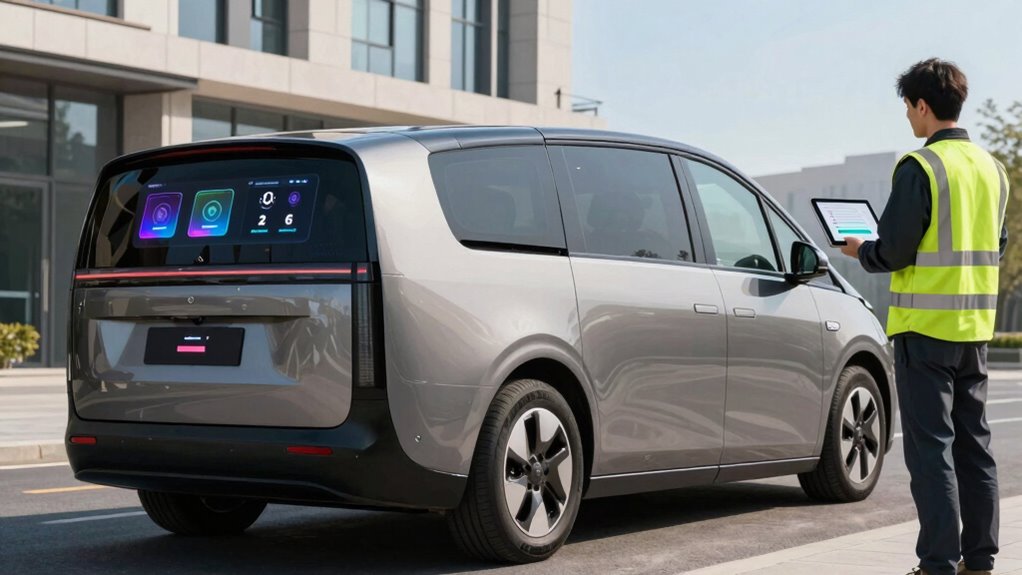

Over-the-air updates allow your E-Transit to receive continuous software improvements that boost safety, performance, and features without needing a dealership visit. These updates can enhance battery management, fix security vulnerabilities, and keep your vehicle compliant with evolving standards. Ford’s remote updates mean your vehicle stays current, adapts to new conditions, and offers a better user experience. Stay with us to explore how these updates keep your E-Transit better every day.
Key Takeaways
- OTA updates allow the E-Transit software to receive new features, bug fixes, and performance improvements remotely without dealership visits.
- Regular updates enhance vehicle safety, security, and compliance by quickly patching vulnerabilities and adapting to changing regulations.
- Software optimizations improve battery management, charging efficiency, and overall vehicle performance over time.
- Continuous background updates reduce downtime and manual interventions, ensuring the E-Transit remains at peak functionality.
- Over-the-air updates support ongoing innovation, adapting the vehicle to evolving user needs and environmental conditions seamlessly.

Have you ever wondered how your devices stay up-to-date without you lifting a finger? The same concept applies to modern vehicles, especially electric models like the Ford E-Transit. Over-the-air updates have revolutionized how vehicle software gets improved, guaranteeing your vehicle runs better, safer, and more efficiently without a trip to the dealership. With these updates, manufacturers can push new features, fix bugs, and enhance performance remotely, saving you time and hassle. But beyond convenience, over-the-air updates play an essential role in areas like vehicle cybersecurity and battery management, which are critical for electric vehicle operation.
Vehicle cybersecurity is a top priority as vehicles become more connected. Hackers are always looking for vulnerabilities, and outdated software can be an entry point for cyberattacks. Over-the-air updates allow manufacturers to promptly patch security flaws, safeguarding your vehicle from potential threats. Imagine a cybersecurity breach that could compromise your vehicle’s control systems or data — with OTA updates, these risks are minimized because manufacturers can quickly release security patches as soon as vulnerabilities are discovered. This continuous security process helps guarantee your vehicle remains protected against evolving cyber threats, providing peace of mind every time you hit the road. Additionally, the ability to update software remotely enhances the overall vehicle security by reducing the need for physical service visits.
Over-the-air updates quickly patch security flaws, protecting your vehicle from cyber threats and ensuring peace of mind on the road.
Battery management is another essential aspect that benefits from over-the-air updates. Electric vehicles rely heavily on sophisticated battery systems to deliver reliable performance and maximize range. Over time, software updates can optimize battery usage, improve charging algorithms, and extend battery life. Through OTA updates, manufacturers can fine-tune battery parameters based on real-world data, making your vehicle more efficient and reducing downtime. For example, if a new charging protocol is developed to speed up charging times or improve battery health, it can be delivered directly to your vehicle remotely. This continuous improvement means your E-Transit can adapt to new charging stations, changing conditions, or user habits, all without needing a visit to a service center. Furthermore, building herbalism skills can help you understand how to support holistic health, much like how continuous software improvements support vehicle health. Additionally, calibration plays a key role in ensuring that updated software maintains optimal performance and accuracy over time. Leveraging European cloud infrastructure can also enhance the security and reliability of these updates, ensuring your vehicle’s data remains protected during transmission.
It is also worth noting that robust update processes can help in maintaining compliance with evolving regulations and standards, ensuring your vehicle adheres to safety and environmental guidelines. In essence, over-the-air updates keep your vehicle at the cutting edge of technology, guaranteeing it remains secure and efficient throughout its lifespan. You don’t have to worry about manually installing updates or missing out on new features. Instead, your vehicle’s software evolves seamlessly in the background, providing ongoing enhancements that improve your driving experience. As electric vehicles like the E-Transit become more integrated into your daily routine, these updates guarantee your vehicle stays reliable, safe, and up-to-date. Whether it’s patching cybersecurity vulnerabilities or optimizing battery performance, over-the-air updates are the silent yet powerful force behind a smarter, safer driving future.

USANOOKS Microfiber Cleaning Cloth Grey - 12 Pcs (12.5"x12.5") - High Performance - 1200 Washes, Ultra Absorbent Microfiber Towel Weave Grime & Liquid for Streak-Free Mirror Shine - Car Washing Cloth
10x GRIP-ROOT WEAVE - TRAP MORE, WORK LESS: Ultra-absorbent microfiber towels for car Grip Root weave works like...
As an affiliate, we earn on qualifying purchases.
Frequently Asked Questions
How Secure Are Over-The-Air Software Updates?
Over-the-air software updates are quite secure because they use advanced encryption protocols to safeguard data during transmission. You don’t need to worry about unauthorized access or tampering. Plus, if an update causes issues, you can easily perform an update rollback to revert to a previous version. This combination of encryption and rollback capabilities ensures your vehicle’s software remains safe and reliable throughout the update process.
Can OTA Updates Be Scheduled for Specific Times?
Yes, you can schedule OTA updates for specific times through update scheduling features. This allows you to set scheduled timing that guarantees disruptions to your fleet’s operations. You simply choose the preferred time, often during low-traffic hours, and the system automatically executes the update. This assures your E-Transit software stays current without interfering with your daily activities, providing convenience and efficiency through effective update scheduling.
What Happens if an Update Fails During Installation?
Imagine your vehicle’s screen flickering as the update stumbles. If an update fails during installation, the system automatically performs an update rollback, restoring the previous version. It also runs update validation to guarantee everything’s stable before trying again. This process keeps your vehicle running smoothly, preventing glitches and ensuring that your software remains reliable without requiring manual intervention.
Are There Any Costs Associated With OTA Updates?
There are generally no direct costs for OTA updates, but you should consider the cost implications of frequent updates, which can impact data plans or bandwidth usage. The update frequency varies based on software improvements and vehicle needs, so staying informed helps you manage any potential expenses. Regular updates improve vehicle performance and safety, often making the investment worthwhile without adding extra charges from the manufacturer.
How Do Updates Affect Vehicle Warranty or Insurance?
Updates generally don’t affect your warranty coverage or insurance, as long as they’re official, authorized updates. Think of it like a software patch or a recall fix—these are designed to improve your vehicle without voiding coverage. However, if unauthorized modifications are made, insurance implications could arise, and warranty coverage might be impacted. Always verify updates come from the manufacturer to keep your warranty and insurance secure.

HOMEXCEL Microfiber Cleaning Cloth 12 Pack, 12.5 x 12.5 inch Microfiber Towels for Cars, Ultra Absorbent Washing Cloth, Lint Free Streak Free Cleaning Rags for Car, Kitchen, and Window (Grey)
Unparalleled Cleaning Performance: Our microfiber towels provide outstanding water absorption and adhesion; effortlessly absorb dirt and liquid, delivering...
As an affiliate, we earn on qualifying purchases.
Conclusion
With over-the-air updates, you can keep your e-transit software running smoothly and securely without visiting a service center. These updates improve functionality, fix bugs, and add new features seamlessly. Did you know that over 80% of fleet operators report reduced downtime thanks to OTA updates? Embracing this technology means you’re always ahead, ensuring your transit system stays efficient and reliable. Stay connected, stay updated, and enjoy the benefits of smarter transportation.

Chemical Guys Workhorse Professional Grade Microfiber Towels for Cars - Black 16x16 Inch Microfiber Cleaning Cloths for Home & Pet Drying, Soft & Scratch-Free, Washing, Drying & Cleaning, 3 Pack
Professional Towels (MIC35303) - Premium 16x16 inch microfiber cleaning cloths for cars; designed for washing, drying, and detailing...
As an affiliate, we earn on qualifying purchases.

Milwaukee 2903-20 M18 FUEL 18V Lithium-Ion Brushless Cordless 1/2 in. Drill/Driver (Tool-Only)
Auto-Stop Control Mode, Enhanced Safety
As an affiliate, we earn on qualifying purchases.