If your battery keeps dying, start by checking for parasitic drains with a multimeter—disconnect the negative terminal and see if the current exceeds 50 milliamps. Then, test your alternator’s voltage output while the engine runs; it should be between 13.8 and 14.8 volts. A weak alternator or electrical drain might be to blame, but figuring out the exact cause is easier when you understand your vehicle’s system. Keep going to learn how to pinpoint the problem precisely.
Key Takeaways
- Test the alternator voltage output with a multimeter; 13.8–14.8 volts indicates proper function.
- Check for parasitic drains by measuring current with all accessories off, aiming for less than 50 milliamps.
- Sequentially remove fuses to identify which circuit is causing excessive drain.
- Ensure the charging system components, including the alternator and voltage regulator, are functioning correctly.
- Regularly diagnose electrical loads and system performance to prevent future battery drainage issues.
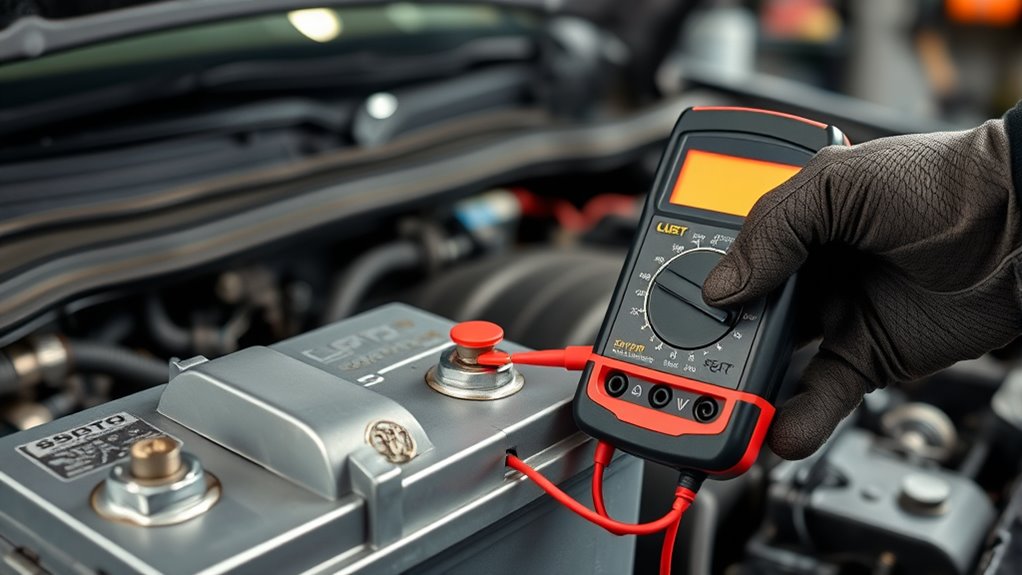
If your car’s battery keeps dying unexpectedly, it’s likely due to a parasitic drain or a weak alternator. Understanding your vehicle’s charging systems is essential in diagnosing these issues. The charging system includes the alternator, voltage regulator, and related wiring—all responsible for keeping your battery charged. When any component falters, your battery may not get the power it needs, leading to frequent draining. To identify the root cause, you’ll need reliable diagnostic tools, which are designed to measure electrical loads and test components accurately.
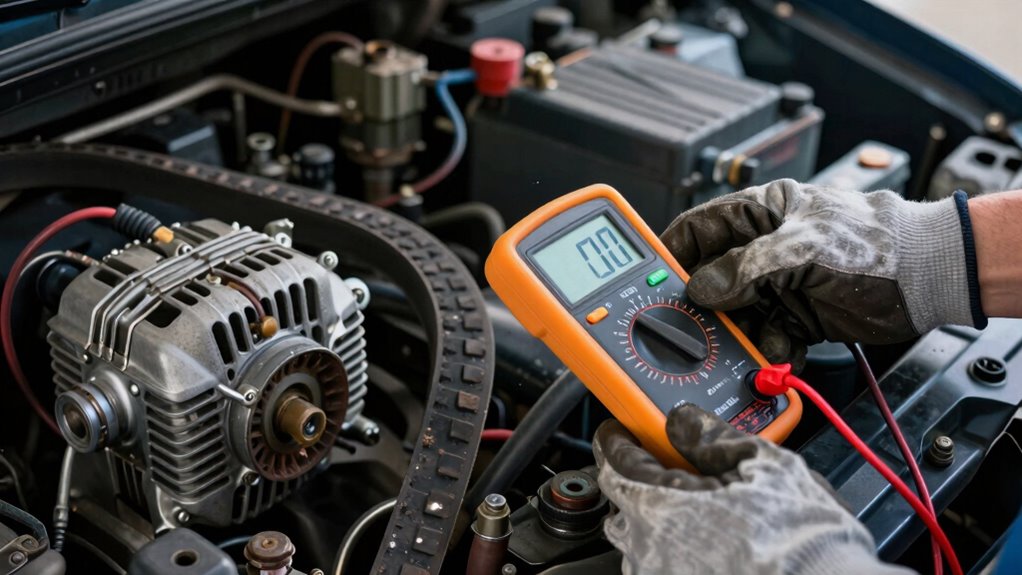
Start by inspecting your vehicle’s charging system with a multimeter or a specialized automotive diagnostic tool. These devices help you check the voltage output from the alternator when the engine runs. A healthy alternator typically produces around 13.8 to 14.8 volts. If the reading falls below this range, your alternator might be weak or failing, unable to replenish the battery effectively. Conversely, if the voltage exceeds the limit, it could damage your battery or other electrical parts, signaling a problem with the voltage regulator. Using diagnostic tools allows you to pinpoint whether the issue stems from the alternator itself or the charging system as a whole. Regular testing of your vehicle’s security zone info can also help detect potential electrical issues before they cause battery problems. Additionally, understanding the electrical system layout can help you identify common failure points and prevent future issues.
Check your alternator’s voltage output with a multimeter; 13.8 to 14.8 volts indicates proper function.
Once you confirm the alternator’s performance, you should test for parasitic drains, which are unintended electrical loads that keep drawing power even when your vehicle is off. To do this, turn off all accessories and remove the keys from the ignition. Set your diagnostic tool to measure current and connect it in series with the battery’s negative terminal. You’ll want to see a current draw of less than 50 milliamps; anything higher suggests a parasitic drain. Start pulling fuses one at a time and observe the readings. When you notice a significant drop in current, you’ve identified the circuit responsible for the drain. This method allows you to narrow down the problem efficiently and avoid unnecessary replacements. Additionally, understanding how the vehicle’s electrical system works can help you prevent future issues and extend the lifespan of your battery.
In troubleshooting charging systems and parasitic drains, diagnostic tools are invaluable. They give you precise measurements and help you avoid guesswork, so you can focus on fixing the real issue without wasting time or money. Regularly testing your vehicle’s charging system and being mindful of electrical loads can save you from frustrating battery failures. Remember, a healthy charging system ensures your battery stays charged and your vehicle runs smoothly. If you’re unsure about interpreting diagnostic results, consulting a professional technician can help you make the right repairs and restore your vehicle’s electrical health.

MELIPRON Van Partition Bulkhead Fit for Ford Transit 150 250 350 Mid Roof with Door Handle, Acrylic Custom Window Board
PERFECT FITMENT: Van safety partition fits for 2014-2026 Ford Transit 150 250 350 mid roof. Ideal for fleet...
As an affiliate, we earn on qualifying purchases.
Frequently Asked Questions
How Can I Prevent Future Parasitic Drains in My Vehicle?
To prevent future parasitic drains, you should perform regular preventive maintenance on your vehicle’s electrical system. Check for loose or corroded connections, and make certain all lights and accessories turn off when the car is off. Consider installing a battery disconnect switch or a parasitic drain tester to monitor electrical consumption. Keeping your battery and electrical system in good shape reduces the chances of unexpected drain, saving you time and money.
Are There Specific Signs Indicating a Failing Alternator Before It Completely Dies?
You might notice an alternator warning or battery warning signs before it fails completely. Look out for dimming headlights, flickering interior lights, or a warning light on your dashboard. If your vehicle stalls or the battery doesn’t hold a charge, these are clear signs. Regularly check your battery and alternator with a tester, and don’t ignore warning signs—they often indicate that your alternator is weakening and needs attention.
Can I Test My Battery and Alternator at Home Effectively?
Think of your car’s battery as its heart, and you can perform DIY testing to check its health and the alternator’s function. Use a multimeter to measure voltage—at rest, it should read around 12.6 volts, and when running, around 13.8-14.4 volts. This simple test helps you catch issues early, giving you peace of mind before a breakdown, all from the comfort of your garage.
How Long Does It Typically Take to Diagnose Parasitic Drain Issues?
Diagnosing parasitic drain issues usually takes about 30 minutes to an hour, depending on the complexity. You’ll use diagnostic tools like a multimeter to perform testing procedures, checking for abnormal current draw when the vehicle is off. Start by disconnecting the negative terminal and measuring the current. If the reading is high, systematically remove fuses to identify the culprit circuit, which speeds up the diagnosis process.
What Are Common Causes of Parasitic Drains in Modern Vehicles?
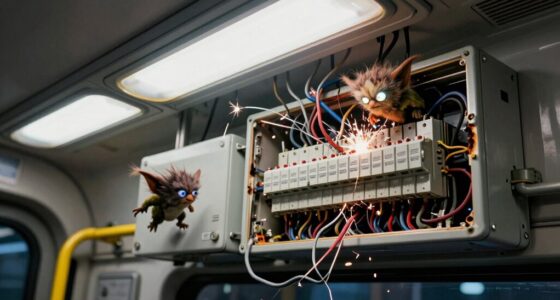
Think of your car’s electrical system as a delicate symphony, easily thrown off by hidden culprits. Common causes of parasitic drains include fuse issues that create silent leaks, and interior lights that stay on, slowly sapping power. These tiny gremlins can silently drain your battery, leaving you stranded. Regular inspections and careful attention to fuse integrity and interior lighting can keep your vehicle’s energy flowing smoothly.

MELIPRON Van Partition Bulkhead with Hinged Door Fit for Ford Transit 150 250 350 (2014-2026) High Roof, Heavy-Duty Steel Cargo Divider, Rattle-Free & Security Lock
DRIVE WITH CONFIDENCE: Heavy duty cabin safety bulkhead creates a solid steel fortress behind your seat. Our Ford...
As an affiliate, we earn on qualifying purchases.
Conclusion
Think of your car’s electrical system as a delicate garden. When parasitic drains or a weak alternator sneak in, they’re like weeds choking the life out of your battery. By staying vigilant and performing regular checks, you can keep your system healthy and your battery charged. Don’t let hidden drains or failing parts sneak up on you—tend to your car’s electrical garden, and it’ll reward you with a reliable start every time.

True Racks Van Shelving Package - Set of 3 Designed to fit Ford Transit Medium & High Roof Van
3 Steel Van Shelving Units: 59"High x 45"Long x 16"Deep to fit 2015-2025 Ford Transit Medium & High...
As an affiliate, we earn on qualifying purchases.

FetonAuto 4PCS Transit Interior Carbin Courtesy Load Space Area Roof Top Cargo Van LED Lights with Wire Harness Accessories for 2014-2024 Ford Transit 150 250 350 HD Connect, White 6000K
𝐅𝐎𝐑 𝐓𝐑𝐀𝐍𝐒𝐈𝐓 𝐕𝐀𝐍 Design for Ford Transit's interior lighting with load space area roof top cargo lights, for...
As an affiliate, we earn on qualifying purchases.