
Orange cables signal high-voltage lines that carry dangerous, potentially lethal electricity. You should never touch or handle them without proper training and protective gear. Be aware of designated do-not-touch zones marked by barriers and warning signs, and only enter with approval and appropriate PPE. Always make sure equipment is de-energized and verify with testing devices before working nearby. Staying vigilant and following safety protocols helps prevent accidents. Learn more about keeping safe around high-voltage environments.
Key Takeaways
- Orange cables indicate high-voltage, dangerous electricity, requiring proper training and protective gear before handling.
- Do-not-touch zones are marked with barriers and signs; only authorized personnel with PPE can enter.
- Always verify equipment is de-energized and use testing devices before working near high-voltage cables.
- Follow lockout/tagout procedures and use insulated tools to prevent accidental contact.
- Maintain focus and adhere to safety protocols to avoid injury or death in high-voltage environments.
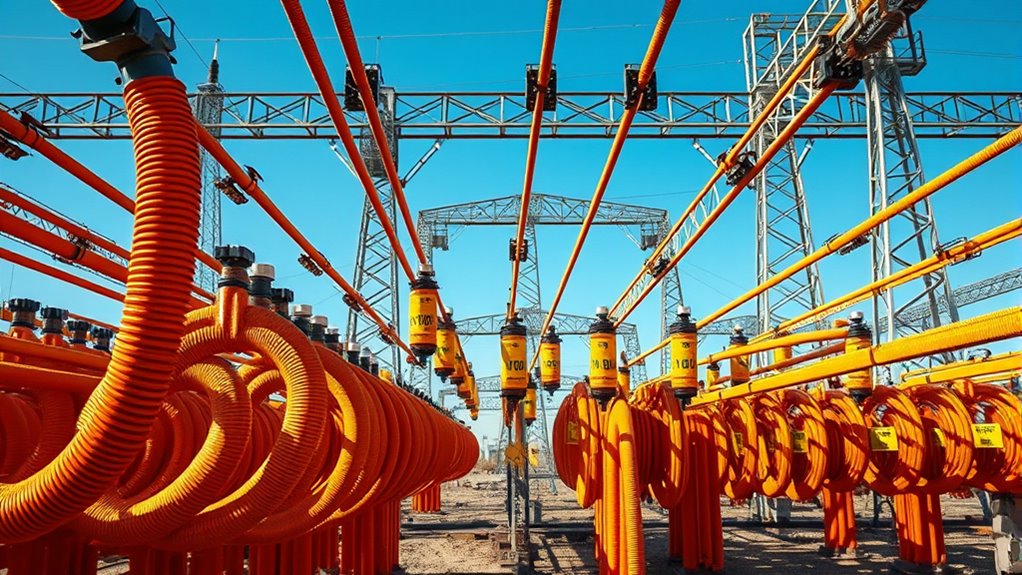
Working with high-voltage equipment can be dangerous if you don’t follow proper safety procedures. One of the most visible safety features in high-voltage environments is the use of orange cables. These cables are intentionally colored to stand out, signaling that they carry dangerous levels of electricity. Never assume an orange cable is safe to touch or handle without proper training and protective gear. Always respect the color coding as a visual cue that the cable is live and potentially lethal.
Before working near these cables, ensure they’re properly insulated and de-energized, following lockout/tagout procedures. Handling or tampering with orange cables without authorization or appropriate safety measures can result in severe electrical shocks, burns, or even fatalities. It is also important to be aware of the proper safety protocols when working around high-voltage equipment to minimize risks.
In addition to recognizing orange cables, you must be aware of designated do-not-touch zones. These zones are clearly marked areas where high-voltage parts are exposed or accessible. You should never enter these zones unless you’re authorized, trained, and equipped with the proper personal protective equipment (PPE). Barriers, warning signs, and physical boundaries are put in place to prevent accidental contact. Respect these boundaries at all times.
If you need to work within a do-not-touch zone, follow strict safety protocols, including de-energizing equipment, verifying that voltage is eliminated, and using insulated tools. Never rely solely on visual cues or assumptions that a component is safe; always verify with appropriate testing devices.
Remember that high-voltage environments are dynamic and require constant vigilance. Even if your task seems straightforward, don’t take shortcuts. Always double-check that the power is off before starting work. If you’re unsure about the status of the equipment or the safety measures in place, consult a supervisor or safety officer.
Wearing the correct PPE, such as insulated gloves and insulating mats, is essential whenever you’re near high-voltage parts, especially within or around do-not-touch zones. Keep your focus on safety, and avoid distractions that could lead to accidental contact with live components.
Ultimately, respecting orange cables and do-not-touch zones isn’t just about following rules; it’s about protecting yourself and others. High-voltage electricity can cause serious injury or death if mishandled.
Frequently Asked Questions
How Often Should High-Voltage Equipment Be Inspected for Safety?
You should inspect high-voltage equipment at least once a year, or more frequently if the environment is harsh or the equipment shows signs of wear. Regular inspections help identify potential problems early, preventing accidents and ensuring safety.
Always follow your company’s specific safety protocols and manufacturer recommendations.
Keep detailed records of each inspection, and don’t skip any steps—your vigilance keeps everyone safe.
What PPE Is Required When Working Near Orange Cables?
When working near orange cables, you need to wear appropriate PPE such as insulated gloves rated for high voltage, flame-resistant clothing, safety goggles, and a hard hat.
You should also use rubber-soled boots and verify your PPE is in good condition. Always double-check that your gear meets safety standards before starting work.
Proper PPE protects you from electrical shocks, burns, and arc flash hazards, keeping you safe in high-voltage environments.
Are There Specific Signs Indicating a Do-Not-Touch Zone?
Did you know that over 60% of high-voltage accidents happen when workers ignore warning signs? Yes, clear signs often mark do-not-touch zones around orange cables, including warning labels, barrier tapes, and safety posters.
You should always look for these visual cues before approaching. If signs aren’t visible, don’t assume it’s safe—stay at a safe distance and consult safety protocols or supervisors.
How to Safely De-Energize High-Voltage Lines in an Emergency?
In an emergency, you should first alert the power company and follow their instructions.
If you must act immediately, wear insulated gloves and use approved tools to disconnect the power source.
Make certain you’re standing on an insulated surface, avoid touching any part of the line, and maintain a safe distance.
Never attempt de-energizing high-voltage lines alone; always rely on trained professionals for this dangerous task.
What Training Is Recommended for Workers Exposed to High-Voltage Areas?
You should receive specialized training in high-voltage safety, covering electrical theory, hazard recognition, and emergency procedures. This training typically includes classroom instruction, hands-on practice, and refresher courses to guarantee you’re prepared for potential risks.
Always follow safety protocols, wear appropriate personal protective equipment, and stay aware of your surroundings.
Proper training helps you avoid accidents and respond effectively if exposure or emergencies occur in high-voltage areas.
Conclusion
Remember, respecting the boundaries of orange cables and do-not-touch zones isn’t just about rules — it’s about safeguarding your well-being. By honoring these gentle reminders, you create a safer environment for yourself and others around you. Think of these precautions as a courteous dance, guiding you away from unseen risks. Embrace the responsibility with confidence, knowing that a cautious step today guarantees a brighter, safer tomorrow. Stay vigilant, stay safe, and always prioritize your safety.