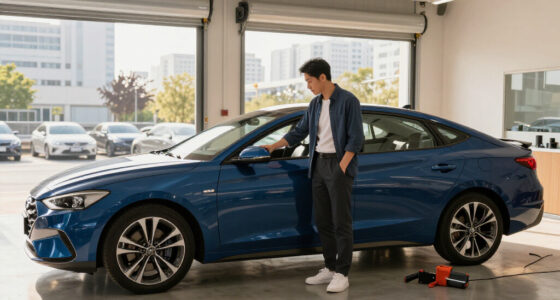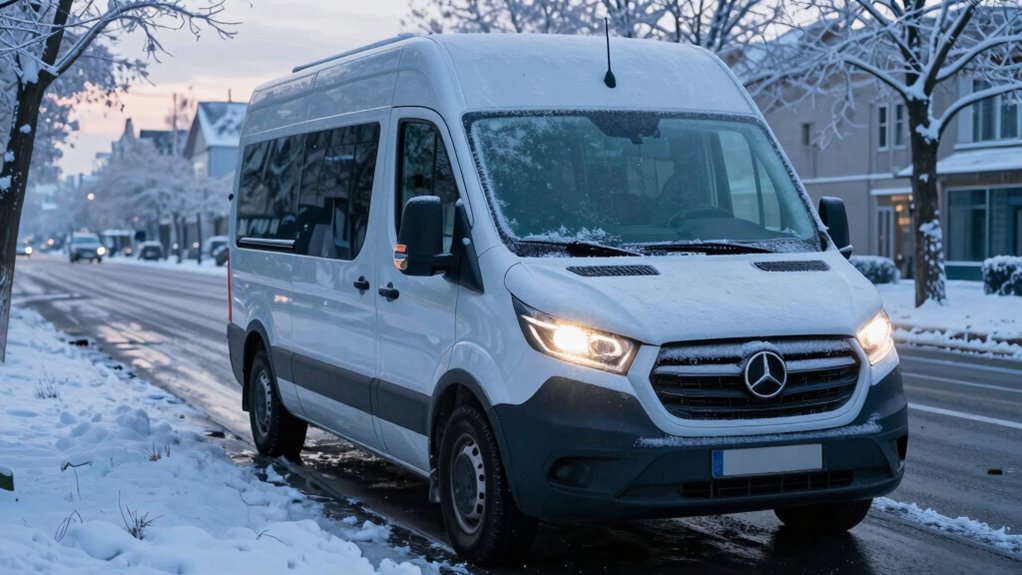

In cold weather, your e-transit’s range and performance drop because low temperatures slow down battery chemistry, reducing power and efficiency. Tire traction also worsens as rubber hardens, making driving more challenging and increasing the risk of slipping. To counter these effects, precondition your vehicle, use winter tires, and drive smoothly with extra stopping distance. Want to discover more tips to keep your e-transit running smoothly in winter? Keep going for essential strategies.

Get business pricing on garage and car supplies
- Business-only prices and quantity discounts
- Tax-exempt purchasing
- Multiple users, one account, clear invoices
Key Takeaways
- Cold temperatures slow chemical reactions inside the battery, reducing its ability to hold and deliver power.
- Battery efficiency declines in winter, decreasing vehicle range and increasing recharging needs during cold weather.
- Preconditioning the vehicle while plugged in warms the battery, helping maintain optimal performance and range.
- Reduced tire traction in cold weather requires proper tire maintenance and winter tires for safety and efficiency.
- Safe winter driving habits and emergency preparedness are essential to manage performance issues and ensure safety.

Have you ever wondered how to stay safe when driving in cold weather? Cold temperatures can considerably impact your vehicle’s performance, especially if you’re driving an e-transit or any electric vehicle. One of the main concerns is how the cold affects battery efficiency. When temperatures drop, your battery’s ability to hold and deliver power diminishes because chemical reactions inside the battery slow down. This means your vehicle’s range will likely decrease, and you might find yourself needing to recharge more often than usual. To combat this, it’s helpful to precondition your vehicle while still plugged in, warming up the battery before you start your trip. This not only boosts battery efficiency but also ensures you get the most out of each charge. Additionally, keeping your battery at an ideal temperature can prevent sudden power drops and extend its lifespan.
Another critical factor to think about is tire traction. Cold weather causes the rubber in your tires to harden, reducing their grip on icy or snow-covered roads. Without proper traction, you’re at a higher risk of slipping or losing control, which can be dangerous. To improve safety, switch to winter tires that are designed with softer rubber compounds and deeper treads to grip snow and ice better. Regularly check your tire pressure as well—cold air causes tire pressure to drop, which further decreases traction and can lead to uneven tire wear. Properly inflated tires provide better contact with the road, enhancing both safety and fuel efficiency. Remember, maintaining good tire traction not only helps you stay safe but also maximizes your vehicle’s range by reducing rolling resistance.
In cold weather, your driving habits also play a role in maintaining safety and efficiency. Drive smoothly, avoid sudden acceleration or braking, and give yourself extra stopping distance—ice and snow make stopping distances longer. Use regenerative braking wisely to recover energy and extend your range, but be cautious on slick surfaces. Keep your vehicle’s windows clear of frost and snow to ensure good visibility, and always carry emergency supplies like blankets, a flashlight, and extra snacks in case you get stranded.
winter tires for electric vehicles
As an affiliate, we earn on qualifying purchases.
As an affiliate, we earn on qualifying purchases.
Frequently Asked Questions
How Does Cold Weather Impact Battery Lifespan Over Time?
Cold weather accelerates battery degradation over time because low temperatures strain your battery’s thermal management system. When it’s chilly, your battery works harder to stay warm, which can cause long-term wear. You might notice reduced capacity and range initially, but proper thermal management helps maintain battery health. To extend your battery’s lifespan, keep your vehicle in a warm environment when possible and guarantee the thermal management system functions effectively.
Can Tire Pressure Adjustments Improve Winter Driving Range?
Yes, adjusting tire pressure can improve your winter driving range and boost winter safety. When you maintain proper tire pressure, your tires grip the road better, reducing rolling resistance and increasing efficiency. Cold weather naturally lowers tire pressure, so check and inflate your tires regularly to the recommended levels. Properly inflated tires help your E-Transit perform at its best, ensuring safer driving and better range during winter conditions.
What Are the Best Practices for Warming up an Electric Vehicle?
Preconditioning routines are your best bet for warming your EV efficiently. Before driving, plug in your vehicle to preheat the cabin and battery, reducing energy drain during your trip. Use cabin heating strategies like seat warmers and steering wheel heaters instead of full blast defrosting. This way, you start with a warm, comfortable interior and maximize your range, ensuring your E-Transit performs well even in chilly weather.
How Do Different Winter Climates Affect E-Transit Performance?
In different winter climates, snow traction and icy road handling markedly impact your E-Transit’s performance. Colder temperatures reduce battery efficiency, lowering range, while snow and ice challenge your vehicle’s grip and stability. To stay safe, reduce speed on icy roads, accelerate gently, and verify your tires are suited for winter conditions. These measures help maintain control, improve traction, and optimize your vehicle’s performance in varying winter climates.
Are There Specific Charging Tips for Winter Conditions?
You should plan your charging stops carefully, ensuring you have easy access to charging stations, especially in winter conditions. Keep your E-Transit’s battery warm when possible, and use fast chargers to minimize cold-related range loss. Always prioritize winter driving safety by preconditioning your vehicle and avoiding long waits at charging stations in bad weather. Regularly check for station accessibility updates to stay prepared and maintain ideal performance.
As an affiliate, we earn on qualifying purchases.
Conclusion
As winter’s chill wraps around your journey like a thick fog, remember that cold weather isn’t just a backdrop—it’s a challenge to your e-transit‘s range and performance. By staying prepared, you keep your electric vehicle running smoothly through icy roads and frosty mornings. Think of your e-transit as a brave traveler, forging ahead through winter’s icy grasp. With proper care, you’ll navigate the season’s hurdles and emerge victorious, leaving winter’s grip behind like a distant storm fading in the rearview mirror.
cold weather tire pressure gauge
As an affiliate, we earn on qualifying purchases.
As an affiliate, we earn on qualifying purchases.
As an affiliate, we earn on qualifying purchases.
Halloween Picks
halloween
As an affiliate, we earn on qualifying purchases.