
TL;DR

Get business pricing on garage and car supplies
- Business-only prices and quantity discounts
- Tax-exempt purchasing
- Multiple users, one account, clear invoices
Ford has announced plans to produce a new LFP battery in the US, hiring over 500 workers. Rivian, a key competitor, is also adjusting its workforce and pushing into affordable EV markets. The development signals increased focus on cost-effective EV batteries amid rising industry competition.
Ford has announced it is hiring over 500 workers to manufacture a new lithium-iron-phosphate (LFP) battery at its BlueOval Battery Park in Michigan, with plans to reach 1,700 American jobs. This move aims to support the company’s push for affordable EVs, competing directly with Rivian, which is also adjusting its workforce amid market pressures.
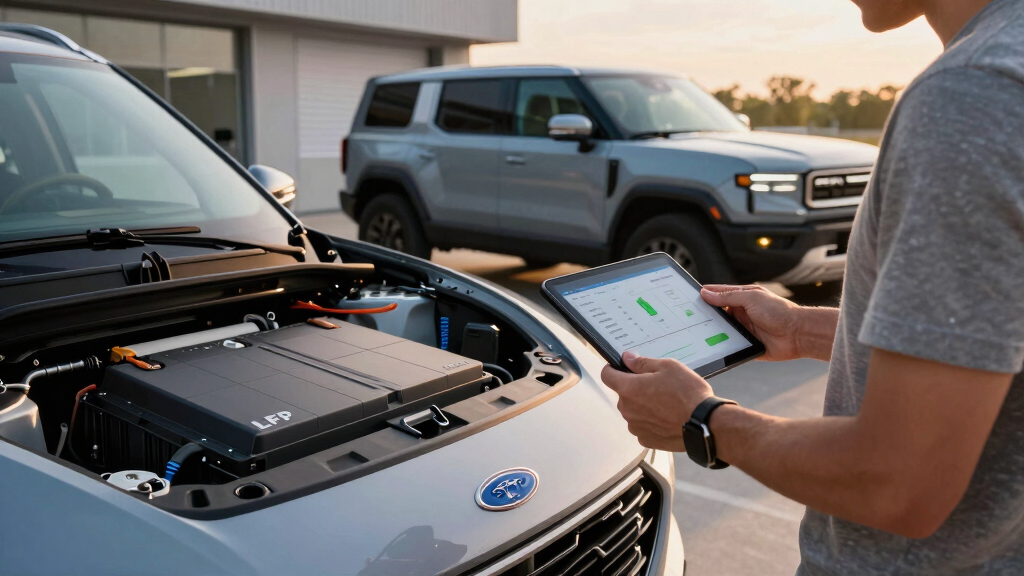
Ford confirmed that it is actively recruiting for its new LFP battery manufacturing plant in Michigan, with a target to ship these batteries later this year. The company plans to produce prismatic LFP batteries, which are designed to power its upcoming affordable midsize electric truck on the Universal EV Platform. Ford’s focus on LFP technology aims to reduce costs and improve safety, addressing the need for lower-priced EVs in the US market.
Meanwhile, Rivian has laid off several hundred workers—about 2% of its workforce—as part of a recent restructuring effort. Despite workforce reductions, Rivian continues to pursue growth, including securing a significant Energy Department loan for its Georgia factory and expanding into the affordable EV segment with its upcoming R2 SUV. Rivian also joined the ChargeScape initiative to facilitate EV charging and utility discounts.
Impact of Ford’s LFP Battery Strategy on EV Market Competition
This development underscores a strategic shift toward cost-effective EV batteries, with Ford aiming to make electric vehicles more affordable and competitive against Tesla and Rivian. The move could accelerate the adoption of EVs in the US by reducing upfront costs, especially as automakers face policy and market challenges. Rivian’s workforce adjustments reflect the broader industry pressures, but its continued investments highlight ongoing competition in the EV space.
LFP battery for electric vehicles
As an affiliate, we earn on qualifying purchases.
As an affiliate, we earn on qualifying purchases.
Industry Trends Toward Cost-Effective EV Batteries and Market Competition
Ford’s announcement follows years of industry focus on reducing EV costs through new battery chemistries like LFP, which offer lower costs and improved safety. The company’s revival of the Universal EV Platform and recent hiring spree signal its commitment to affordable EVs, despite setbacks from federal policy changes and market fluctuations. Rivian, once a startup darling, has shifted strategies with workforce cuts but remains a key player aiming to compete on price and technology, especially with its upcoming R2 SUV and its role in the broader EV market recovery.
“We have welcomed more than 500 employees to BlueOval Battery Park Michigan so far, and we plan to reach 1,700 American jobs. These LFP prismatic batteries will power Ford’s affordable midsize electric truck.”
— Scott Davis, Ford
As an affiliate, we earn on qualifying purchases.
What Remains Unclear
It is not yet clear when Ford will fully ramp up production of its LFP batteries or how these will impact its overall EV lineup and pricing. Additionally, Rivian’s long-term strategy post-layoffs remains uncertain, including how its upcoming models will compete in the affordable EV segment and whether workforce cuts will affect its growth trajectory.
As an affiliate, we earn on qualifying purchases.
Upcoming Milestones in Ford’s Battery Rollout and Rivian’s Market Moves
Ford plans to begin shipping the new LFP batteries later this year, with production scaling up through 2024. The company will also unveil its affordable EV model powered by these batteries. Rivian is expected to continue its restructuring, with potential updates on its R2 SUV and further market expansion efforts in the coming months.
As an affiliate, we earn on qualifying purchases.
Key Questions
When will Ford start delivering vehicles with the new LFP batteries?
Ford plans to ship the batteries later this year, with vehicle launches expected shortly thereafter, though specific dates have not been confirmed.
How will Rivian’s workforce cuts affect its upcoming EV models?
It remains unclear how the layoffs will impact Rivian’s production and development timelines, but the company continues to push forward with its R2 SUV and other initiatives.
What are the advantages of LFP batteries over traditional lithium-ion batteries?
LFP batteries are lower cost, safer, and have a longer lifespan, but they are typically heavier and have less energy density, which can affect range.
Will Ford’s new batteries significantly lower EV prices?
Ford aims to use the LFP batteries to reduce upfront costs, potentially making EVs more affordable, especially in the mid-size truck segment, but the exact impact depends on manufacturing scale and market factors.
How does Rivian’s strategy differ from Ford’s in the EV market?
While Ford is focusing on cost reduction and mass-market EVs with new batteries, Rivian is emphasizing premium features, off-road capability, and strategic restructuring to compete in both the luxury and affordable segments.
Source: CleanTechnica
Fall Picks
fall essentials
As an affiliate, we earn on qualifying purchases.