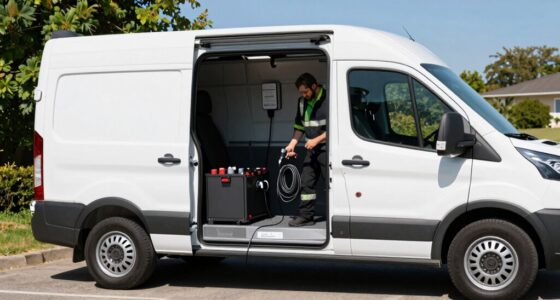

To beat range anxiety, focus on smart battery management by avoiding full discharges and keeping the charge between 20% and 80%. Plan efficient routes with GPS and real-time traffic data to reduce unnecessary travel and conserve energy. Drive smoothly, avoid rapid acceleration, and use eco-driving modes to maximize mileage. Regular maintenance and regenerative braking also help. For more tips on boosting your E-Transit’s range, explore strategies that keep your vehicle performing at its best.
Key Takeaways
- Plan efficient routes using GPS and real-time traffic data to minimize detours and avoid congestion.
- Practice smooth driving techniques like gradual acceleration and deceleration to conserve battery energy.
- Keep the battery charge between 20% and 80% to preserve battery health and extend range.
- Use regenerative braking to recover energy during deceleration and reduce overall power consumption.
- Regularly maintain vehicle systems, including tire inflation and software updates, to optimize efficiency.
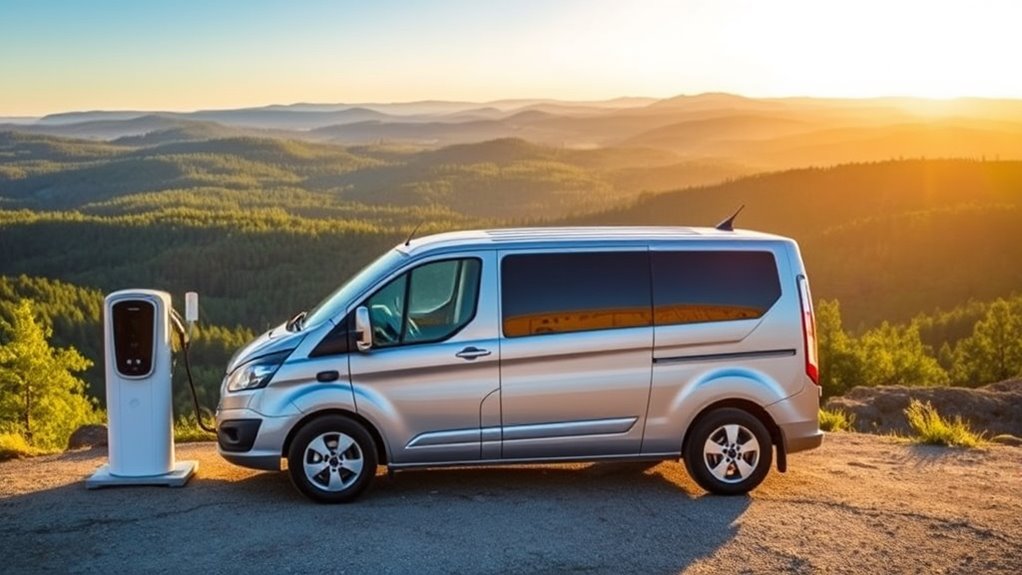
Electric transit vehicles offer considerable savings and efficiency benefits, but to get the most out of your E-Transit, you need to maximize its mileage. One of the key ways to do this is by mastering battery management. Proper battery care ensures your vehicle operates at peak efficiency and prolongs its lifespan. Avoid letting the battery deplete completely before recharging, as deep discharges can strain the system and reduce overall range. Instead, aim to keep the battery charge between 20% and 80%, which helps maintain ideal health. Regularly monitor battery temperature; extreme heat or cold can diminish performance. If your E-Transit is equipped with thermal management systems, make sure they’re functioning correctly to keep the battery within a safe operating range. Additionally, use the vehicle’s energy-saving features, such as regenerative braking, to recover energy during deceleration. This not only extends your mileage but also reduces strain on the battery. Maintaining proper battery health is essential for maximizing your vehicle’s range and efficiency. Keeping the battery in optimal condition also involves understanding how different driving patterns impact battery longevity, which is crucial for long-term savings. Incorporating battery monitoring systems can help you stay informed about your battery’s status in real-time and prevent potential issues before they arise.
Route optimization plays an essential role in stretching your E-Transit’s range. Planning routes carefully can markedly reduce unnecessary mileage and avoid traffic congestion that wastes energy. Use GPS and routing software to select the most direct paths, avoiding detours and known congestion points. Incorporate real-time traffic data to adapt your route on the fly, ensuring you stay on the most efficient course. When possible, structure your schedule to minimize stop-and-go driving, which consumes more energy than steady cruising. Incorporate scheduled breaks to recharge the vehicle if your routes are long, and consider the terrain—steep inclines demand more power, reducing overall range. By carefully mapping out your daily routes, you’re not just saving energy—you’re also reducing the frequency of recharging, which enhances operational efficiency. Good route planning also involves understanding how different road conditions affect energy consumption, helping you make smarter driving decisions.
Combine good battery management with strategic route planning to maximize your E-Transit’s mileage. Keep an eye on battery levels and adapt your driving style accordingly—smooth acceleration and deceleration conserve energy. Use the vehicle’s eco-driving modes when available, and avoid excessive idling. Regular maintenance, such as tire inflation and checking for system updates, also contributes to better efficiency. The more you learn about your vehicle’s performance and how to manage its energy use, the farther you’ll go before needing a recharge. This proactive approach minimizes range anxiety, boosts productivity, and ensures your electric transit vehicle operates at its best. Staying informed about ongoing advancements in battery technology can further enhance your vehicle’s efficiency over time.
Frequently Asked Questions
How Does Cargo Weight Impact E-Transit Range?
Cargo weight directly impacts your E-Transit’s range, as heavier loads demand more energy. To extend your mileage, focus on cargo optimization and weight reduction strategies, such as removing unnecessary items and choosing lightweight materials. By minimizing cargo weight, you lessen the strain on your vehicle’s battery, allowing you to travel further on a single charge. Proper cargo management is essential for maximizing efficiency and preventing range anxiety.
What Is the Ideal Tire Pressure for Maximum Mileage?
Imagine you’re tuning up your classic car—setting the right tire pressure is key. For your E-Transit, maintaining ideal inflation, usually around 110-120 psi, maximizes mileage. Check your tire pressure regularly, especially before long trips, to guarantee tires are neither under nor over-inflated. Proper tire pressure improves efficiency, extends tire life, and helps you get the most out of each charge, reducing range anxiety.
How Does Climate Affect Electric Vehicle Range?
Climate markedly impacts your electric vehicle range. In cold weather, you’ll see reduced mileage because of increased battery resistance and the need for cabin heating, which consumes extra energy. Hot weather can also decrease range due to cooling system demands. To optimize your E-Transit’s mileage, practice climate adaptation by planning for weather considerations, such as pre-conditioning your vehicle and maintaining proper tire pressure, ensuring efficient energy use regardless of climate conditions.
Can Driving Habits Significantly Extend E-Transit Mileage?
Think of your driving style as the steering wheel of your E-Transit’s mileage. Gentle acceleration and smooth braking can stretch your range like a well-tuned engine. Route planning also plays an essential role—opt for flatter, direct routes to minimize energy use. Yes, your driving habits can greatly extend your E-Transit’s mileage, turning everyday driving into an opportunity to conserve power and maximize efficiency effortlessly.
What Maintenance Routines Optimize Battery Efficiency?
You can optimize your e-transit’s battery efficiency by regularly calibrating the battery to maintain accurate charge readings. Keep an eye on thermal management by ensuring cooling systems are clean and functioning properly, especially during extreme temperatures. Avoid deep discharges and rapid charging when possible, as these can strain the battery. Consistent maintenance helps preserve battery health, extending your vehicle’s range and overall lifespan.
Conclusion
By following these tips, you’ll turn your E-Transit into a well-oiled machine, gliding smoothly across the miles with confidence. Think of your vehicle as a trusty steed, ready to carry you further each day, free from range anxiety. With a little effort and smart driving, you’ll stretch your battery’s legs and maximize every charge—making your e-transit your reliable partner on every journey. The road ahead is wide open; just keep your eyes on the horizon.