
Solid-state batteries could transform electric vans by making them safer, faster to charge, and more efficient. They use solid electrolytes, reducing fire and leak risks, and support higher charging rates for quick recharges. With longer lasting, lighter batteries, your electric van would cover more miles and cost less to maintain. This technology also opens doors for wider adoption and better performance. Keep exploring to discover how these innovations are shaping the future of electric transportation.
Key Takeaways
- Solid-state batteries enhance safety by reducing fire and leakage risks, enabling safer operation of electric vans.
- They support faster charging, decreasing downtime and improving efficiency for commercial fleet operations.
- Increased energy density allows for longer ranges and higher payload capacities in electric vans.
- Improved durability lowers maintenance costs and extends battery lifespan, reducing total ownership expenses.
- Their scalability fosters widespread adoption, accelerating the transition to safer, more reliable electric commercial vehicles.
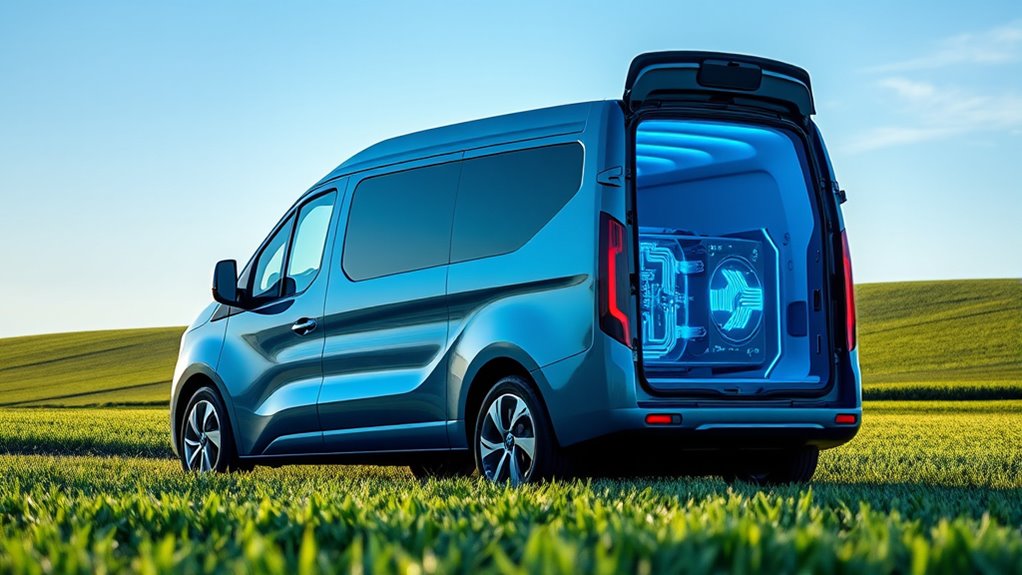
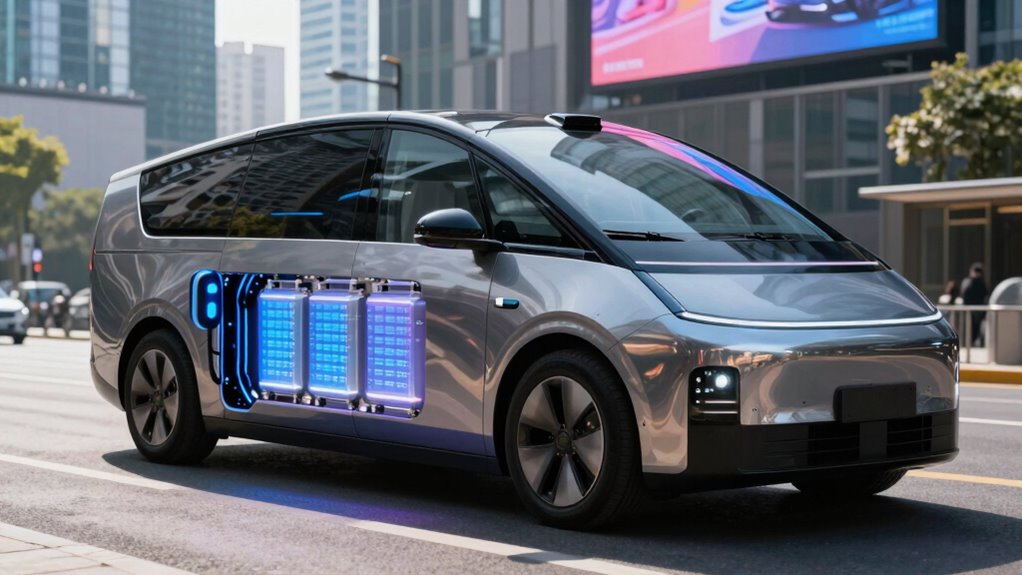
As electric vans become increasingly essential to sustainable transportation, solid-state batteries are poised to revolutionize their performance. These advanced batteries promise higher energy densities, faster charging times, and, most importantly, enhanced safety. Unlike traditional lithium-ion batteries that use liquid electrolytes, solid-state batteries employ a solid electrolyte, which markedly reduces the risk of leaks, fires, or explosions. This leap in battery safety gives you greater confidence in deploying electric vans for daily operations, especially in urban environments where safety concerns are paramount.
Solid-state batteries enhance electric van safety, reliability, and performance with higher energy density and reduced fire risk.
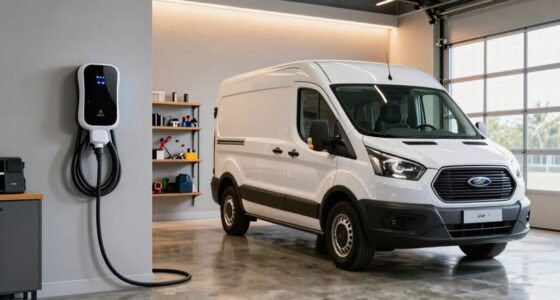
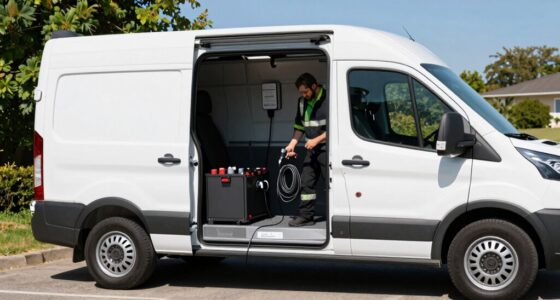
The shift to solid-state technology also impacts the charging infrastructure needed to support electric vans. Because these batteries can handle higher charging rates safely, charging stations will become more efficient and widespread. You’ll likely see faster charging options that allow you to get back on the road quickly, minimizing downtime. This could lead to a more robust charging network, making long-distance travel and frequent stops more feasible for electric vans. As the technology matures, charging stations might become more standardized, reducing the complexity and cost associated with current infrastructure. This evolution will make electric vans more practical for fleet operators and delivery services, who need reliable, quick turnaround charging options.
Furthermore, the improved safety profile of solid-state batteries means you’ll have fewer concerns about battery degradation and thermal runaway, common issues with conventional lithium-ion cells. This stability extends the lifespan of your electric van’s battery, reducing replacement costs and maintenance. Over time, this can translate into lower total ownership costs and increased reliability, which are critical for your operations. As the technology advances, manufacturers are working on scalable production methods, meaning that solid-state batteries could soon become more affordable, further accelerating adoption in the commercial vehicle sector. Additionally, the manufacturing scalability of these batteries will play a crucial role in making them accessible and cost-effective for widespread use.
You’ll also benefit from the potential for lighter battery packs, which improves the overall efficiency of your electric vans. Less weight means better range and payload capacity, making your operations more efficient. Plus, the higher energy density of solid-state batteries opens the door for longer routes without the need for frequent recharging. As these batteries become more prevalent, they could redefine what’s possible with electric vans, allowing you to operate more sustainably and cost-effectively.
In essence, the integration of solid-state batteries will transform your experience with electric vans by making them safer, more reliable, quicker to charge, and more efficient. The advancements in battery safety and charging infrastructure are set to address many current limitations, paving the way for a cleaner, more practical future in transportation.
Frequently Asked Questions
How Do Solid-State Batteries Compare to Traditional Lithium-Ion Batteries in Cost?
Solid-state batteries currently cost more than traditional lithium-ion batteries due to higher material costs and manufacturing complexities. You’ll find the cost comparison favors lithium-ion batteries for now, but solid-state tech promises cheaper production as materials improve and processes scale up. Although initial costs are higher, solid-state batteries could lower long-term expenses through better performance and safety, making them an attractive investment for future electric van applications.
What Are the Manufacturing Challenges for Solid-State Batteries in Vans?
You face manufacturing challenges with solid-state batteries in vans, mainly due to scalability issues and material stability. Scaling production requires advanced processes that guarantee consistent quality, which is tricky with these newer materials. Additionally, maintaining material stability over long-term use is essential to prevent degradation. Overcoming these hurdles demands significant research and investment, but success could lead to safer, more efficient electric vans with longer ranges.
How Long Do Solid-State Batteries Typically Last in Electric Vans?
Solid-state batteries generally last between 8 to 15 years in electric vans, depending on usage and maintenance. You’ll find that their battery lifespan is influenced by degradation factors such as temperature fluctuations, charge cycles, and how often you fast-charge. To maximize longevity, avoid extreme temperatures and frequent deep discharges. Proper care can help you get the most out of your solid-state battery, ensuring reliable performance over many years.
Are Solid-State Batteries Environmentally Friendly to Produce and Recycle?
You’ll find that solid-state batteries are generally more environmentally friendly to produce and recycle because they involve fewer toxic materials and safer recycling processes. Their design simplifies recycling processes, reducing environmental impact. Plus, because they last longer and are safer, they generate less waste over time. Overall, solid-state batteries offer a greener alternative, helping cut down pollution and conserve resources during both manufacturing and recycling stages.
When Will Solid-State Battery Technology Be Commercially Available for Vans?
You can expect solid-state battery technology for vans to become commercially available around 2028 to 2030. This breakthrough promises improved battery safety, faster charging, and longer range. As automakers and charging infrastructure providers invest heavily, you’ll see more widespread adoption soon. Keep an eye on industry updates, because these advancements will make electric vans more reliable and convenient, transforming your driving experience with safer batteries and better charging options.
Conclusion
Imagine a future where electric vans charge in just minutes and travel over 300 miles on a single charge. Solid-state batteries could make this a reality, revolutionizing delivery and logistics industries. Currently, lithium-ion batteries dominate, but solid-state tech promises up to 50% higher energy density. This breakthrough could cut costs, boost range, and accelerate adoption. With such advancements, you’ll soon see more eco-friendly vans on the road, transforming transportation as we understand it.