Neglecting your coolant system may seem minor, but it quickly becomes a bigger story. When you ignore coolant levels, radiator health, or signs of leaks, you risk overheating and damaging key engine parts like pistons, valves, and gaskets. Rust and clogs can form fast, restricting coolant flow and leading to engine failure. Small issues can snowball into costly repairs if left unchecked. Keep an eye on your system—you’ll learn how to prevent these problems before they worsen.

Get business pricing on garage and car supplies
- Business-only prices and quantity discounts
- Tax-exempt purchasing
- Multiple users, one account, clear invoices
Key Takeaways
- Small coolant leaks or contamination can quickly lead to engine overheating if left unaddressed.
- Neglecting radiator maintenance causes debris buildup, reducing cooling efficiency and risking rapid system failure.
- Overheating damages engine components like pistons and gaskets, escalating repairs from minor to major.
- Rust and corrosion from coolant neglect clog passages, causing localized overheating and system breakdowns.
- Ignoring coolant issues accelerates component wear, increasing the likelihood of catastrophic engine failure.
Neglecting your vehicle’s coolant system can lead to serious engine damage, yet many drivers overlook its importance. When you ignore proper coolant levels or fail to maintain your radiator, you risk engine overheating, which can cause costly repairs or even total engine failure. The coolant acts as your engine’s lifeline, absorbing heat and transferring it away from critical components. If this system isn’t functioning correctly, the engine temperature can soar beyond safe limits, leading to immediate damage.
Engine overheating is the most common consequence of coolant neglect. When your radiator isn’t properly maintained or the coolant is old and contaminated, heat isn’t dissipated effectively. You might notice the temperature gauge creeping into the red zone or, worse, your engine warning light flashing. Once overheating occurs, the damage accelerates rapidly. Components such as pistons, valves, and head gaskets can warp or crack under excessive heat. This destruction often results in expensive repairs or the need for an engine replacement.
Engine overheating from neglected coolant can warp pistons and gaskets, leading to costly repairs or engine failure.
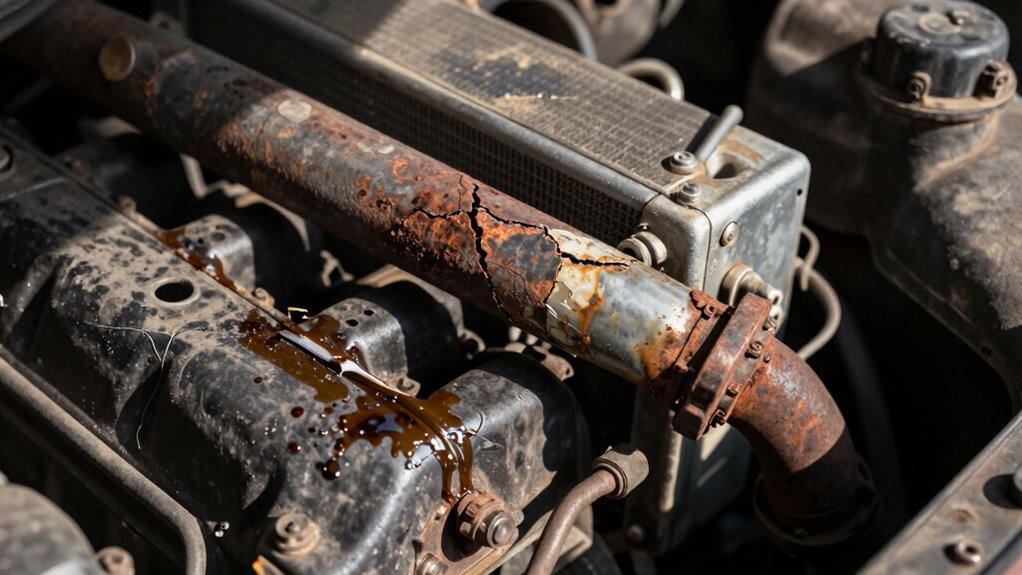
Radiator maintenance plays a pivotal role in preventing these issues. Over time, debris, dirt, and mineral deposits build up inside the radiator, reducing its efficiency. If you neglect to flush and clean it periodically, cooling performance diminishes, and your engine runs hotter than it should. Small leaks or corrosion can develop unnoticed, further impairing the system’s ability to regulate temperature. Regular inspections and maintenance are essential to keep your radiator functioning efficiently and to catch potential issues before they escalate into major problems. Paying attention to coolant system health can help identify early signs of trouble. Additionally, understanding the impact of neglect on engine components underscores the importance of consistent upkeep. A lack of awareness about lab equipment and chemical safety can sometimes lead to improper handling of cooling system fluids, emphasizing the need for proper knowledge and precautions.
Furthermore, neglecting your coolant can lead to the formation of rust and corrosion within the entire cooling system. Rust particles can clog passages, restricting coolant flow and causing localized overheating. When you fail to top off or replace your coolant as recommended, the mixture may become acidic or contaminated, reducing its effectiveness. This degradation can result in reduced cooling efficiency, which accelerates wear on hoses, water pumps, and other components. The longer you delay addressing these issues, the higher your risk of a catastrophic engine failure.
In essence, neglecting your coolant system and radiator maintenance isn’t just a minor oversight—it’s a gamble with your engine’s longevity. Small issues like low coolant levels or minor leaks snowball quickly into severe damage if left unchecked. Staying proactive with regular coolant checks, flushes, and radiator inspections can save you from costly repairs and keep your engine running smoothly for miles to come. Regular coolant system maintenance and understanding the importance of cooling efficiency are crucial in preventing such failures. Remember, a well-maintained cooling system is your best defense against engine overheating and the chaos it can bring.
As an affiliate, we earn on qualifying purchases.
Frequently Asked Questions
How Often Should Coolant Be Changed for Optimal Engine Health?
You should change your coolant every 30,000 to 50,000 miles or every 2 to 3 years, depending on your vehicle’s recommendations. Regularly replacing coolant maintains its composition, ensuring peak temperature stability and preventing corrosion. Neglecting this can lead to engine overheating or damage. Always check your owner’s manual for specific intervals, and use the right coolant type to keep your engine running smoothly and efficiently.
Can Coolant Neglect Cause Engine Overheating Even if the Temperature Gauge Is Normal?
Even if your temperature gauge reads normal, neglecting coolant can still cause engine overheating. Coolant leaks or temperature fluctuations might not trigger immediate alerts but can reduce coolant effectiveness. Over time, low coolant levels prevent proper heat dissipation, risking hot spots and engine damage. Regularly checking for leaks and maintaining coolant levels guarantees your engine stays cool, even when the gauge seems fine.
Are There Signs of Coolant Neglect I Can Notice Without Opening the Hood?
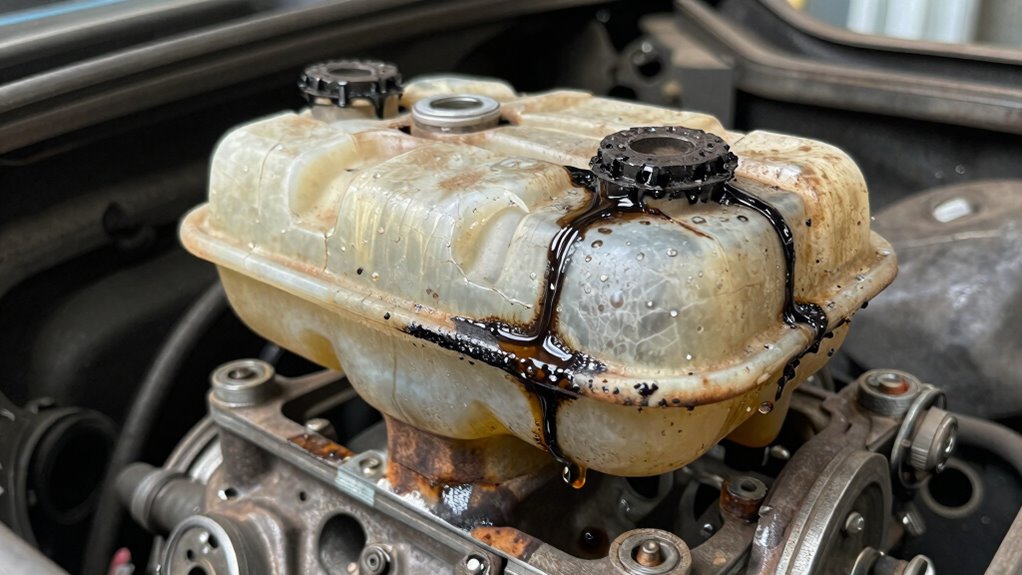
You can notice signs of coolant neglect without opening the hood by paying attention to visual signs like puddles under your car or dull, discolored coolant reservoirs. Smell indicators, such as a sweet, syrupy odor around your vehicle, could also signal coolant leaks. These clues suggest your coolant levels or condition are off, and ignoring them might lead to overheating or engine damage, so address them promptly.
What Are the Long-Term Effects of Ignoring Coolant System Maintenance?
Ignoring coolant system maintenance can turn your engine into a ticking time bomb. Corrosion buildup can eat away at metal parts, causing leaks, cracks, and even engine failure. Seal deterioration worsens, leading to overheating and catastrophic damage. Over time, your engine’s efficiency plummets, repairs skyrocket, and you risk complete breakdown. Regular coolant checks protect your engine’s health, saving you from costly, disastrous consequences down the road.
Does Coolant Neglect Affect Fuel Efficiency or Emissions?
Yes, neglecting coolant impacts fuel efficiency and emissions. When your coolant isn’t maintained, it can lead to engine corrosion, damaging essential parts and causing the engine to work harder. This inefficiency uses more fuel and increases emissions. Additionally, coolant contamination can clog sensors and injectors, reducing performance. Regular coolant checks help prevent these issues, ensuring your engine runs smoothly, efficiently, and with lower environmental impact.
As an affiliate, we earn on qualifying purchases.
Conclusion
Neglecting your coolant might seem minor, but it can quickly lead to costly engine damage. Think of it like ignoring small cracks in a dam—what starts small can become a flood if left unchecked. Maintaining proper coolant levels isn’t just about avoiding repairs; it’s about respecting the delicate balance that keeps your engine running smoothly. When you overlook it, you’re risking a bigger story—one that could drain your wallet and disrupt your journey.
As an affiliate, we earn on qualifying purchases.
As an affiliate, we earn on qualifying purchases.
Halloween Picks
halloween
As an affiliate, we earn on qualifying purchases.