
To keep loads safe and legal, make sure you distribute weight evenly across your trailer and keep heavier items towards the front and bottom. Use the right number of tie downs rated for your cargo, attach them to secure anchor points, and tighten them properly without over-tensioning. Regularly check straps and anchor points during your journey to prevent shifting or falling. Mastering these basics guarantees stability and safety, and there’s more to learn for confident cargo securement.

Get garage and car supplies delivered free — and shop member deals
- Fast, free delivery on millions of items
- Access to Prime Big Deal Days deals on October 6–7
- Prime Video, Amazon Music and more included
Key Takeaways
- Distribute weight evenly and position heavier items at the bottom and front to maintain balance.
- Use the appropriate number of rated tie downs and secure all cargo tightly without over-tightening.
- Apply proper tension with tensioning devices to prevent cargo movement without causing damage.
- Cross-straps for large or irregular loads to enhance stability and security.
- Regularly inspect tie downs and anchor points throughout transit to ensure ongoing load safety and compliance.
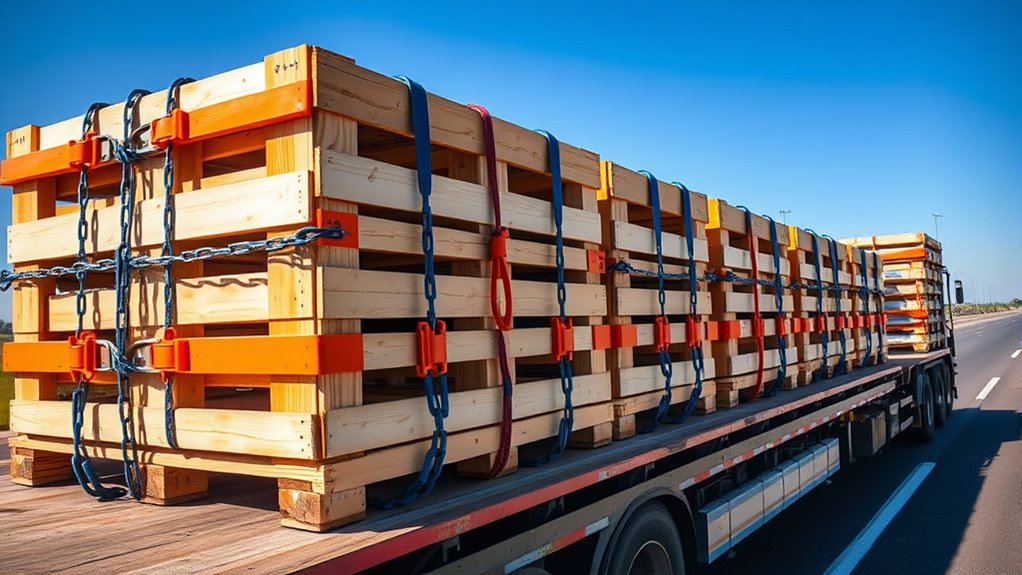
Proper cargo securement is vital to guarantee safety on the road and prevent accidents. When you’re hauling loads, ensuring the cargo is stable and properly secured is your top priority. One of the key factors in achieving this is effective load distribution. Distributing weight evenly across the trailer prevents shifting that could destabilize your vehicle or cause the load to fall off. You should position heavier items at the bottom and toward the front of the trailer, which helps maintain balance and control. Remember, an uneven load can lead to dangerous situations, especially during sudden stops or sharp turns. Keep in mind that the load must stay within your vehicle’s weight limits, and the distribution should respect the vehicle’s center of gravity to avoid tipping or rollover risks.
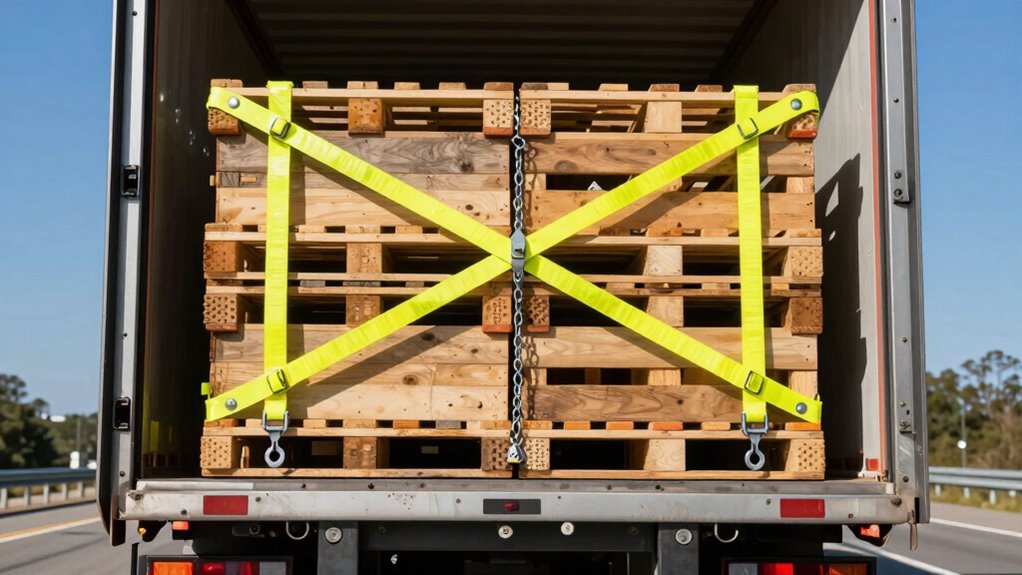
Once you’ve achieved proper load distribution, you need to focus on securing the cargo with the right tie down techniques. Proper tie downs are vital in maintaining load stability during transit. Use the appropriate number of tie downs based on the weight and type of cargo. Secure each piece tightly, but avoid over-tightening, which can damage the cargo or straps. You should attach tie downs to designated anchor points on your trailer, ensuring they are rated for the load’s weight. When applying tie downs, cross-strapping can provide additional stability, especially for large or irregularly shaped loads. Also, make sure the straps are free of frays, cuts, or damage before use.
The tension you apply to tie downs should be firm but not excessive. Use a tensioning device if available, to guarantee even and secure fastening. Check that the cargo can’t move or shift when you shake or push against it. Using proper tie down techniques involves more than just securing cargo; it’s about understanding the physics behind load stability. For instance, pulling straps at an angle can help lock the load in place more effectively. Always double-check your work before hitting the road—tighten any loose straps and verify all anchor points are secure.
Frequently Asked Questions
What Are the Penalties for Improper Cargo Securement?
If you commit cargo violations by improperly securing loads, you face hefty safety penalties and fines. Authorities may issue citations, which could lead to costly fines, vehicle out-of-service orders, or even license suspension. These safety penalties are designed to enforce proper securement and prevent accidents. You should always guarantee your cargo is properly secured to avoid these risks, protect others, and stay compliant with safety regulations.
How Often Should Securement Devices Be Inspected?
You should inspect your securement devices before starting each trip, after every 150 miles, and whenever the load shifts or you notice any signs of wear. This inspection frequency guarantees securement maintenance remains effective, preventing load shifts or accidents. Regular checks help you catch issues early, maintaining safety and compliance with regulations. Always stay vigilant and perform thorough inspections to keep your cargo secure throughout your journey.
Can I Use Homemade Securement Methods?
You shouldn’t use DIY fixes or homemade solutions for cargo securement. These methods aren’t tested or approved, and they can compromise safety and legality. Rely on certified, industry-approved securement devices to make certain your load stays safe during transit. If you’re unsure, always consult regulations and your company’s guidelines. Using proper equipment is essential for preventing accidents and avoiding penalties. Never compromise safety with makeshift solutions.
Are There Specific Securement Rules for Oversized Loads?
Yes, there are specific securement rules for oversized loads. You must obtain overdimensional permits, which specify load dimension limits and securement requirements. These permits guarantee your load stays within legal size and weight limits while being safely secured. Follow the permit conditions carefully, including using appropriate tie-downs, chains, or straps rated for the load. Proper securement prevents accidents, protects other drivers, and keeps your load legal on the road.
What Are the Latest Regulations Updates for Cargo Securement?
You should stay updated on the latest cargo regulations and securement standards, as they often change to improve safety. Recent updates emphasize the proper use of tie-downs, mandatory securement devices, and load distribution. It’s your responsibility to follow these regulations closely, ensuring your cargo remains secure during transit. Regularly review official transportation agency guidelines, attend training sessions, and double-check your securement methods before hitting the road.
Conclusion
Think of cargo securement like tending to a delicate garden. With careful attention and the right tools, your loads stay firmly rooted, weathering any storm. Neglect, however, risks chaos and damage. By mastering these securement techniques, you’re the gardener safeguarding your cargo’s journey. Keep it tight, stay vigilant, and watch your efforts blossom into safe, successful deliveries every time. Your commitment guarantees your cargo’s voyage is smooth, secure, and worry-free.
Halloween Picks
halloween
As an affiliate, we earn on qualifying purchases.