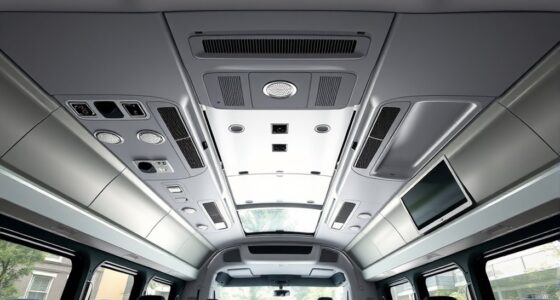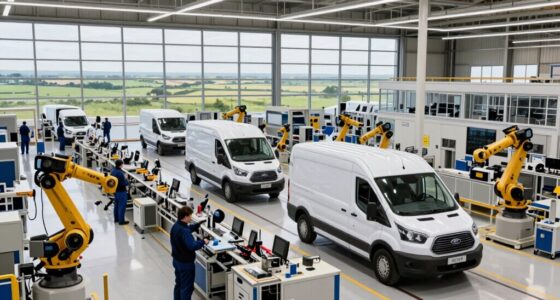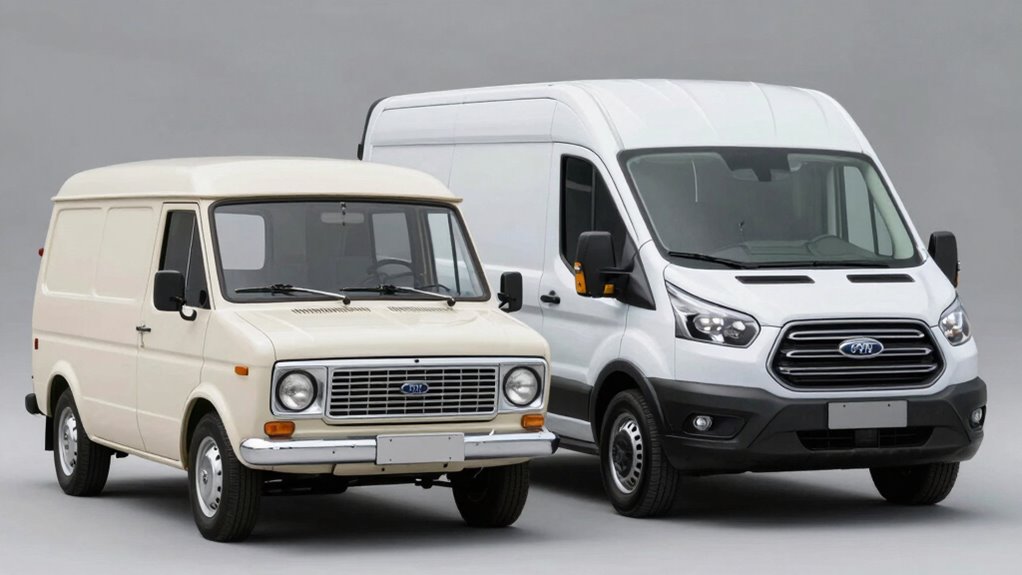

Since its debut in 1965, the Ford Transit has continually evolved to meet changing needs, becoming more versatile, safer, and tech-savvy. It’s expanded in size options, added modern safety features like airbags, and improved aerodynamics for better efficiency. The Transit now offers advanced driver assistance and infotainment systems, balancing practicality with innovation. If you keep exploring, you’ll discover how this vehicle’s rich history reflects decades of automotive progress.
Key Takeaways
- Introduced in 1965, the Ford Transit has evolved through multiple generations with size, design, and payload enhancements.
- Continuous exterior and interior design improvements, including sliding doors and advanced infotainment systems, have boosted usability.
- The Transit adapted to diverse markets by integrating safety features like airbags and electronic stability control.
- Sustainability efforts led to eco-friendly practices and safety innovations, maintaining relevance in a changing industry.
- Each generation builds on previous innovations, solidifying the Transit’s legacy as a durable, versatile, and forward-looking vehicle.
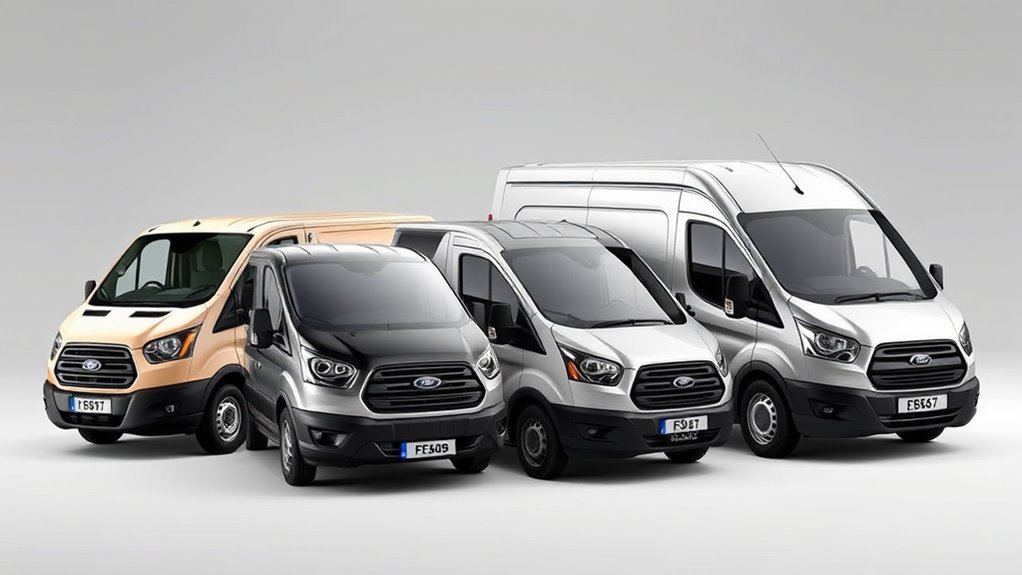
Have you ever wondered what makes a van truly timeless? It’s a combination of its ability to adapt, maintain reliability, and stand out through the years. When you look at the Ford Transit, it’s clear that its evolution reflects both historical milestones and design innovations that keep it relevant for decades. Starting in 1965, the Ford Transit was introduced as a versatile commercial van, designed to meet the needs of businesses and families alike. Over the years, it has undergone significant transformations, each marked by milestones that pushed the boundaries of what a van could be. These milestones include its expansion in size options, improvements in payload capacity, and advancements in safety features, all of which helped it stay competitive in a crowded market. The early models showcased a straightforward, utilitarian design, but Ford was quick to recognize the importance of innovation. By the 1980s, the Transit saw improved aerodynamics and more efficient engines, setting the stage for its reputation as a reliable workhorse. Its adaptability to different markets and uses has been a key factor in its longevity. Additionally, the incorporation of modern safety features has played a vital role in maintaining its appeal among consumers seeking both practicality and security. Furthermore, Ford’s commitment to sustainable design practices has contributed to its ongoing relevance in today’s environmentally conscious market.
Design innovations played a pivotal role in the Transit’s longevity. Ford continually refined the van’s interior and exterior, making it more user-friendly and adaptable to various needs. For instance, the introduction of sliding side doors in later models increased accessibility, especially in tight spaces. The incorporation of modern safety features such as anti-lock brakes, airbags, and electronic stability control helped meet evolving safety standards, making it a safer choice for drivers. In recent years, Ford’s focus on technology has been evident through the integration of advanced infotainment systems and driver-assistance features, further cementing its place in the modern market. The Transit’s ability to evolve while retaining its core identity speaks to its timeless appeal. It’s a vehicle that has grown with its users, balancing functionality with innovation.
As you consider the history of the Ford Transit, it’s clear that its success hinges on continuous improvement grounded in historical milestones and design innovations. Each generation has built on the last, adapting to changing industry demands and consumer preferences. The result is a van that’s not only practical and durable but also a symbol of progress in automotive design. Its enduring presence on the road proves that when a vehicle is built with foresight and flexibility, it can truly stand the test of time. The Ford Transit’s journey from 1965 to today exemplifies how innovation and milestone achievements shape a vehicle’s legacy, making it a van for the ages.
Frequently Asked Questions
What Were the Main Design Challenges During the Transit’s Development?
You faced design challenges like maximizing cargo capacity while keeping the Transit compact enough for urban driving. Improving engine efficiency was vital to meet evolving emissions standards and reduce operating costs. Balancing comfort, durability, and versatility also posed hurdles, ensuring the van could serve various commercial needs without sacrificing performance. These challenges pushed you to innovate and refine the Transit’s design, making it a reliable, efficient workhorse across decades.
How Has the Transit’s Safety Technology Changed Over the Decades?
You’ve seen how safety technology in the Transit has advanced from basic seat belts to electric innovations like collision avoidance systems. While early models relied on simple features, modern Transits now incorporate safety advancements such as lane-keeping assist and automatic emergency braking. This evolution reflects a shift from basic safety to proactive protection, making your journeys safer and smarter with each generation.
What Are the Most Rare or Limited-Edition Transit Models?
If you’re into vintage collectibles, the rarest Ford Transit models are the limited-edition versions like the Transit Connect XLT Special Edition and early custom conversions. These special editions often feature unique paint jobs, interior upgrades, or engine options that make them highly sought after by collectors. Keep an eye out for these limited runs, as they’re a rare glimpse into the Transit’s history and hold significant value for enthusiasts.
How Does the Transit Compare to Its Main Competitors Historically?
Think of the Transit as a chameleon, adapting seamlessly over decades. It’s historically held strong market positioning by balancing versatility and reliability, appealing to customers who crave practicality. Compared to rivals like the Mercedes-Benz Sprinter or Ram ProMaster, the Transit often outshines with a broader range of configurations and a reputation for durability. You’ll find it aligns well with customer preferences for long-term value, making it a steady leader in its class.
What Future Innovations Are Planned for the Transit Line?
You can expect Ford to continue enhancing the Transit line with electric upgrades and autonomous features. Ford’s investing heavily in electrification, aiming to improve efficiency and reduce emissions, so future models will likely include fully electric options. Autonomous features are also on the horizon, helping you drive safer and more comfortably. These innovations will keep the Transit competitive, ensuring it adapts to evolving transportation needs and technology advancements.
Conclusion
Just like the timeless resilience of the Ford Transit, your journey is fueled by evolution and adaptability. As the van has grown from humble beginnings to a versatile icon, so can your path bend and reshape with each challenge. Remember, every great story, much like this van’s legacy, is built on constant change. Embrace the journey ahead, knowing that with each mile, you’re part of something that truly stands the test of time.