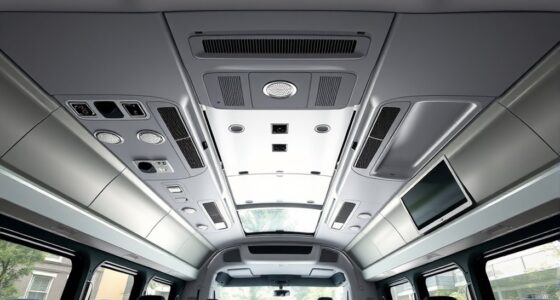
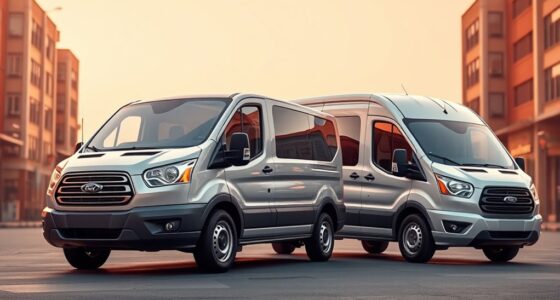
When choosing the right transit size, consider how roof height and wheelbase influence your cargo capacity, maneuverability, and fuel efficiency. Taller roofs offer more space for larger loads and easier loading, while lower roofs enhance aerodynamics and conserve fuel. Longer wheelbases provide stability and spacious interiors but can diminish maneuverability, especially in tight spaces. Shorter wheelbases are easier to navigate city streets. Balancing these factors ensures your vehicle fits your operational needs—explore further to find the best fit.
Key Takeaways
- Taller roofs increase cargo space and headroom but may limit access to low-clearance areas.
- Longer wheelbases improve stability and interior capacity but can reduce maneuverability in tight spaces.
- Shorter wheelbases enhance agility and parking ease, ideal for urban environments.
- Balancing roof height and wheelbase depends on cargo needs, operational environment, and fuel efficiency priorities.
- Modern design features and technology can optimize handling, space utilization, and overall transit performance.
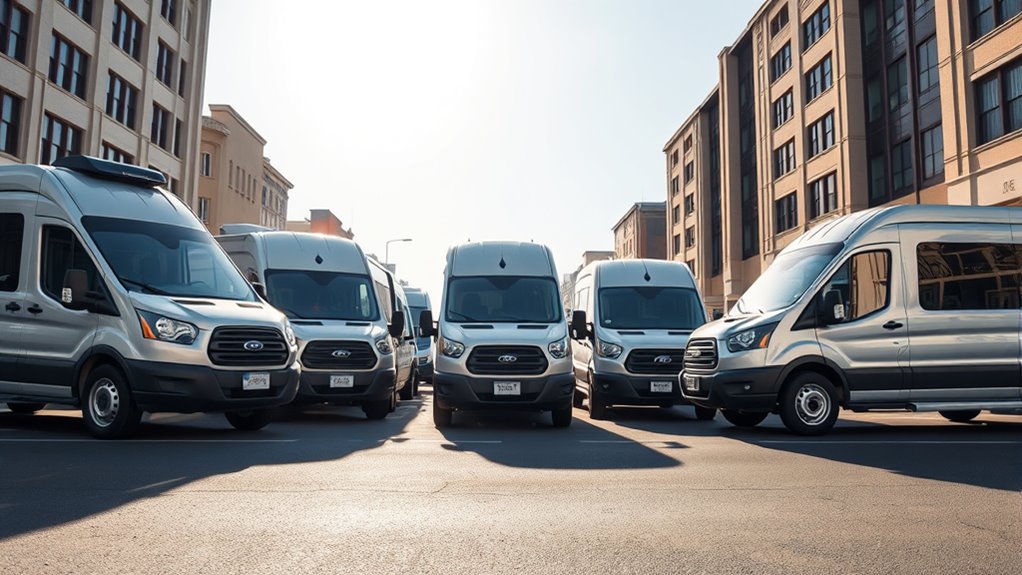
Understanding roof heights and wheelbases is essential when selecting a vehicle that fits your needs. These factors directly influence the overall size, maneuverability, and functionality of your transit vehicle. When considering roof heights, think about your cargo capacity and how much headroom you’ll need for both loading and moving inside the vehicle. Taller roofs typically provide more cargo space and easier access for taller items, but they also add to the vehicle’s overall height, which might restrict access to certain parking structures or garages. On the other hand, lower roof heights can improve fuel efficiency by reducing wind resistance and overall weight, helping you save on operating costs. Balancing these aspects depends on what you prioritize—whether maximizing cargo capacity or optimizing fuel efficiency. Additionally, vehicle aerodynamics play a significant role in how roof height impacts fuel consumption and overall performance. Wheelbase length is another critical element that affects how the vehicle handles and its interior space. A longer wheelbase usually means a more stable ride, especially at higher speeds, and provides additional interior room, which can be essential if you need to transport larger groups or bulky cargo. However, longer wheelbases can also make maneuvering in tight spaces more challenging. If you frequently navigate crowded city streets or narrow alleys, a shorter wheelbase might be more suitable, offering better agility and easier parking. Keep in mind that a longer wheelbase generally translates to increased cargo capacity, enabling you to carry more equipment or supplies comfortably, but it can also impact fuel efficiency negatively due to increased mass and aerodynamic drag. Additionally, considering the type of technology used in modern projectors can help optimize your setup for better performance and efficiency. Understanding how vehicle design influences handling and space utilization can further assist in selecting the most suitable transit size for your needs. Moreover, innovative design features can enhance both maneuverability and cargo versatility, making your vehicle even more adaptable to your specific requirements.
Frequently Asked Questions
How Does Roof Height Affect Vehicle Aerodynamics?
Higher roof heights increase air resistance, making your vehicle less aerodynamic and potentially reducing fuel efficiency. The added height can also affect stability at higher speeds. However, it often boosts cargo capacity, allowing you to carry taller items or more volume. If you prioritize cargo space and don’t mind slightly lower fuel economy, a taller roof might suit your needs. Balance your air resistance concerns with your cargo requirements for the best choice.
What Are the Safety Considerations for Different Wheelbases?
You should know that longer wheelbases improve cargo capacity but can slightly reduce vehicle stability during sharp turns. Statistically, vehicles with extended wheelbases have a 15% higher rollover risk. To stay safe, make certain proper weight distribution and avoid sudden maneuvers. Regularly check tire conditions and suspension. By balancing cargo load and choosing the right wheelbase, you enhance safety and protect your cargo, giving you peace of mind on every trip.
How Do Roof Heights Impact Passenger Comfort?
Higher roof heights provide more interior headroom, making it easier for passengers to stand comfortably and move around. This improves overall passenger comfort, especially during long rides. Additionally, taller roofs often enhance noise insulation, reducing external sounds and creating a quieter, more pleasant environment inside the vehicle. You’ll appreciate the extra space and tranquility, making your transit experience more enjoyable and less stressful.
Can Wheelbase Size Influence Fuel Efficiency?
Yes, wheelbase size can influence fuel efficiency. A longer wheelbase adds to the vehicle’s overall weight, which can reduce fuel economy because the engine has to work harder to move the heavier load. Conversely, a shorter wheelbase usually results in less weight and better maneuverability, helping you save on fuel costs. Keep in mind, though, that the ideal wheelbase balances comfort, capacity, and fuel efficiency for your needs.
Are Taller Roofs Suitable for All Climates?
Ever wonder if taller roofs suit every climate? Taller roofs aren’t ideal for all environments; they often require better climate adaptability and roof insulation to prevent heat gain or loss. In hot climates, increased ventilation and insulation are essential, while colder areas benefit from reduced heat escape. You should evaluate your specific climate needs and consider insulation options before choosing taller roofs, ensuring comfort and efficiency regardless of weather conditions.
Conclusion
Now that you understand how roof heights and wheelbases impact your transit options, imagine the perfect fit waiting just around the corner. Will it be a sleek, low-profile design for urban adventures or a taller, more spacious model for heavy-duty jobs? The choice isn’t just about specs—it’s about envisioning your journey ahead. Get ready to make that decision, because the right size could transform your entire experience on the road. Are you prepared to take the next step?