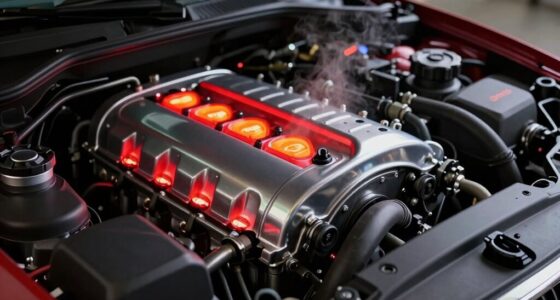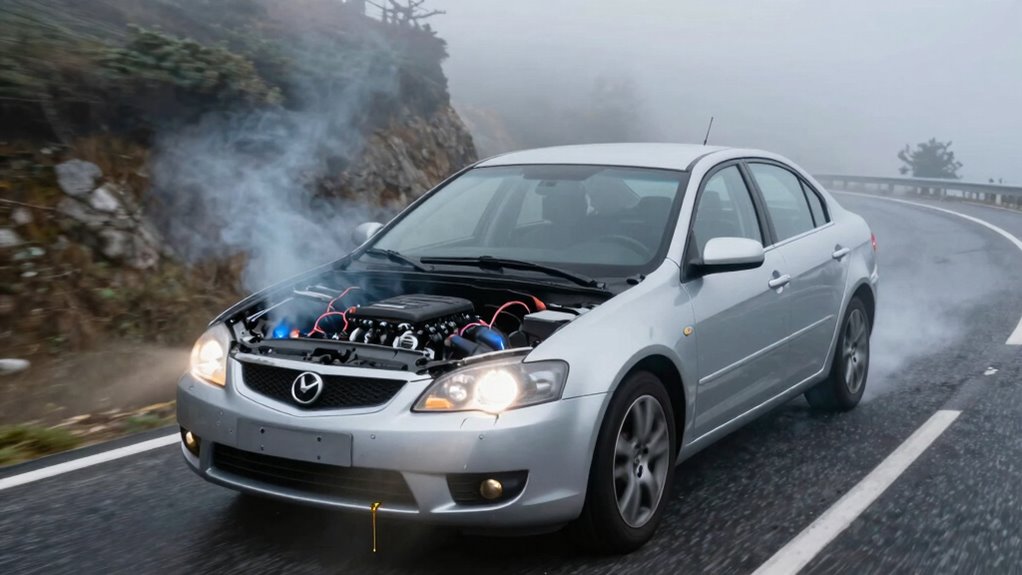

If you notice a strange burning smell while driving, it could be your engine overheating, causing oil or coolant to vaporize and emit a sharp odor, or electrical wiring overheating, which emits a plastic or rubber smell. Heavy brake use can also lead to hot, burnt brake components. Ignoring these signs can cause serious damage or hazards. Understanding these common causes can help you identify the problem early—keep exploring to learn more about how to handle it.
Key Takeaways
- Burning oil smell indicates possible engine overheating, oil leaks, or worn piston rings needing immediate inspection.
- Coolant odors often signal coolant leaks or engine overheating, requiring prompt checking of coolant levels and system.
- A burning plastic or rubber smell suggests electrical wiring issues or overheating components that need professional diagnosis.
- Persistent odors, especially after heavy braking, may point to brake system overheating or stuck calipers.
- Early detection of unusual smells helps prevent costly repairs and ensures vehicle safety by addressing underlying issues promptly.

Have you ever noticed a strange smell while driving and wondered what’s causing it? It’s unsettling, especially when you’re not sure if it’s a minor issue or something more serious. One common cause is engine overheating, which can produce a burning smell that seems to cling to your vehicle. When your engine gets too hot, it can cause oil or coolant to burn off, creating an acrid odor that fills the cabin. If you notice this smell, it’s essential to pull over safely and check your coolant levels and engine temperature gauge. Ignoring engine overheating can lead to severe damage, like warped pistons or a blown head gasket, which are costly to repair. Sometimes, the smell might come from brake issues, particularly when you’ve been using your brakes heavily. Over time, brake pads wear down, and if the brake components get too hot, they can emit a burnt smell. This is often noticeable after descending a hill or during city driving with frequent stops. If the smell persists even when you’re not braking, it could indicate dragging brake calipers or a stuck brake system, which causes excessive heat buildup. Such brake issues not only produce odors but also compromise your safety, as the brakes may not respond properly when needed most. Additionally, electrical wiring problems can sometimes cause overheating or sparks, which emit a distinct burning plastic or rubber smell. You might notice this smell lingering even after you turn off the vehicle, which indicates a serious electrical issue. Proper diagnosis of electrical issues is crucial and should be handled by a professional to prevent escalation. Recognizing vehicle warning signs early can help prevent costly repairs and dangerous situations. Additionally, small appliance maintenance tips can help prevent electrical issues that may lead to wiring problems or overheating. Conducting regular visual inspections can help identify potential electrical problems before they become dangerous. Always pay close attention to any unusual odors while driving. Burning oil or coolant smells are often signs of engine overheating, which needs immediate attention. Brake issues can cause a burnt smell after heavy use, signaling you should have your brake system checked soon. Electrical wiring problems, although less common, are just as dangerous and shouldn’t be ignored. When in doubt, consult your mechanic promptly. Addressing these smells early on can prevent costly repairs and keep you safe on the road.
Frequently Asked Questions
Can a Strange Smell Indicate a Brake System Problem?
Yes, a strange smell can indicate a brake system problem. If you notice a burning smell, it might be caused by brake pad wear, which generates heat and odors. Sometimes, air conditioning odors can also seem strange but are unrelated. If the smell persists while driving, especially near the wheels or brakes, get your brake system checked promptly to prevent further damage or safety issues.
How Quickly Should I Address a Burning Smell While Driving?
You should address a burning smell immediately, as it signals a potential emergency. Pull over safely to check your engine temperature and oil levels, since overheating or low oil can cause fires. Don’t wait till the last minute—acting quickly can prevent serious damage or accidents. If the smell persists or you’re unsure, call roadside assistance or a mechanic. Better safe than sorry, especially when your vehicle’s safety is at stake.
Is a Sweet Smell Always Related to Coolant Leaks?
A sweet smell isn’t always caused by a coolant leak, but it’s a common symptom. Coolant leak symptoms include a sweet odor, overheating, or low coolant levels. Other causes for a sweet smell can be electrical wiring issues or even certain chemicals. If you notice this smell, check for coolant leaks, inspect your engine for signs of overheating, and have a mechanic evaluate electrical components to prevent damage.
Can Electrical Wiring Issues Cause a Burning Smell?
Yes, electrical wiring issues can cause a burning smell. Electrical faults, such as short circuits or overheating wiring insulation, produce a distinct burnt odor. When wiring insulation melts or burns, it releases fumes that you’ll notice while driving. If you detect this smell, it’s essential to have a mechanic inspect your vehicle promptly, as wiring problems can lead to electrical fires and serious damage.
Are There Preventative Measures to Avoid Strange Smells in My Car?
To avoid strange smells in your car, you should perform regular maintenance like oil changes, coolant checks, and inspecting wiring. Keep an eye out for scent identification—notice any burning or chemical odors—and address issues promptly. Regularly cleaning your engine bay and replacing worn-out parts can also prevent odors from developing. Staying proactive guarantees your vehicle runs smoothly and keeps unpleasant smells at bay, saving you time and potential costly repairs.
Conclusion
If you notice a strange smell while driving, don’t ignore it. Whether it’s burning oil, coolant, or wiring, each signals a potential issue that needs quick attention. Regular checks can help you catch problems early and keep you safe on the road. So, next time that odd scent hits your nose, ask yourself: am I willing to risk costly repairs or a breakdown? Stay vigilant—your vehicle’s health depends on it.