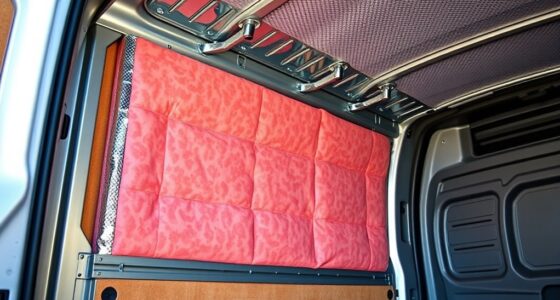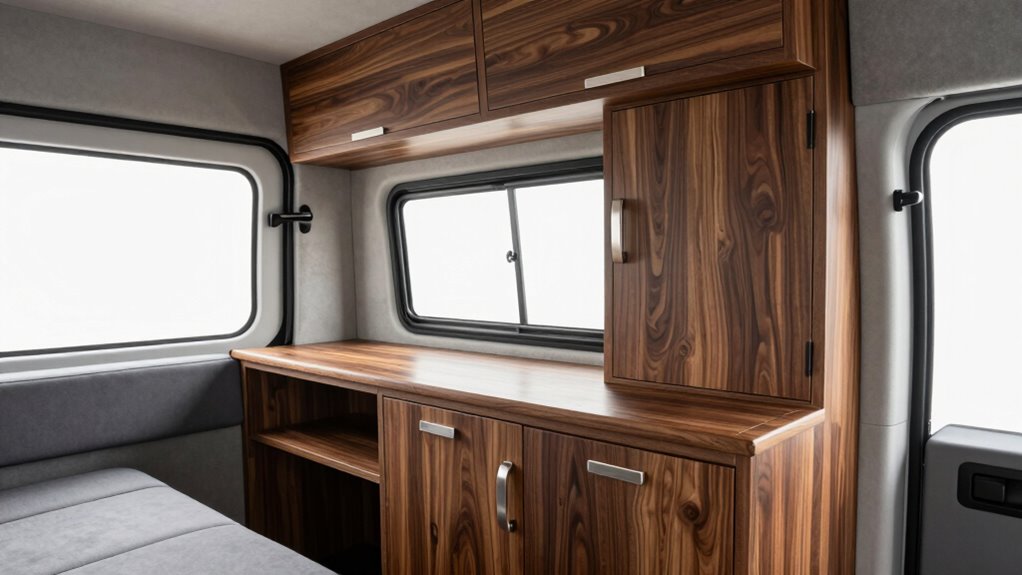
To maximize space in your van build, choose lightweight, durable materials like aluminum, plywood, or composite boards for your cabinets. These options reduce weight, improve handling, and resist moisture and warping across different climates. Opt for sleek, modular designs that are easy to install, reconfigure, or remove as needed. Blending practical storage with stylish materials creates a balanced, functional interior. Keep exploring to discover more tips on maximizing your van’s storage potential.
Key Takeaways
- Select lightweight, durable materials like aluminum or plywood to maximize storage capacity without adding excessive weight.
- Prioritize modular and reconfigurable cabinet designs for flexible use and efficient space utilization.
- Incorporate vertical storage solutions and multi-purpose furniture to optimize limited interior space.
- Use moisture-resistant and scratch-proof materials to enhance durability and reduce maintenance needs.
- Balance style and practicality by choosing materials that complement your aesthetic while maintaining function.
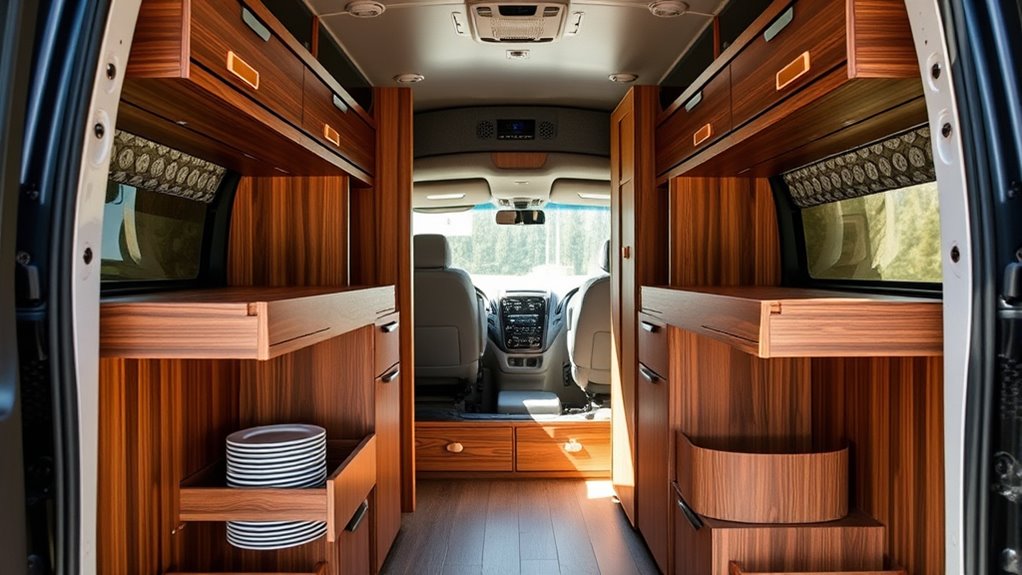
When selecting cabinets and storage solutions for your space, it’s essential to take into account both functionality and style. The materials you choose for your furniture play a significant role in guaranteeing durability, weight, and overall aesthetics. Opting for the right furniture materials can make a noticeable difference in how your van feels and performs. Lightweight solutions are especially critical in a van build because every pound counts—less weight means better fuel efficiency, easier handling, and more space for essentials. Materials like aluminum, lightweight plywood, or composite boards are excellent options, offering strength without adding unnecessary bulk. These materials are resistant to warping and moisture, guaranteeing your storage stays intact over time, even in varying climates.
Choosing lightweight, durable materials like aluminum and plywood enhances van storage, balancing style with practicality.
You should also consider how the furniture materials blend with your design vision. Sleek aluminum cabinets give a modern, minimalist look, while plywood can add warmth and a rugged charm. When choosing lightweight solutions, think about how easy they are to install, remove, or reconfigure. Modular systems with lightweight panels or collapsible features can give you flexibility as your needs change. Not only do these solutions save weight, but they also make your space more adaptable, allowing you to maximize every inch efficiently. Additionally, lightweight materials often have enhanced moisture resistance, which is essential in a mobile environment prone to humidity changes. Incorporating moisture-resistant materials can help prevent warping and damage caused by humidity fluctuations.
Furthermore, lightweight furniture materials often come with the benefit of easier maintenance. Many lightweight solutions are designed to be resistant to scratches, dents, and moisture, which is essential in a mobile environment. They also tend to be more straightforward to clean, saving you time and effort. When you focus on lightweight solutions, you’re making a conscious choice to prioritize practicality without sacrificing style. The right combination of durable, lightweight materials ensures your cabinets and storage units will stand up to the rigors of travel while keeping your interior looking sharp. In addition, selecting cost-effective lightweight materials can help you stay within your budget without compromising quality.
In addition to weight considerations, durability is key. Choosing high-quality lightweight materials means your cabinets will last longer and require less frequent replacements. Look for options that are not only lightweight but also sturdy enough to handle daily use and the vibrations of travel. Some materials, like reinforced composites or laminated plywood, strike a good balance between weight and strength. By carefully selecting furniture materials that are lightweight yet durable, you create a space that’s both functional and visually appealing—making every inch of your van work for you. Lightweight materials play a crucial role in achieving this balance.
Frequently Asked Questions
How Do I Prevent Cabinets From Rattling During Travel?
To prevent cabinets from rattling during travel, you should add cabinet insulation and vibration dampening materials. Securely fasten all cabinet components with strong brackets and screws, and use foam or rubber padding between the cabinet frame and walls. This combination absorbs vibrations and reduces noise, ensuring your cabinets stay in place. Regularly check and tighten fasteners as needed, so nothing loosens over time, keeping your van quiet and secure.
What Materials Are Best for Lightweight, Durable Van Cabinets?
For lightweight, durable van cabinets, consider materials like plywood, aluminum, or high-density polyethylene. Plywood offers a great balance of strength and weight, making it a popular choice. Aluminum is even lighter and highly durable but can be more expensive. High-density polyethylene is lightweight and resistant to moisture, ideal if weight considerations are critical. Compare these materials based on your weight needs, durability, and budget to choose the best option for your build.
How Can I Customize Storage for Specific Gear or Appliances?
Because your gear isn’t just gear, it’s practically part of the family, you’ll want custom storage solutions that fit perfectly. You can add gear-specific compartments, dividers, or padded inserts to keep everything secure and accessible. Measure carefully, then build or buy modules tailored to your gear’s size and shape. This way, when you’re on the road, everything has its place—no more rummaging or damaging your beloved equipment.
What Are the Costs Associated With Different Cabinet Materials?
Cabinet material costs vary widely; plywood is budget-friendly and durable, while hardwoods like oak or cherry are more expensive but offer a premium look. Melamine is another cost-effective option, easy to clean and lightweight. Your choice depends on your budget and style preferences. If you’re on a tight budget, opt for plywood or melamine to keep costs low, but if you want a high-end finish, investing in hardwoods might be worth it.
How Do I Ensure Easy Access to Frequently Used Items?
You might worry about clutter, but easy access is doable. Use drawer organization to keep essentials sorted, so you find what you need quickly. Install cabinet lighting to brighten frequently used areas, making it easier to spot items in low light. Position your most-used items at eye level or in open shelves, ensuring they’re always within reach. This approach keeps your space functional and clutter-free.
Conclusion
By selecting the right cabinets and storage solutions, you’ll turn your van into a well-organized haven. Think of it like a puzzle where every piece fits perfectly—you’ll maximize space and keep everything easily accessible. Don’t rush your choices; the right storage makes life simpler and your van feel more like home. With careful planning, your build will be as efficient as a well-oiled machine, making every trip smooth and enjoyable.