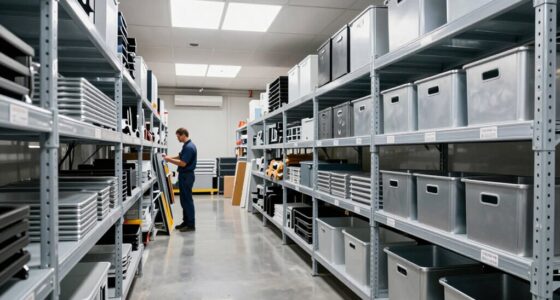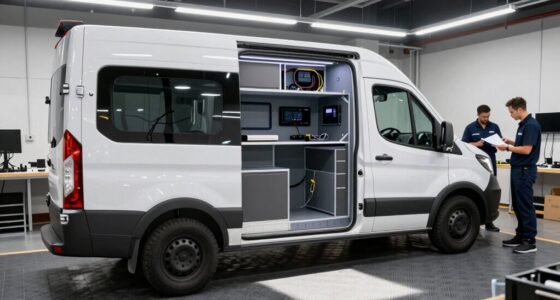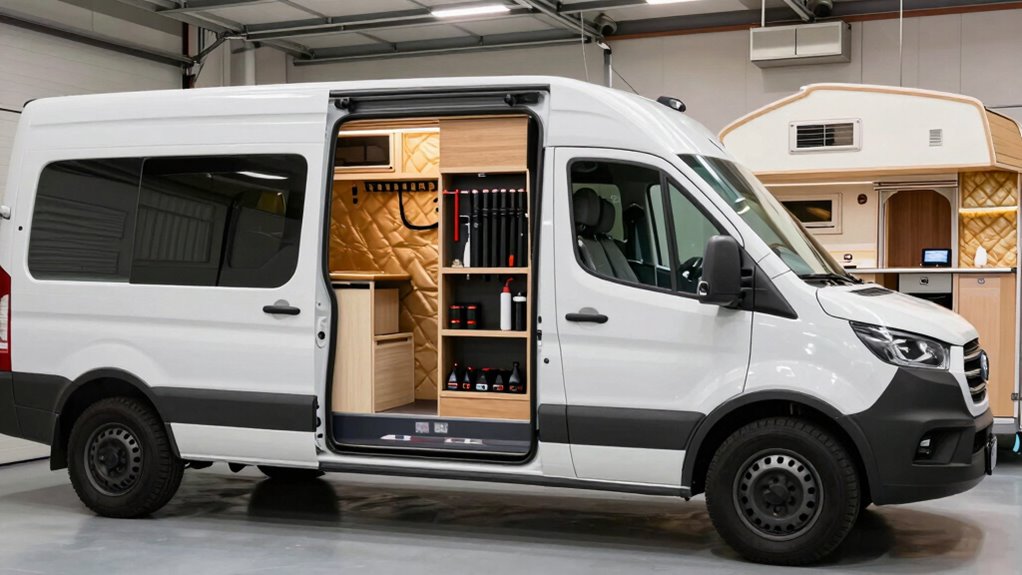

Work van upfits focus on safety, security, and efficiency to support your daily tasks. You need modular shelving, secure storage, and cargo tie-downs to stay organized and prevent damage or accidents. Electrical systems must be reliable to avoid downtime, with features like grounding and circuit breakers for safety. Unlike campers that prioritize comfort, your van setup should maximize productivity and protect your gear. Find out more about how these priorities shape effective van modifications.

Get garage and car supplies delivered free — and shop member deals
- Fast, free delivery on millions of items
- Access to Prime Big Deal Days deals on October 6–7
- Prime Video, Amazon Music and more included
Key Takeaways
- Work van upfits focus on safety and modular organization for efficient, secure tool access and cargo security during work operations.
- Camper builds prioritize comfort, convenience, and living amenities, making electrical and interior features a higher priority.
- Electrical systems in work vans emphasize reliability, safety, and uninterrupted power for tools, while campers focus on comfort and energy efficiency.
- Sustainability in work vans aims to ensure operational efficiency and eco-friendly energy management, differing from camper’s comfort-oriented energy needs.
- Cargo security measures are more critical in work vans to prevent theft and damage, whereas camper builds prioritize ease of access and user comfort.
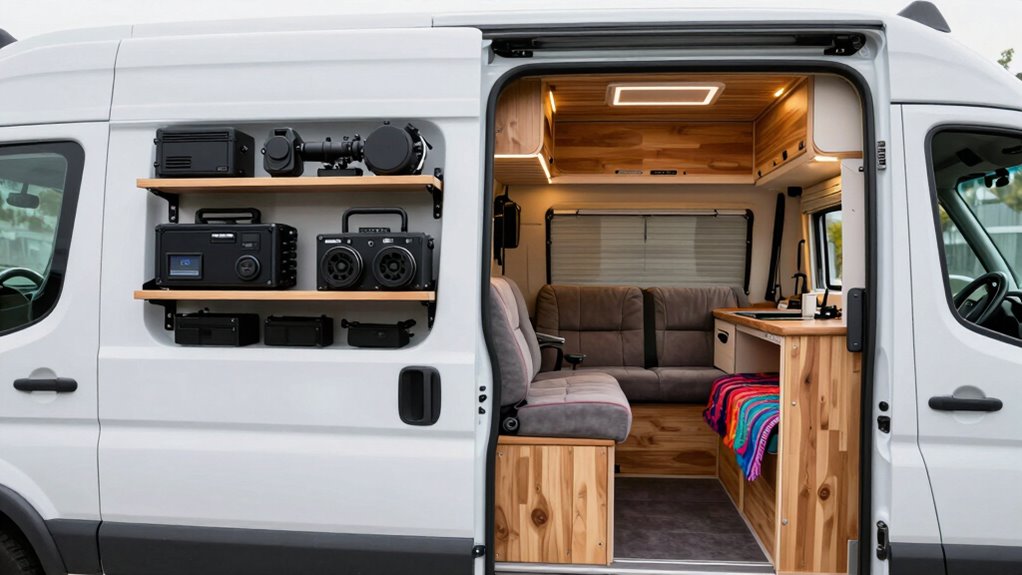
When customizing a van, it’s essential to recognize that work van upfits and camper builds serve very different purposes, which means their priorities should diverge accordingly. If you’re outfitting a work van, your main focus is on maximizing efficiency, safety, and functionality. Cargo organization becomes a top priority because you need to ensure tools, equipment, and supplies are secure, accessible, and neatly stored. You’ll want modular shelving, secure bins, and tie-down points that keep everything in place during transit. Poor cargo organization can lead to wasted time searching for tools and increased risk of damage or accidents. Every piece of equipment should have its designated spot, allowing you to work quickly and safely on-site. Implementing cargo security measures is also crucial to prevent theft or loss during transport. Incorporating security protocols can further protect your valuable equipment from theft or damage. Electrical systems in a work van are equally critical. You need a reliable power setup to run tools, charge batteries, and power devices throughout the day. A well-designed electrical system includes heavy-duty batteries, inverter installations, and properly wired outlets. This setup reduces downtime, prevents power failures, and enhances productivity. You may also want to incorporate lighting, heating, or cooling systems depending on your work environment. Don’t overlook the importance of safety features like circuit breakers and grounding, which protect both you and your equipment. Unlike camper builds, where electrical systems are often designed for comfort and convenience, work van electricals are all about ensuring your operational capabilities are uninterrupted and safe. Additionally, understanding the importance of biodiversity and sustainable energy solutions can help create environmentally responsible work setups that minimize ecological impact. Incorporating renewable energy options such as solar panels can further enhance energy efficiency and sustainability. Considering energy management strategies can also optimize power usage and extend system lifespan.
As an affiliate, we earn on qualifying purchases.
Frequently Asked Questions
How Do Safety Standards Differ Between Work Vans and Camper Builds?
Safety standards differ markedly between work vans and camper builds. You focus on strict safety protocols like secure shelving and proper load distribution in work vans to prevent accidents. In camper builds, insulation standards are a priority to guarantee comfort and safety from temperature extremes. You need to balance these priorities, making sure that safety protocols in work vans prevent hazards, while insulation standards in camper builds promote comfort and energy efficiency.
What Are the Most Cost-Effective Materials for Work Van Upfits?
You should choose materials that balance durability and cost efficiency for work van upfits. Plywood and aluminum are excellent options—they’re durable enough for demanding use and affordable. Vinyl flooring offers resilience and easy cleaning without breaking the bank. Avoid pricey options like high-end composites. By prioritizing material durability and cost efficiency, you guarantee your van’s interior withstands daily wear while keeping expenses manageable.
How Do Vehicle Sizes Impact Upfit Customization?
Vehicle size directly influences your upfit customization, especially for interior lighting and storage solutions. Larger vans give you more space to install bright, flexible lighting and ample storage compartments, making organization easier. Smaller vehicles require smarter, space-efficient solutions, like multi-purpose furniture and compact lighting options. You need to tailor your interior lighting and storage solutions to match the vehicle’s size, ensuring functionality without sacrificing comfort or accessibility.
What Maintenance Considerations Are Unique to Work Van Upfits?
Imagine a delivery van with custom shelving and a reinforced floor. You need to regularly check interior durability, ensuring shelves stay secure and floors withstand frequent loading. Electrical systems also require attention—wiring for lighting or equipment must be inspected to prevent shorts or failures. Regular maintenance of these systems prolongs your van’s lifespan, keeps operations smooth, and prevents costly repairs, making your work van reliable day after day.
How Do Legal Regulations Influence Upfit Design Choices?
Legal regulations profoundly influence your upfit design choices, especially regarding safety, accessibility, and vehicle modifications. You must prioritize compliance to avoid fines and guarantee legal operation. While interior aesthetics and customer preferences matter, regulations guide essential features like lighting, signage, and load capacities. Balancing these factors helps you create a functional, compliant work van that meets customer needs without risking legal issues.
cargo securement tie-down straps
As an affiliate, we earn on qualifying purchases.
As an affiliate, we earn on qualifying purchases.
Conclusion
While it might seem that all van builds serve a similar purpose, understanding that work van upfits and camper builds have different priorities is essential. Don’t think one size fits all—your van’s role shapes its features. Prioritizing durability and organization for work vans, instead of comfort and aesthetics, guarantees you get the most out of your investment. Embrace these differences to create a truly tailored solution that meets your specific needs and maximizes productivity.
van electrical system inverter kit
As an affiliate, we earn on qualifying purchases.
As an affiliate, we earn on qualifying purchases.
As an affiliate, we earn on qualifying purchases.
Halloween Picks
halloween
As an affiliate, we earn on qualifying purchases.