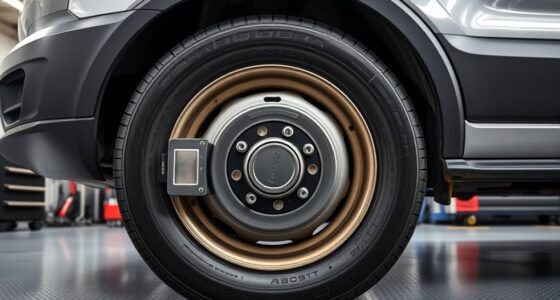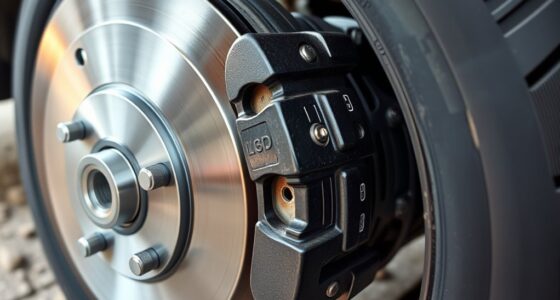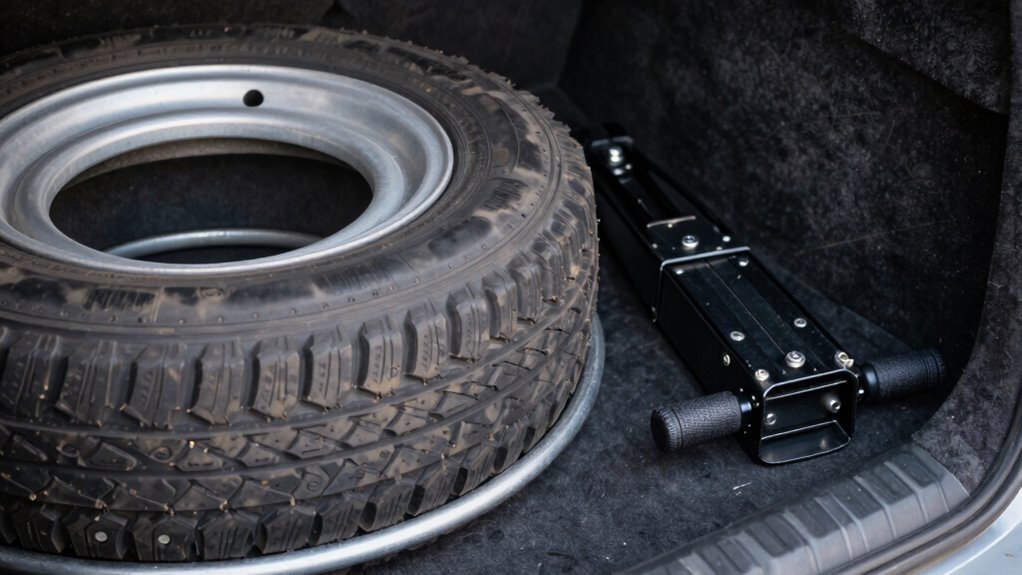

To be prepared for flats, ensure your spare tire is properly inflated and in good condition, and regularly check its pressure. Know how to safely use your jack — find a flat, level spot, and always follow proper lifting procedures to avoid accidents. Practice changing a tire with your tools so you’re confident when needed. Staying proactive about tire maintenance and safety skills is essential; discover key tips that keep you ready for unexpected flats.
Key Takeaways
- Regularly check that your spare tire has proper PSI and is in good condition.
- Familiarize yourself with proper jack placement and safety procedures before an emergency.
- Ensure all necessary tools, including the wrench and jack, are accessible and in working order.
- Practice safe tire changing techniques on level ground, engaging the parking brake first.
- Maintain and inspect tires routinely to identify early signs of wear or damage, preventing flats.
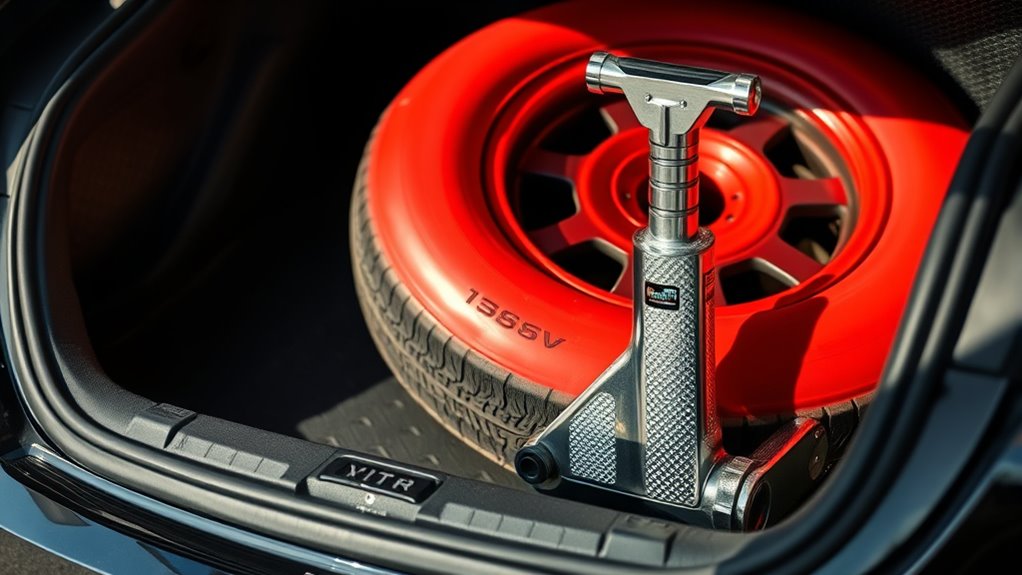
Have you ever wondered what you should do if you get a flat tire on the road? Being prepared can make all the difference in turning a stressful situation into a manageable task. The first step is understanding how to handle your spare tire and jack properly. Before you even hit the road, check your spare tire’s tire pressure. Many people overlook this, but it’s essential. A spare tire with low tire pressure won’t do you any good when you need it most. Regularly inspect the pressure, ensuring it matches the recommended PSI listed in your vehicle’s manual. Proper tire pressure helps you change the tire safely and quickly, preventing further inconvenience or danger. When a flat occurs, your priority is to stay calm and assess the situation. Find a safe, flat spot away from traffic to pull over. Once stopped, turn on your hazard lights to alert other drivers. Before you start jacking up your vehicle, it’s crucial to practice jack safety. Make sure the vehicle is on a level surface, and engage the parking brake firmly. Position the jack at the correct lifting point, usually marked underneath the vehicle. Never place the jack on uneven ground or under parts not designated for lifting, as this can be dangerous. Once the jack is secured, slowly lift the vehicle until the flat tire is off the ground. Keep a firm grip on the jack during the process, and don’t rush — safety comes first. When the tire is elevated enough, loosen the lug nuts with a wrench, turning counterclockwise. Use steady, even pressure rather than forcing them, which can strip the nuts or damage the wheel. After removing the flat tire, replace it with the spare, aligning the holes with the lug bolts. Tighten the lug nuts by hand first, then lower the vehicle slightly so the tire touches the ground but still bears some weight. This allows you to tighten the nuts more securely in a crisscross pattern. Once everything is tight, lower the vehicle fully, removing the jack, and double-check that all lug nuts are properly tightened. When you’re finished, store the flat tire and tools securely in your trunk. Remember, maintaining proper tire pressure and practicing jack safety aren’t just precautions — they’re essential for safe, efficient tire changes. Being prepared means you won’t be caught off guard by a flat tire, and you can handle the situation confidently and safely. Additionally, understanding the importance of tire maintenance can help prevent flats and extend the lifespan of your tires. Regularly inspecting your tires for signs of wear and damage is a key part of preventive maintenance, ensuring safer driving conditions. Incorporating proper tire care into your routine not only reduces the likelihood of flats but also contributes to better fuel efficiency and overall vehicle safety. Recognizing early warning signs of tire issues can further prevent emergencies and save you time and money in the long run.
Frequently Asked Questions
How Often Should I Check My Spare Tire’s Pressure?
You should check your spare tire’s pressure at least once a month, just like with regular tires. During tire rotation, it’s a good time to verify the spare’s pressure and make certain it’s ready if needed. Regular pressure monitoring helps prevent surprises on the road and keeps your vehicle safe. Don’t forget to inspect the spare more often if you’ve hit rough roads or experienced temperature changes that could affect tire pressure.
Can I Drive Long Distances on a Spare Tire?
You can drive long distances on a spare tire, but it’s not ideal for tire durability or your spare tire lifespan. Imagine the tire as a fragile glass orb, designed for short-term use, not endless journeys. Extended driving on a spare can cause it to weaken or wear unevenly, risking a blowout. Always replace or repair your regular tire promptly to guarantee safety and preserve the spare’s integrity.
What if My Jack Doesn’t Fit My Car?
If your jack doesn’t fit your car, don’t force it. Instead, check your owner’s manual for the correct jack type or consider carrying a universal jack. Before your trip, perform regular tire rotation and wheel alignment to prevent uneven wear, which can make jacks less compatible. If you’re stuck, call roadside assistance or a mechanic for help. Always keep the right tools to stay prepared.
How Do I Know if My Spare Is Still Usable?
You can check if your spare is still usable by inspecting its tread and sidewalls for cracks or damage. Regular tire rotation helps guarantee even wear, which also extends the life of your spare. Remember to take into account storage conditions—store your spare in a cool, dry place away from direct sunlight, as extreme temperatures can deteriorate the rubber. Keep your spare in good shape so it’s ready when you need it.
Are There Different Types of Jacks for Various Vehicles?
Did you know there are dozens of types of jacks, each designed for specific vehicles? From scissor jacks to hydraulic floor jacks, choosing the wrong one could turn a simple tire change into a major headache. Always check your vehicle’s compatibility before buying or using a jack. Using the right type guarantees safety, efficiency, and prevents damage—so you’re never stranded or struggling when you need it most.
Conclusion
Don’t delay—double-check your spare, jack, and tools today. Being prepared for a flat frees you from frustration and fear, fueling confidence on every drive. Remember, a simple spare and sturdy jack can save the day, turning trouble into triumph. So stay savvy, stay safe, and stay stocked—because a small step now prevents a big setback later. Keep your kit complete, and cruise confidently, wherever the road takes you.