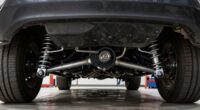
If you notice play or clunks in your steering, it’s likely due to worn or damaged components like the rack, tie rods, or bushings. Loose or worn tie rods cause vague steering and knocking sounds, while a worn rack can lead to increased play and noise. Deteriorated bushings also affect steering stability and create noise during turns. Understanding which part is causing the issue can help you plan the right repairs—there’s more to explore on how each component affects your steering.
Key Takeaways
- Worn or loose tie rods often cause steering vagueness, knocking, and uneven tire wear.
- A worn or damaged steering rack can produce play and clunking noises, especially during turns.
- Deteriorated or cracked bushings lead to looseness and noise, impacting steering response and stability.
- Contaminated or low power steering fluid reduces hydraulic pressure, causing looseness and noise in the steering system.
- Regular inspection helps identify early signs of wear in the rack, tie rods, and bushings to prevent steering issues.
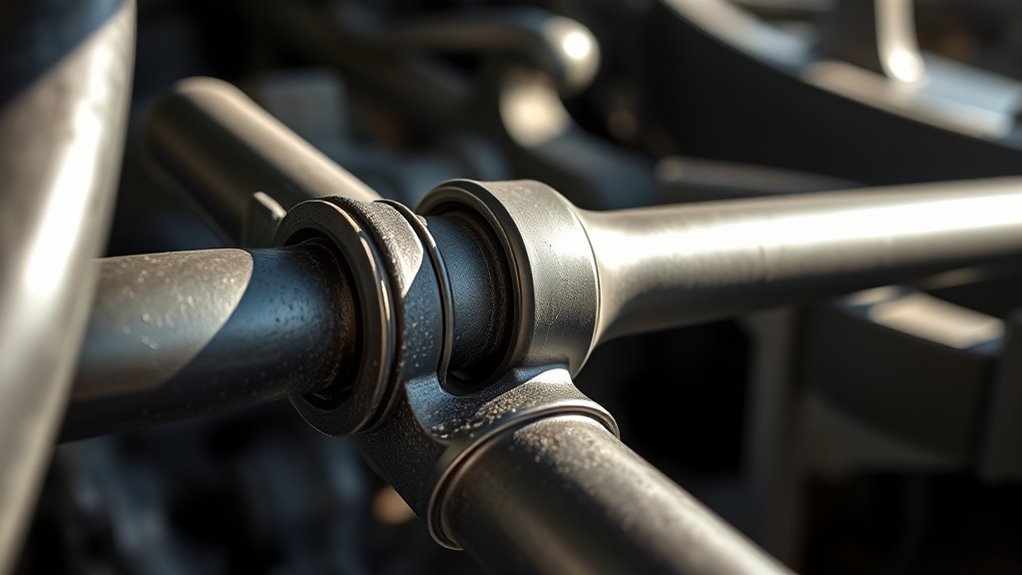
If your vehicle’s steering feels loose or you notice knocking sounds when turning, you’re likely dealing with steering play and clunks. These issues can stem from several components within your steering system, often related to worn or damaged parts that affect how smoothly your car responds to your commands. One common cause is a problem with the power steering system. If your power steering fluid is low or contaminated, it can cause the steering to feel less responsive and produce noises when turning. Regularly checking and topping off your steering fluid helps maintain proper hydraulic pressure, ensuring your steering feels firm and predictable. Neglecting this can lead to increased steering play and potential damage to other parts like the steering rack.
Steering issues often stem from worn parts or low, contaminated power steering fluid.
The steering rack itself is a critical element that transmits your steering input to the wheels. If it becomes worn, loose, or damaged, you’ll notice increased steering play and possibly clunking sounds. The rack contains gears that can wear out over time, especially if debris or dirt contaminates the system. This wear causes the steering wheel to feel loose and imprecise, making it harder to control your vehicle accurately. In some cases, the rack may develop leaks, further reducing hydraulic support and leading to increased hydraulic pressure loss and noise. Additionally, maintaining proper steering system maintenance can help prevent such issues before they become severe. Furthermore, inspecting the rack and related components regularly can help catch early signs of wear.
Tie rods are another key part of the steering linkage that can cause play and clunks. They connect the steering rack to the wheels and allow for precise control of wheel direction. When tie rods wear out or become loose, you’ll feel a vagueness in the steering and hear knocking noises when turning. Worn tie rods can also cause uneven tire wear and alignment issues, which exacerbate steering problems. If you notice any play in the steering wheel, it’s wise to have the tie rods inspected and replaced if necessary. Proper adjustment and timely replacement of tie rods help maintain steering alignment and overall vehicle safety.
Bushings play a quieter but still crucial role in maintaining proper steering alignment and stability. Over time, bushings can deteriorate or crack, leading to looseness or noise during turns. When these parts fail, they can contribute to the feeling of looseness or produce knocking sounds, especially when turning sharply or over bumps. Replacing worn bushings restores tightness to the steering system, improving response and reducing unwanted noises. Regularly inspecting all these components helps ensure your steering remains responsive and safe. Additionally, using high-quality replacement bushings can extend the lifespan of your steering components and enhance driving comfort.
Frequently Asked Questions
How Long Can I Drive With Steering Issues Before Repairs Are Urgent?
You shouldn’t drive long with steering issues, as it can be dangerous. If you notice loose steering or clunks, stop driving and check your steering fluid first. Poor steering can harm your wheel alignment, making handling worse. It’s best to get repairs done promptly—ignoring the problem could lead to more costly damage or accidents. Drive only if absolutely necessary, and have a mechanic inspect and fix your steering system soon.
Are Steering Problems More Common in Certain Vehicle Models?
Think of your vehicle like a musical instrument—some models are more prone to discord. Certain vehicle model trends show that some brands or years experience more steering problems, often due to manufacturing defects. For example, some makes have issues with tie rods or bushings that cause play or clunks. Staying informed about your car’s history and recalls helps you catch these issues early, preventing costly repairs down the road.
Can Steering Play Cause Uneven Tire Wear?
Yes, steering play can cause uneven tire wear. When your steering has excessive play, it affects wheel alignment, leading to tires wearing unevenly over time. To prevent this, get your wheel alignment checked and maintain regular tire rotation. By addressing steering issues early, you help guarantee even tire wear, improve handling, and extend the lifespan of your tires. Don’t ignore steering play—it can lead to bigger, costly problems down the road.
What Are the Costs Associated With Replacing Rack, Tie Rods, or Bushings?
Replacing a rack, tie rods, or bushings can cost you between $300 and $1,200, depending on your vehicle and the parts needed. A rack replacement tends to be pricier, often around $800 to $1,200, while tie rods and bushings are usually $300 to $700. Keep in mind, labor costs vary by shop, so get a detailed cost estimate to understand your repair expenses better.
How Can I Prevent Steering Components From Wearing Out Prematurely?
Think of your steering system as a delicate dance that needs steady rhythm. To prevent premature wear, prioritize regular preventative maintenance and keep components lubricated. Check for any signs of looseness or leaks, and address them promptly. Avoid rough driving, which stresses parts. This rhythm of care helps your steering stay responsive and extends the life of the rack, tie rods, and bushings, ensuring smooth, safe handling on every journey.
Conclusion
Ultimately, pinpointing steering play and clunks often comes down to the rack, tie rods, or bushings, but it’s worth considering that worn suspension components might also contribute. While many assume the rack is the main culprit, some experts suggest that loose bushings could be the hidden cause, offering a more nuanced explanation. Don’t overlook these possibilities—thorough inspection guarantees you tackle the root issue, keeping your steering responsive and safe.