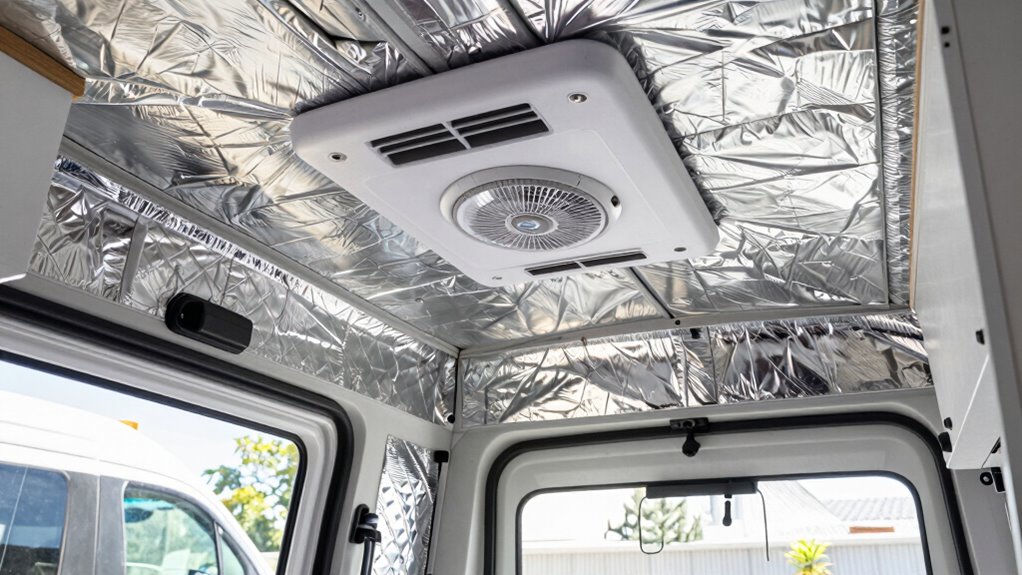

Balancing ventilation and insulation is key to controlling climate in your van. Ventilation keeps air fresh and prevents condensation, while insulation retains heat and blocks unwanted temperature changes. Too much insulation can limit airflow, and too much ventilation can reduce heat efficiency. By strategically managing both, you’ll improve comfort and energy use year-round. Want to discover how to optimize both elements for the perfect van environment? Keep exploring for practical tips.
Key Takeaways
- Proper airflow improves ventilation, reducing humidity and condensation while maintaining fresh air, but excessive airflow can cause heat loss.
- Insulation retains interior heat and prevents temperature fluctuations, yet over-insulation can hinder necessary ventilation.
- Achieving balance involves integrating both ventilation and insulation to optimize comfort, energy efficiency, and moisture control.
- Natural and mechanical ventilation support climate control without compromising insulation’s thermal benefits.
- Strategic planning ensures that ventilation and insulation work together to prevent issues like condensation, heat loss, or overheating.

When you prioritize proper airflow, you’re not just making your van more comfortable—you’re also reducing energy consumption because your heating and cooling systems don’t have to work as hard to maintain a stable temperature. This reliance on natural or mechanical ventilation means you can keep the interior fresh without sacrificing thermal retention. You’ll find that managing these two elements thoughtfully makes a significant difference in how livable your van feels year-round. Proper climate control depends on balancing both elements effectively to prevent issues like condensation or excessive heat loss.
Frequently Asked Questions
How Do Ventilation and Insulation Affect Soundproofing in a Van?
Ventilation and insulation both impact your van’s soundproofing efficacy by influencing noise transmission. Proper insulation reduces sound waves passing through walls, making your space quieter. However, increased ventilation can create gaps that allow noise to enter more easily. To optimize soundproofing, you should balance insulation for noise reduction and make sure ventilation doesn’t compromise the van’s ability to block external sounds. This way, you enjoy better climate control without sacrificing tranquility.
Can Ventilation Reduce Humidity Without Compromising Insulation?
Yes, ventilation can reduce humidity without compromising insulation if you focus on moisture control through proper airflow management. Installing vents or fans helps circulate air, removing excess moisture and preventing condensation. Choose ventilation options that are well-sealed and don’t create drafts that bypass insulation. By balancing airflow, you maintain a comfortable, dry environment inside your van while preserving the insulating properties. Proper design guarantees humidity stays in check without sacrificing warmth or soundproofing.
What Are the Best Materials for Combined Ventilation and Insulation?
Think of your van’s climate as a balanced dance, where the right material combinations guide airflow management. For insulation, spray foam or sheep’s wool keep warmth in without trapping moisture. For ventilation, passive options like ridge vents or adjustable roof vents guarantee fresh air flows freely. Combining rigid foam with mesh-lined vent panels offers both insulation and airflow, keeping your space cozy yet breezy, just like a gentle breeze through open windows.
How Does Climate Influence the Importance of Ventilation Versus Insulation?
Climate impact heavily influences whether you prioritize ventilation or insulation in your van build. In hot, humid environments, good ventilation helps prevent mold and keeps the air fresh, while insulation keeps cold out in winter. Building considerations should include your local climate, ensuring you choose materials and designs that optimize comfort and energy efficiency. Balancing these elements is key to creating a comfortable, climate-adapted space.
Are There Energy-Efficient Solutions That Optimize Both Ventilation and Insulation?
Think of your van as a cozy nest, where solar cooling and smart vents work together like a vigilant guardian. You can optimize both by installing solar-powered cooling systems that reduce energy use and smart vents that automatically adjust airflow. This synergy keeps your van comfortable year-round, balancing insulation’s warmth with ventilation’s freshness efficiently, so you enjoy a sustainable, energy-smart journey without sacrificing comfort.
Conclusion
Picture your van as a cozy cabin, where the gentle breeze keeps the air fresh and inviting, and warm insulation wraps you like a comforting blanket on chilly nights. Balancing ventilation and insulation creates a sanctuary that breathes with you, responding to each change in weather. When you find that sweet spot, your van transforms into a haven—an oasis of comfort and fresh air amidst the world’s chaos, where every journey feels just right.